

Rubric: International
Format: Special Report
Author: Sinisa Brkic (sb)
India’s Youth Protests Continue After Wangchuk Ends Fast. Sonam Wangchuk has ended his hunger strike, but India’s youth movement continues to press the government over exam leaks, unemployment and political responsibility.
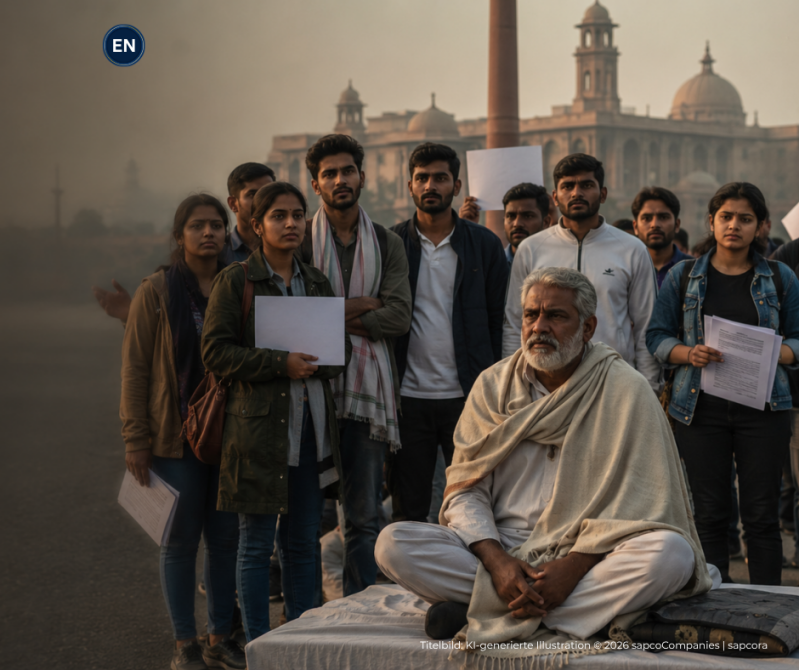
Sonam Wangchuk has ended his 26 day hunger strike, but the movement behind him is continuing. What began as anger over alleged examination leaks has grown into a broader conflict over education, jobs, political accountability and the treatment of young protesters.
The Fast Is Over, the Dispute Is Not
Sonam Wangchuk ended his hunger strike after 26 days following talks with senior government representatives and growing concern about his health. His decision lowered the immediate risk of further escalation, but it did not resolve the political conflict.
Protest leaders have said demonstrations will continue. They are still demanding the resignation of Education Minister Dharmendra Pradhan, accountability for failures in the examination system and protection for peaceful demonstrators. The government has asked for more time. No final agreement has been announced on the central demands.
An Examination Scandal Became a Political Crisis
The protests were triggered by allegations that important examination papers had been leaked or manipulated. For students, the issue is larger than a single test.Competitive examinations determine access to universities, medical careers and public employment. Millions of young Indians invest years of preparation and substantial family resources in these tests. When the integrity of the system is questioned, confidence in merit itself begins to collapse.
The anger therefore extends beyond technical failures. Protesters want to know who was responsible, how organized the manipulation may have been and why political consequences have remained limited.
Why the Minister’s Resignation Matters
The government has promised tougher measures against examination fraud, faster court proceedings and administrative reforms. Protesters argue that these steps address procedure, but not responsibility.
Their demand for Pradhan’s resignation does not rest on proven personal involvement in the alleged leaks. It rests on ministerial accountability for a system that failed on a scale affecting large numbers of students.For the government, dismissing a senior minister under pressure would carry political costs. Refusing to do so also carries a price. It strengthens the impression that responsibility is imposed below, while those at the top remain protected.
The Meaning of the “Cockroach” Protests
The movement is sometimes described as the “Cockroach Janta Party.” It is not an established parliamentary party. The name emerged as a satirical response to language viewed by many young people as dismissive of the unemployed. Protesters reclaimed the insult and turned it into a symbol of political defiance.
Its appeal lies in the grievances it brings together. Examination fraud, unemployment, limited university places, expensive private coaching and distrust in public institutions have merged into a single argument about dignity and opportunity.
Wangchuk Gave the Movement a National Figure
Wangchuk brought moral weight and public visibility to the protests. His fast transformed a student driven movement into a national confrontation. As his health deteriorated, authorities moved him to a hospital. His condition became a source of growing concern, but medical details should be treated cautiously and without speculation. By ending the fast, Wangchuk reduced the immediate danger to his health. He also prevented the dispute from entering a potentially more volatile phase.
His withdrawal from the hunger strike should not be read as political surrender. The movement has made clear that it intends to continue.
Government Promises Have Not Restored Trust
The government has announced stronger penalties, faster legal action and reforms intended to protect future examinations. These measures acknowledge that the existing system has failed to maintain public confidence. What remains unclear is how binding the government’s assurances are, whether cases against peaceful protesters will be withdrawn and whether responsibility will reach beyond lower level officials. That gap between promises and enforceable action now defines the dispute.
The state may be able to control demonstrations. Rebuilding trust in the examination system will be far more difficult.
A Deeper Crisis of Opportunity
The protests have gained force because they reflect a broader problem. For many young Indians, education is presented as the path to economic security. Yet university places are limited, competition is severe and secure employment remains difficult to obtain. A leaked paper therefore represents more than an administrative failure. It suggests that effort, discipline and merit may be undermined by money, access or criminal networks. This is why the movement has spread beyond those directly affected by one examination. It speaks to a generation that has been promised mobility, but increasingly doubts whether the institutions controlling access to opportunity are fair.
A Political Test for Modi’s Government
The protests do not currently threaten the survival of Prime Minister Narendra Modi’s government. They do, however, create a serious political problem. Education, employment and fair access affect families across party lines. The government can dismiss the movement as opposition politics, but it cannot easily dismiss the underlying frustration. The risk is not an immediate collapse in support. It is the gradual erosion of confidence among younger voters who feel that the system demands discipline from them while offering limited accountability in return. Wangchuk’s hunger strike has ended. The political test for the government has not.
Kommentar hinzufügen
Kommentare