

Section: Health
Format: Special Report
Author: Sinisa Brkic (sb)
A multistate Salmonella outbreak linked to recalled jalapeños is expanding beyond fresh produce and into processed foods. The U.S. Department of Agriculture has issued a public health alert covering certain meat and poultry products made with jalapeños tied to the contamination, adding a new layer of complexity for consumers trying to determine what remains safe to eat. Federal health officials have reported 345 illnesses across 27 states and 36 hospitalizations, with no deaths reported so far. The investigation remains active as authorities work to trace the full distribution network and identify additional products that may have used the affected peppers.
A Produce Recall Is Becoming a Broader Food Safety Problem
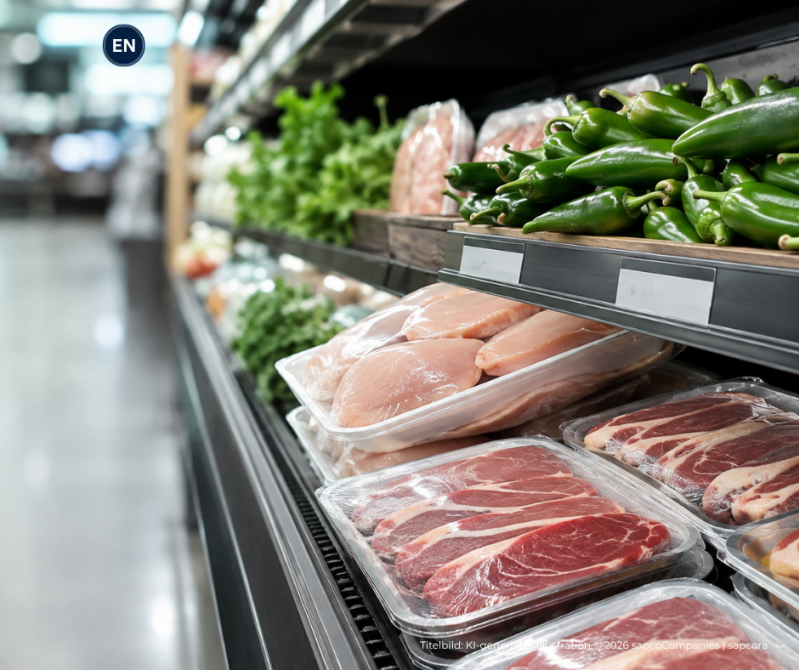
What began as an outbreak tied to fresh jalapeños has developed into a wider food safety issue involving products made with the recalled peppers. The USDA is now warning consumers about certain meat and poultry items containing jalapeños that had already been recalled because of possible Salmonella contamination.
That distinction matters. The concern is no longer limited to consumers who purchased fresh peppers directly. Ingredients that entered commercial food production before the contamination was identified can move through multiple layers of the supply chain, turning one agricultural recall into a series of secondary alerts involving prepared or processed foods.
The latest federal warning therefore represents more than an administrative update. It broadens the practical scope of the incident and increases the number of consumers who may need to examine products they previously had little reason to associate with the original outbreak.
345 Illnesses Across 27 States
The underlying outbreak has already reached significant scale. According to the information released by federal health authorities, 345 people in 27 states have been identified as part of the outbreak, with 36 hospitalizations and no reported deaths.
Investigators have identified jalapeños originating in Sinaloa, Mexico, and distributed into the United States through Coast Citrus Distributors as the likely source. Authorities are continuing to examine where the peppers were shipped and which additional businesses or food manufacturers may have received them.
The number of illnesses alone does not explain the growing public attention. The more consequential development is the widening product footprint, because consumers may now encounter the recalled ingredient in foods whose connection to fresh jalapeños is not immediately obvious.
Why the USDA Alert Changes the Story
Food recalls often become more complicated when a contaminated ingredient has already entered the manufacturing or preparation process. Once that happens, regulators must determine not only where the original ingredient was sold, but also which finished products were made with it and where those products were distributed.
That is now the central issue in this outbreak. The USDA public health alert indicates that affected jalapeños were used in certain meat and poultry products, bringing an additional category of federally regulated foods into the investigation.
For consumers, the consequence is straightforward but important. Checking only whether fresh jalapeños were purchased may no longer be sufficient. The relevant question is whether a household has any specific processed products subsequently identified by authorities as containing the recalled ingredient.
Not Every Product Containing Jalapeños Is Implicated
The expansion of the investigation does not mean that all foods containing jalapeños are unsafe. Nor does it establish a connection between the outbreak and every manufacturer, restaurant or retailer that serves products containing the peppers.
The issue is tied to specific supply chains and products identified through the federal investigation. That makes precision essential, particularly as public interest grows and search activity increasingly combines broad terms such as product recall with the names of restaurants, food companies and individual product categories.
An expanding recall can quickly create confusion if the distinction between an ingredient category and a documented supply chain is lost. The evidence released so far supports scrutiny of identified products and distributors, not generalized claims about jalapeños sold throughout the United States.
Chipotle and QDOBA Addressed the Identified Supply
Restaurant chains have also become part of consumer concern because of their heavy use of jalapeños and other fresh ingredients. In this case, however, the available information provides an important distinction between earlier supply exposure and current risk.
According to the FDA information summarized in the investigation, Chipotle changed its affected supply source on July 20. QDOBA removed the implicated jalapeños on July 28.
Federal officials have indicated that they do not consider those restaurants to present an ongoing risk from this specific outbreak based on the identified supply. That does not reduce the seriousness of the wider investigation, but it does provide a necessary boundary around what the evidence currently supports.
The Supply Chain Remains the Critical Question
The next phase of the investigation is likely to depend heavily on distribution records. Authorities are still working to determine the full path taken by the contaminated jalapeños after they entered the United States.
That process can reveal additional manufacturers, distributors or food service operations that received the affected product before the recall. If more downstream products are identified, new alerts could follow even without a major change in the number of reported illnesses.
This is one reason the current USDA action carries particular significance. It demonstrates that the original ingredient moved beyond fresh produce channels and into processed food production, creating the possibility of additional secondary products that require separate identification.
Consumers Are Searching for Specific Answers
The public response to the outbreak reflects the practical nature of the risk. Consumers are not merely searching for general information about Salmonella. They want to know which products are affected, whether something already purchased is included, which businesses received the implicated peppers and whether the risk is still active.
That shift in search behavior is important because it mirrors the evolution of the investigation itself. A broad outbreak story has become a product identification story, and the usefulness of official information now depends heavily on the speed and clarity with which specific affected items can be identified.
For consumers who believe they may have been exposed, official FDA and CDC health guidance remains the appropriate standard. Salmonella infections can be more serious for young children, older adults and people with weakened immune systems, making accurate information particularly important for higher risk households.
No Evidence for Broader Claims Beyond Identified Products
The expanding investigation also creates a risk of overstatement. A restaurant name appearing in online searches does not establish current contamination, and the presence of jalapeños in a product does not by itself mean that the recalled supply was used.
Any connection between a company and the outbreak should therefore be based on official distribution information or a specific recall notice. That standard becomes increasingly important as consumer concern spreads faster than regulators can sometimes complete the underlying supply chain analysis.
The distinction protects both consumers and businesses. It allows legitimate warnings to remain clear while reducing the likelihood that companies with no documented connection to the contaminated supply are incorrectly associated with the outbreak.
The Investigation Is Still Moving
The current outbreak has entered a more consequential phase because the contaminated ingredient has been identified beyond its original form. Fresh jalapeños were the starting point, but the USDA alert shows how quickly a food safety investigation can expand once an ingredient has entered further processing.
With 345 reported illnesses across 27 states and additional products now under scrutiny, the situation remains active rather than resolved. The key question is no longer simply where the recalled jalapeños were sold, but how far they traveled through the U.S. food system before the problem was detected.
For consumers, the most important information will come from increasingly specific product notices. For regulators, the task is to finish mapping the distribution chain. Until that work is complete, further additions to the affected product list remain a material possibility.
Salmonella Jalapeño Alert Expands to Meat and Poultry Products in the US. A Salmonella outbreak linked to recalled jalapeños has sickened 345 people across 27 states. USDA is now warning about affected meat and poultry products as the investigation expands.
Kommentar hinzufügen
Kommentare