

Section: Geopolitics
Format: News Report
Author: Sinisa Brkic (sb)
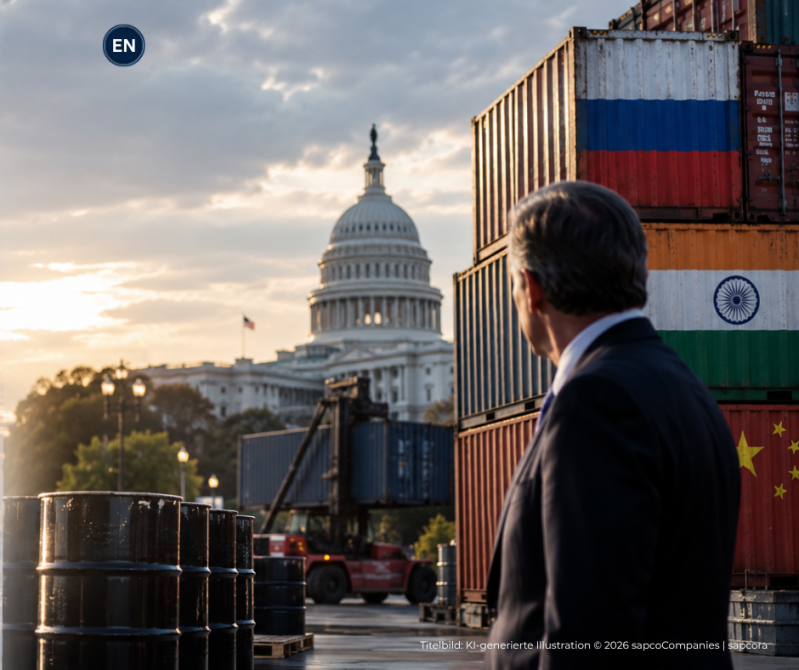
The US Congress has approved sweeping sanctions legislation aimed at increasing economic pressure on Russia while also extending sanctions provisions related to Iran. The bill could have consequences well beyond Russia because it provides for tariffs of up to 100 percent on goods from countries that meet defined criteria tied to purchases of Russian oil and gas or sanctions evasion. India and China are among the major energy buyers closely watched as the legislation moves to President Donald Trump.
Congress Clears the Final Legislative Hurdle
The US House of Representatives approved the “Lindsey O. Graham Sanctioning Russia and Iran Act of 2026” on September 16 by a vote of 262 to 159. The Senate had already passed the legislation on August 7 by 86 votes to 11, completing congressional action on the measure.
The House vote drew support from both parties. A large majority of Republicans backed the legislation, while 58 Democrats also voted in favor, underscoring the bipartisan support for additional economic pressure on Russia despite disagreements over the powers granted to the president. The legislation now awaits presidential action. The Trump administration had previously expressed support for the measure and said presidential advisers would recommend that Trump sign the legislation if presented in its approved form.
The Measures Extend Beyond Russia
Much of the legislation is directed at Russia’s financial, energy and defense sectors. It provides for additional sanctions against Russian officials, financial institutions and other entities linked to the Russian government, while also expanding restrictions intended to limit Moscow’s access to international markets. Another central provision targets Russia’s so called shadow fleet. Western governments use the term for vessels and related networks accused of helping transport Russian energy while circumventing existing sanctions and restrictions.
The broader significance of the legislation lies in its treatment of third countries. Instead of limiting economic measures to Russian entities, Congress has created a mechanism that can also affect countries continuing to purchase large volumes of Russian crude oil or natural gas.
Tariffs of Up to 100 Percent Could Reach Major Energy Buyers
The legislation provides for tariffs of up to 100 percent on goods imported into the United States from countries that fall within defined categories. Those categories include countries that continue purchasing Russian crude oil or natural gas and rank among the five largest importers by volume, as well as countries identified among the leading facilitators of Russian oil sanctions evasion.
The distinction is important. India and China are not automatically subjected to new 100 percent tariffs simply because Congress has passed the bill, and no such tariff has yet been imposed under the legislation. If Trump signs the measure, the relevant provisions would establish a process for identifying countries that meet the statutory criteria. The legislation directs the president to impose duties within 30 days on qualifying countries, while also allowing the administration to adjust tariff rates and issue waivers when it determines that doing so is in the national interest of the United States.
That combination gives the measure considerably more reach than a conventional sanctions package directed solely at Russian companies or officials. It links US policy toward Russia directly with Washington’s trade relations with some of the world’s largest economies.
India Faces a Particularly Sensitive Calculation
India is among the countries most closely associated with the new provisions because it has become a major buyer of Russian crude oil. New Delhi has repeatedly maintained that its energy purchasing decisions are driven by national requirements, affordability and the need to secure reliable supplies for a population of more than 1.4 billion people. Following the House vote, India said it was monitoring developments and reiterated that energy security remained a priority. Indian officials also indicated that concerns about the possible effects of the legislation had been raised with US counterparts and that New Delhi would take steps necessary to protect its trade and economic interests.
The potential consequences extend beyond the energy relationship between India and Russia. If the tariff provisions were applied to India, they could intersect directly with the broader economic relationship between Washington and New Delhi, adding another layer to an already complex mix of strategic cooperation, trade negotiations and energy policy.
China Is Another Central Factor
China is also a major purchaser of Russian energy and remains one of Moscow’s most important economic partners. Its position therefore places it near the center of the debate over whether pressure on Russia can be increased by raising the economic cost for countries that continue to buy Russian oil and gas.
Any application of the new tariff provisions to China would have implications beyond Russia policy. It could become part of the much larger trade relationship between Washington and Beijing, where tariffs, market access, technology restrictions and strategic competition are already closely connected. At this stage, however, the legislation does not amount to a new tariff order against China. Any concrete economic impact will depend on the bill becoming law, subsequent determinations under its provisions and the way the Trump administration uses the discretion provided by Congress.
Presidential Discretion Remains Significant
One of the most contested elements of the legislation is the authority retained by the president. Although the bill establishes requirements for additional sanctions and duties, it also provides mechanisms allowing the president to waive measures after certifying to Congress that a waiver serves the national interests of the United States.
The administration would also have room to modify tariff rates as circumstances change. Supporters of this flexibility argue that economic measures can be more useful when they can be adjusted as part of negotiations, while critics in Congress have warned that broad waiver authority gives the executive branch substantial control over how aggressively the legislation is applied. This distinction will matter after enactment. The practical significance of the bill will depend not only on its statutory language, but also on which countries Washington determines fall within its scope and whether the administration chooses to issue waivers or adjust the measures.
Iran Is Included in the Same Legislative Package
The legislation also addresses Iran by extending key provisions of the Iran Sanctions Act for another five years. That component preserves authorities used by Washington to impose economic restrictions connected with Iran’s activities and its nuclear program. Russia remains the primary focus of the current international attention because of the provisions affecting energy trade and third countries. The inclusion of Iran nevertheless broadens the legislation into a larger sanctions package covering two major areas of US foreign and security policy.
The Next Step Is the White House
The legislation is not yet law. President Trump must still sign it before its provisions can take effect, although his administration has already formally supported the measure and previously recommended approval of the version sent through Congress.
The immediate significance of the congressional vote is therefore the creation of a new legal framework for economic pressure on Russia and countries deeply involved in Russian energy trade. The more consequential stage would begin after enactment, when Washington determines which countries meet the statutory criteria and how strongly the new tariff and sanctions provisions are applied. For India, China and other major purchasers of Russian energy, that distinction is central. Congress has completed its part of the process, but the scale of the international economic consequences will be determined by the decisions that follow.
US Congress Passes Russia Sanctions Bill With Tariffs of Up to 100%. The US Congress has approved a sweeping Russia sanctions bill that could impose tariffs of up to 100 percent on major buyers of Russian oil and gas, including potentially India and China.