

Section: Energy
Format: Analysis
Author: Sinisa Brkic (sb)
The United States is pressing Germany and France to release substantial volumes from their strategic diesel reserves as global fuel markets tighten and prices climb. Washington is seeking the release of as much as 120 million barrels from European emergency stocks over six months and has raised the possibility of restricting U.S. diesel exports if Europe does not act. The confrontation puts two of Europe’s largest economies in an unusually difficult position. Releasing reserves could ease immediate pressure on fuel markets, but doing so on the scale requested by Washington would significantly reduce emergency inventories at a time when geopolitical risks remain elevated and global supply chains are already under strain.
Washington wants a major European intervention
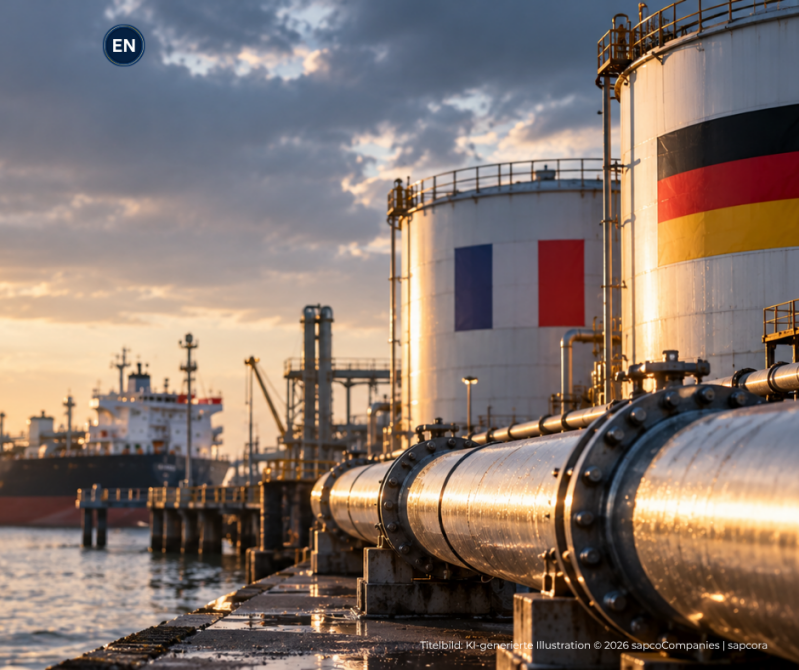
The scale of the American request is what separates the current dispute from previous efforts to calm energy markets. The United States is seeking around 120 million barrels of diesel from European emergency inventories over six months, an amount equivalent to more than 40 percent of the European Union’s strategic diesel and gasoil stocks. Germany and France sit at the center of the issue because they hold a particularly large share of those reserves. Germany has roughly 5.6 million metric tons of emergency diesel stocks, while France holds about 8.2 million metric tons. Together, the two countries account for approximately 35 percent of the EU’s strategic diesel reserves. That concentration gives Berlin and Paris considerable importance in any coordinated European response. It also means that a substantial release cannot easily be treated as a technical market intervention with limited consequences for national energy security.
The threat of an export restriction changes the equation
The most consequential element is not the request itself, but the pressure attached to it. The Trump administration has indicated that restrictions on U.S. diesel exports could be considered if Germany and France do not contribute sufficiently to a broader release of emergency inventories.
No such export ban has been adopted. The possibility nevertheless introduces a markedly different dynamic into transatlantic energy relations because the United States is simultaneously asking European governments to deploy their strategic reserves while signaling that American supplies could become less accessible if they decline. Strategic reserves are designed primarily as protection against severe supply disruptions. Using access to current exports as leverage in negotiations over those reserves turns an emergency mechanism into part of a broader interstate bargaining process. For Europe, that creates a difficult calculation. Governments must weigh the immediate economic benefit of placing additional diesel on the market against the value of retaining stocks for a potentially more serious disruption later.
Diesel has become a strategic economic pressure point
The dispute comes as diesel markets are already under exceptional strain. Supply disruptions linked to the conflict involving Iran, restrictions on Russian exports and reduced availability from other major suppliers have tightened the international market, while U.S. refineries have become increasingly important sources of refined fuel for overseas buyers. Diesel is economically significant in ways that extend far beyond private transportation. Freight trucks, agricultural machinery, construction equipment and large sections of industrial production depend on the fuel, which means sustained price increases can move rapidly through logistics networks and ultimately into the cost of goods. The consequences therefore reach into inflation, industrial competitiveness and household purchasing power. Europe is particularly exposed because its energy system remains dependent on imported fuels even after years of efforts to diversify supplies following the sharp reduction in Russian energy imports. This is also why a potential American export restriction would matter well beyond Germany and France. Any meaningful reduction in U.S. diesel available to international markets could intensify competition for alternative supplies and place additional pressure on already tight refining and distribution systems.
Europe faces an uncomfortable reserve dilemma
Emergency stocks exist precisely because governments cannot assume that commercial markets will always provide sufficient supply during a crisis. The current situation tests where policymakers draw the line between using those reserves to suppress an acute price shock and preserving them for an outright physical shortage. Releasing limited quantities during market disruptions is not unusual. A coordinated drawdown on the scale sought by Washington would be considerably more significant because Europe would be consuming a large portion of its protective buffer while the underlying geopolitical uncertainty remains unresolved. That distinction matters. A reserve release can increase supply temporarily, but it does not create additional refining capacity or resolve the geopolitical disruptions that caused the shortage. Once emergency inventories have been drawn down, rebuilding them requires governments or mandated industry participants to return to the market as buyers. The timing therefore becomes crucial. Governments could ease current conditions while simultaneously reducing their ability to respond to a subsequent supply shock.
Berlin and Paris have not made a final decision
Germany, France and other European governments are discussing possible coordinated action, with the European Commission involved in consultations over emergency inventories. Italy, Ireland and the United Kingdom have also participated in discussions about potential reserve releases. U.S. Energy Secretary Chris Wright has publicly expressed confidence that Europe will act. That confidence, however, should not be confused with an announced European decision. Neither Germany nor France has agreed publicly to the full volume sought by Washington, and the European Union has not committed to the requested 120 million barrels. The same caution applies to Washington’s argument that Germany and France have not fully delivered on previous commitments concerning emergency stocks. That remains the U.S. government’s position rather than an independently established finding that either country violated a binding obligation. The distinction is important because the political significance of the dispute depends heavily on what happens next. Negotiating pressure, a coordinated reserve release and an actual restriction on U.S. exports would represent materially different stages of the confrontation.
Domestic pressure in the United States is part of the calculation
Washington’s position is also shaped by conditions inside the United States. High diesel prices have become an economic and political problem ahead of the November midterm elections, giving the administration a strong incentive to increase global supply and reduce pressure on domestic fuel markets. American refiners have increased production and exports as international shortages have intensified, but the United States is not isolated from global pricing. Diesel is traded internationally, and shortages abroad can feed back into American prices as exporters respond to stronger demand in overseas markets. Restricting exports could therefore appear politically attractive as a way of keeping more fuel inside the United States. The economic consequences are less straightforward. Refinery systems, storage capacity and international trading relationships are interconnected, which means an export restriction could generate effects beyond the immediate goal of reducing domestic prices. For European policymakers, this makes Washington’s position particularly sensitive. What may serve a domestic U.S. objective could simultaneously transfer additional supply pressure onto allied economies.
Strategic reserves are becoming part of transatlantic leverage
The broader significance of the dispute lies in what it reveals about the changing nature of energy security. Strategic fuel reserves were created as insurance against external shocks. They are now becoming entangled with trade policy, domestic price politics and negotiations between governments that ordinarily describe one another as close allies. That does not mean a transatlantic energy rupture has occurred. Negotiations remain underway, the threatened U.S. export restrictions have not been imposed and a coordinated compromise remains possible. But the structure of the dispute is notable because access to fuel and control over emergency stocks are increasingly being treated as instruments of economic leverage. For Germany and France, the immediate question is whether releasing a substantial share of their reserves offers enough short term market relief to justify reducing the buffer available for a deeper crisis. For Washington, the question is how far it is prepared to press European governments in pursuit of lower global and domestic fuel prices. What was initially a diesel supply problem has therefore become something larger. It is now also a test of how strategic energy reserves are used when market scarcity, domestic politics and geopolitical pressure converge.
U.S. Targets Europe’s Diesel Reserves as Washington Pressures Germany and France. Washington is pressing Germany and France to release major volumes from Europe’s strategic diesel reserves and has raised the prospect of restricting U.S. exports if they refuse.
Kommentar hinzufügen
Kommentare