

Section: Security
Format: Analysis
Author: Sinisa Brkic (sb)
Germany’s foreign intelligence service has sharply raised its public assessment of the threat posed by Russia. BND President Martin Jäger says Germany risks being drawn into a violent confrontation as Moscow intensifies what he describes as a “shadow war” against European states. The warning is not a prediction of an imminent Russian attack on NATO. It signals instead that German intelligence sees the boundary between hybrid confrontation and military escalation as increasingly unstable.
Germany’s threat assessment has changed
The significance of Jäger’s warning lies not simply in the language used to describe Russian hostility, but in the range of escalation the BND now considers possible. Cyberattacks, sabotage, espionage, disinformation and covert influence operations have long been part of European security assessments. Germany’s foreign intelligence chief is now publicly placing such activity within a broader spectrum that could, under certain circumstances, extend to limited military action. Speaking before the Bundestag’s Parliamentary Oversight Panel, Jäger described the confrontation with Russia as having entered a more dangerous phase. Germany, he said, is already facing a “shadow war” that cannot be understood solely through the traditional distinction between peace and armed conflict. That distinction is central to the BND’s warning. Hybrid operations are no longer being treated merely as disruptive activity conducted safely below the threshold of war. The concern is that the threshold itself may become harder to identify, easier to test and more vulnerable to deliberate manipulation.
No warning of an imminent major war
The assessment requires careful qualification. The BND currently sees no indication that Russia is preparing an imminent large scale attack on NATO territory. Jäger did not say Germany and Russia are on the verge of conventional war, nor did he suggest such a conflict is inevitable. His warning concerns the pathways through which escalation could occur before any major confrontation becomes likely. According to the BND assessment, lower level Russian military activity, particularly in the Baltic region, cannot be ruled out. That changes the strategic question. European debate has often focused on when Russia might rebuild sufficient military capability to challenge NATO directly, with 2027 and 2029 frequently cited in defense planning discussions. The BND is highlighting a different risk. A major war would not necessarily have to be the first step. Limited military activity, deliberate provocations, covert operations or incidents with ambiguous attribution could test NATO much earlier, particularly if they are designed to remain below the level of an obvious conventional attack.
The space between peace and war is narrowing
European governments have spent years describing Russian cyber operations, sabotage, espionage and influence campaigns as forms of hybrid warfare. The concept was useful because it separated hostile activity from conventional military conflict. Jäger’s warning suggests that this distinction may be becoming less reliable. The concern is not that every act of sabotage will produce military escalation. The danger lies in the accumulation of hostile actions within the same strategic confrontation. Each operation can increase the risk of miscalculation, retaliation or deliberate escalation, particularly when attribution is contested and political responses differ among allies. The BND president cited the attempted attack at Leipzig/Halle Airport in August as an example of the threat environment confronting Germany. German authorities attribute the incident to Russia. Moscow rejects Western accusations of hostile operations against NATO states and denies any intention to attack the alliance. Germany’s domestic intelligence chief Sinan Selen has also warned that Russian activity now extends beyond traditional espionage. Sabotage and potential violent operations are increasingly treated as part of the wider security threat, adding another layer to a confrontation already being fought through cyber networks, critical infrastructure, political influence and intelligence operations.
Germany has become a strategic target
Germany occupies a particularly sensitive position in the confrontation with Moscow. It is Europe’s largest economy, a major supporter of Ukraine and one of the logistical and political centers of NATO’s European security architecture. Weakening German support for Ukraine would therefore have consequences far beyond Berlin. Pressure on Germany can affect European cohesion, sanctions policy, military assistance and the ability of the European Union to maintain a common position toward Russia. German infrastructure, institutions and public opinion are strategically relevant targets even without an open military confrontation. A shadow war can pursue political objectives without requiring conventional forces to cross NATO borders. The risk rises when such operations are no longer isolated instruments of pressure but become part of a broader strategy designed to probe how far Germany and its allies can be pushed without provoking a unified response.
The Baltic scenario changes the calculation
Jäger’s reference to possible lower level military activity in the Baltic region is particularly significant because it highlights one of the most difficult problems facing NATO deterrence. The alliance is structured to deter a major attack by making clear that aggression against one member can trigger a collective response. A deliberately limited action presents a more complicated challenge. Its purpose might not be territorial conquest. It could instead be designed to create uncertainty, expose political differences among NATO members or test whether the alliance is prepared to respond decisively to an incident kept intentionally below the scale of a conventional invasion. This is why the question of Russian military capability cannot be reduced to a single year. The point at which Moscow could sustain a major war against NATO is not necessarily the same point at which it could undertake a smaller operation intended to test the alliance’s cohesion, political will and military response. For Germany and its European partners, deterrence therefore has to address not only the possibility of a large scale attack, but also smaller actions whose strategic purpose may be precisely to avoid looking like the beginning of one.
Germany’s intelligence services want greater room to act
The warning also comes at a politically important moment for Germany’s security architecture. Berlin is debating reforms that could expand the capabilities of its intelligence services and, under defined circumstances, allow them to take a more active role against hostile foreign operations. The argument behind such changes is straightforward. Security agencies contend that a threat environment shaped by cyberattacks, sabotage, covert networks and operations below the formal threshold of war cannot be addressed effectively by structures designed primarily for observation and intelligence gathering. The constitutional implications are substantial. Germany’s historical experience has produced deliberately restrictive rules governing its intelligence services. Any move toward broader operational powers raises questions about oversight, proportionality and the limits of state authority. Jäger’s warning therefore reaches beyond Russia policy. It strengthens the case of those who believe Germany’s intelligence and security structures were designed for a strategic environment that no longer exists.
The warning is about escalation, not inevitability
The most important conclusion from the BND assessment is also the one most vulnerable to exaggeration. Germany is not being told that war with Russia is imminent. It is being told that the conditions under which confrontation could become violent have changed. That is a more complex warning than a prediction of conventional war. It describes a security environment in which sabotage, cyber operations, political coercion, intelligence activity, military signaling and potentially limited armed action can form parts of the same strategic confrontation. For years, Europe’s security debate has focused on when Russia might be capable of a major conflict with NATO. The BND is now forcing a second question into that debate. What happens if the first serious test comes earlier, remains deliberately limited and is designed precisely to make NATO hesitate over whether the threshold has been crossed? That is the real significance of Jäger’s warning. The danger is not that a major war has suddenly become inevitable. It is that the distance between shadow conflict and open confrontation may be becoming shorter, less visible and considerably harder to control.
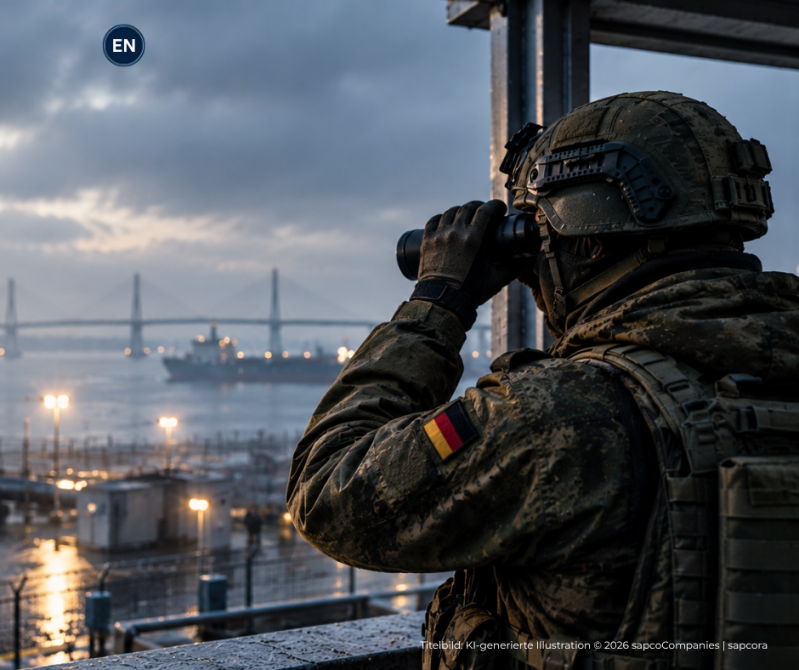
BND Warns of Conflict With Russia as Security Risks Rise. Germany’s BND warns that Russia’s shadow war could escalate into violent conflict, while stressing there are no signs of an imminent major attack on NATO.
Kommentar hinzufügen
Kommentare