

Category: Technology & AI
Format: Analysis
Author: Sinisa Brkic (sb)
French AI infrastructure company Sesterce has announced plans to invest more than €10 billion in a major computing campus in Finland, transforming a former paper mill into a potential hub for advanced artificial intelligence. The project underscores Europe's growing competition for AI infrastructure and Finland's appeal to international technology investors. Yet the ambitious proposal comes at a time of increasing scrutiny over the financial, environmental, and energy demands of large-scale data centers.
A Major AI Investment Planned for Central Finland
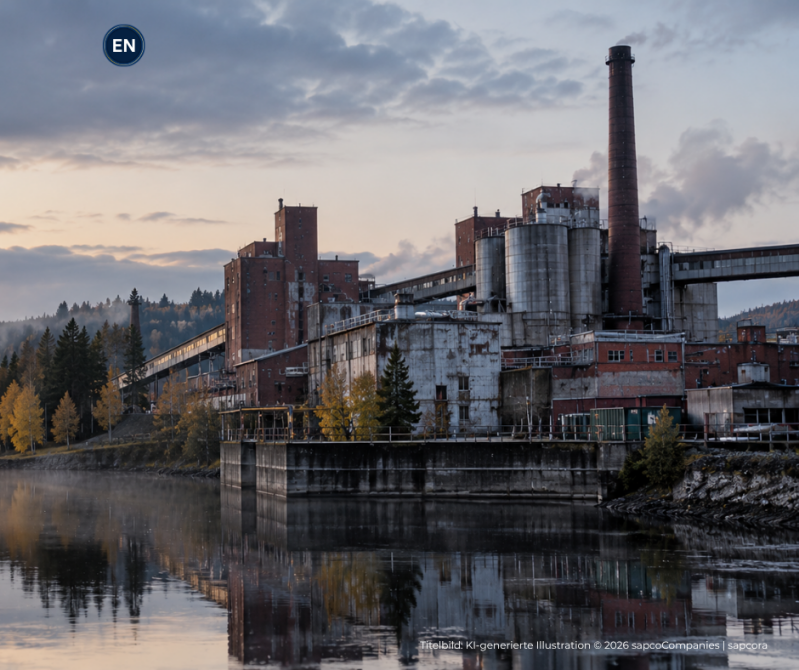
French artificial intelligence infrastructure company Sesterce announced on October 8, 2026, plans to develop a computing campus worth more than €10 billion in Jämsä, central Finland. The proposed facility would occupy the former Kaipola paper mill, bringing a new industrial purpose to a location where paper production ended in early 2021. The investment would rank among the largest AI infrastructure projects announced in Finland, reflecting the rapidly increasing demand for computing capacity capable of supporting advanced artificial intelligence systems. Unlike conventional digital businesses, these facilities require extensive physical infrastructure, substantial electricity supplies, specialized cooling systems, and highly reliable network connections. Sesterce intends to begin construction of the first phase before the end of 2026, initially developing 200 megawatts of electrical capacity. A second phase would increase the planned capacity to 600 megawatts, while the company's broader long-term strategy envisages more than one gigawatt of AI infrastructure capacity across Finland. The scale of the proposal is significant, but the investment remains at the planning stage. Its ultimate realization will depend on securing the necessary financing, regulatory approvals, electrical infrastructure, and commercial commitments.
A Former Paper Mill Becomes a Strategic Asset
The decision to locate the campus at Kaipola illustrates how Europe's industrial landscape is being reshaped by the growing physical demands of artificial intelligence. Sites once developed for manufacturing are attracting renewed interest because of their existing electricity connections, buildings, water infrastructure, and established transportation networks. The Kaipola paper mill operated for decades as part of Finland's established forestry and manufacturing industry. Its closure deprived the surrounding area of a major industrial operation, leaving substantial infrastructure in need of a new economic purpose. Sesterce's proposal seeks to use these existing assets rather than develop an entirely new location. The company's chief executive, Youssef El Manssouri, has emphasized the importance of preserving the site's industrial identity while adapting its infrastructure to the requirements of modern computing. According to Sesterce, construction could support approximately 2,000 jobs, with around 300 positions expected once the campus becomes fully operational. The company also intends to prioritize Finnish contractors and subcontractors, potentially extending the economic benefits to regional engineering and construction businesses. These figures remain projections rather than guaranteed employment outcomes. The actual number of jobs and the scale of local economic activity will depend on the project's implementation, the pace of construction, and the facility's eventual operating capacity.
Why Finland Is Attracting International Technology Investors
Finland is becoming an increasingly important location in Europe's data center expansion. Its relatively cool climate, established electricity infrastructure, and availability of former industrial sites provide advantages for companies seeking locations capable of supporting energy-intensive computing operations. The country has already attracted substantial investment commitments from international technology companies. On September 9, Google announced plans to invest at least €13 billion in Finnish digital infrastructure, energy projects, and related partnerships over 2027 and 2028. That program includes developments associated with Hamina, Kajaani, Muhos, and Vaala, demonstrating the geographic scope of Finland's emerging data center industry. Google's existing facility in Hamina also occupies a former paper mill, providing an established example of industrial property being converted into digital infrastructure. The attraction of Finland, however, extends beyond climate and available land. Electricity costs, access to suitable grid connections, regulatory predictability, and the potential for long-term energy agreements have become increasingly important considerations in deciding where major computing facilities should operate. For technology companies, the question is no longer simply whether a country offers favorable conditions for investment. It is whether the location can accommodate sustained growth in electricity demand while maintaining reliable energy supplies and acceptable operating costs. Finland's ability to manage these requirements will be central to its long-term position in the European AI infrastructure market.
Google's Environmental Dispute Exposes the Challenges
The rapid expansion of data center investment in Finland has also brought environmental oversight into sharper focus. On October 6, Finnish authorities intervened in preparatory work associated with two Google data center projects in Muhos and Kajaani, citing the need to complete mandatory environmental impact assessments. The intervention followed substantial land preparation activities, including forest clearing, before the relevant environmental review processes had been completed. The Finnish Licensing and Supervision Agency instructed the project developer, Tuike Finland, to suspend preparatory activities that significantly alter the environment, with October 23 established as the latest deadline for compliance. The authority's intervention concerns the specified activities at the two planned locations, rather than Google's existing data center operations in Finland. Google has maintained that its forestry activities complied with applicable forestry regulations and has pointed to its environmental management and restoration commitments. Environmental organizations, meanwhile, have raised concerns about the consequences of extensive land clearing associated with the country's expanding data center industry. The dispute demonstrates that substantial investment announcements do not remove the need for environmental scrutiny. Even projects promoted as supporting technological progress and cleaner energy systems must satisfy regulatory requirements concerning land use, biodiversity, and environmental impact. For Sesterce, the regulatory context is particularly relevant. Although the proposed Kaipola campus would reuse an existing industrial site, redevelopment does not eliminate the need for appropriate assessments, permits, and environmental safeguards. The Finnish authorities' actions involving Google also illustrate why projected construction schedules should be treated cautiously until the necessary administrative and technical conditions have been satisfied.
Electricity Supply Will Shape the Project's Economics
The electrical requirements of the proposed Sesterce campus represent one of its most consequential characteristics. An initial connection capacity of 200 megawatts would already constitute a substantial industrial electricity requirement, while expansion to 600 megawatts would place significantly greater demands on the surrounding energy infrastructure. These figures represent proposed capacity rather than guaranteed continuous consumption. Nevertheless, they demonstrate the importance of transmission networks, reliable power generation, and long-term electricity planning in determining the feasibility of major AI computing facilities. Sesterce has announced a commitment to support additional renewable electricity generation in Finland. For every megawatt consumed by its campus, the company says it will enable an equivalent megawatt of newly constructed renewable generation capacity within the Finnish electricity grid, with the commitment to be fulfilled within ten years of the facility becoming operational. The proposal could encourage additional renewable energy investment, but its environmental implications require careful interpretation. Matching installed renewable generation capacity with a data center's electricity demand does not necessarily establish that renewable power will be available during every hour of operation. Electricity production from wind and solar installations fluctuates, while advanced computing facilities require dependable power supplies. Grid capacity, energy storage, flexible consumption arrangements, and the availability of other generation sources will therefore remain important factors. Sesterce also intends to use closed-loop liquid cooling systems supported by collected rainwater and recycled water. According to the company, drinking water would not be used for cooling, while environmental commitments would be monitored through independent audits and annual public reporting. The company has additionally announced plans for a €10 million community fund, to be established when the Jämsä campus begins operations. The fund is intended to support local projects selected in cooperation with the city and its residents. These commitments form part of the proposed development model, but their effectiveness cannot yet be independently established. Actual operating data will be necessary to assess whether the campus delivers the promised environmental and community benefits.
The Financing Behind the €10 Billion Plan Remains Unclear
Despite the magnitude of the proposed investment, Sesterce has not publicly disclosed the financing structure supporting the project. The company has also declined to identify the anchor customer it says has already committed to the planned facility. Sesterce maintains that the development is supported by identifiable commercial demand and that a customer agreement has been secured. Such an agreement could provide an important foundation for infrastructure financing, particularly where construction depends on long-term commitments to purchase computing capacity. However, the existence of an anchor customer does not establish that the full investment has been financed. Projects of this magnitude typically require substantial equity commitments, debt financing, contractual guarantees, and carefully structured development arrangements. The absence of disclosed financing partners leaves significant questions about how the investment will be funded and how financial risks will be distributed among the parties involved. The distinction matters because the more than €10 billion figure represents announced investment intentions, not capital already spent or independently verified as fully available for construction. The project's commercial prospects will also depend on the cost of specialized computing hardware, electricity pricing, equipment procurement, and the pace at which contracted computing capacity can become operational. For an investment of this size, the announcement is only an initial milestone. Financial commitments, completed agreements, construction progress, and operational delivery will provide more meaningful evidence of the project's viability.
Europe's AI Independence Requires More Than New Facilities
Sesterce's plans carry implications beyond Finland's domestic economy. They also raise questions about Europe's ability to strengthen its position in an artificial intelligence industry heavily influenced by international technology providers. European policymakers and technology companies increasingly recognize computing infrastructure as a strategic industrial resource. Access to advanced processors and large-scale computing capacity can influence research capabilities, commercial innovation, and the competitiveness of emerging AI businesses. Building additional infrastructure within the European Union could improve regional capacity and create opportunities for European companies seeking access to powerful computing systems. It could also support the development of technical expertise, specialized services, and related industries. However, locating a data center in Europe does not automatically establish European technological independence.
Much of the advanced semiconductor technology required for AI computing is designed or manufactured through international supply chains. The software platforms, networking systems, and specialized hardware used inside European facilities may remain dependent on companies headquartered outside the European Union. Ownership and commercial access are equally important considerations. A computing campus based in Finland could primarily serve customers outside Europe, meaning that its location would not necessarily translate into greater European control over the AI models and services operating within it. Sesterce's decision not to identify its anchor customer therefore has significance beyond the project's immediate commercial arrangements. If the facility serves European AI developers and research institutions, it could contribute directly to improving regional computing access. If its capacity is largely reserved for international technology corporations, the economic benefits for Finland could remain considerable while the contribution to European technological independence would be more limited. The distinction is fundamental to assessing whether large infrastructure investments strengthen Europe's own technological capabilities or primarily expand the global operating footprint of established international companies.
Industrial Investment Is Changing the Geography of AI
The proposed Kaipola development reflects a broader shift in how artificial intelligence is influencing industrial investment decisions. Traditional technology centers built their competitive advantages around research universities, software development, entrepreneurial ecosystems, and access to capital. AI infrastructure introduces another set of requirements, placing greater emphasis on electricity networks, physical facilities, construction capacity, and energy availability. This creates opportunities for regions that have not historically been associated with major technology development. Former industrial locations may possess precisely the infrastructure required to accommodate substantial computing facilities. The economic effects, however, require a more nuanced assessment than the headline investment figures suggest. Data centers are capital-intensive facilities, but their permanent employment requirements can be relatively modest compared with the number of workers needed during construction. The long-term economic value for host communities therefore depends on factors extending beyond direct job creation. Local procurement, electricity costs, tax contributions, infrastructure improvements, and the development of related technical businesses will influence whether these investments generate durable regional benefits. There is also the question of opportunity costs. Electricity and grid capacity allocated to large computing facilities may not be available on the same terms to other industrial consumers, particularly if network expansion fails to keep pace with demand. The economic case for a major data center must therefore consider its relationship with the wider energy system and industrial economy, not simply the amount of capital associated with its construction. For Finland, attracting international investment remains an important opportunity. Managing its consequences will become an equally important policy challenge as the number and scale of proposed projects increase.
A Major European Investment Still Facing Its Decisive Test
Sesterce's proposed €10 billion AI campus illustrates the speed at which artificial intelligence is reshaping industrial investment across Europe. Its planned transformation of the Kaipola paper mill combines traditional industrial infrastructure with the extraordinary computing demands of a rapidly expanding technology sector. The development could create new economic opportunities for Jämsä, strengthen Finland's position in the European data center market, and contribute additional computing capacity within the European Union. Its renewable energy commitments and proposed reuse of an established industrial site also offer a potentially distinctive approach to large-scale computing infrastructure. Yet the most important questions remain unresolved. The complete financing structure has not been disclosed, the anchor customer remains unidentified, and the proposed development must still pass through construction, regulatory, and operational milestones. Recent regulatory intervention involving Google's Finnish projects reinforces the importance of distinguishing investment announcements from completed and operational infrastructure. It also demonstrates that environmental compliance, electricity supply, and public accountability cannot be treated as secondary considerations in the expansion of AI computing capacity. Europe's technological ambitions increasingly depend on the ability to convert investment proposals into functioning infrastructure that generates lasting economic value. For Sesterce, the proposed campus offers an opportunity to become an important participant in that transformation. Whether it achieves that position will depend less on the size of the announced investment than on the company's ability to finance, construct, and operate the facilities it has promised. The real measure of Europe's AI infrastructure expansion will not be how many billions companies announce, but how much reliable computing capacity they deliver and who ultimately benefits from it.
French AI Firm Sesterce Plans €10 Billion Campus in Finland. French AI company Sesterce plans a €10 billion data center campus in Finland as Europe's infrastructure ambitions face financing and energy challenges.
Kommentar hinzufügen
Kommentare