

Section: International
Format: News Article
Author: Sinisa Brkic (sb)
Date: October 19, 2026
The United Nations World Food Programme is cutting monthly food assistance for approximately 500,000 Palestinians in Gaza as a severe funding shortage forces the agency to scale back humanitarian operations. Food rations, cash assistance, and daily hot meals are also being reduced, placing additional pressure on families already struggling to meet their basic needs. The reductions come as roughly two-thirds of Gaza's population continues to face crisis-level food insecurity or worse.
UN Food Assistance Cut by Nearly One-Third
The United Nations World Food Programme (WFP) confirmed on October 19, 2026, that funding shortages are forcing major reductions in its humanitarian operations in the Gaza Strip. The organization is reducing the number of people receiving monthly food assistance from approximately 1.6 million to 1.1 million, leaving half a million Palestinians without the regular support they previously received. The decision represents a reduction of more than 30 percent in the agency's monthly caseload. It comes at a time when large sections of Gaza's population remain dependent on humanitarian assistance following years of conflict, extensive infrastructure destruction, and prolonged economic disruption. The loss of WFP assistance does not necessarily mean that all affected households will be entirely without food or access to other humanitarian programs. It does, however, remove a significant source of regular support from families whose ability to purchase or produce sufficient food remains severely constrained. The latest announcement marks a significant development in Gaza's humanitarian response. Financial pressures that had previously prompted warnings about future reductions have now resulted in substantial cuts to assistance across the territory.
Daily Hot Meals Reduced by 100,000
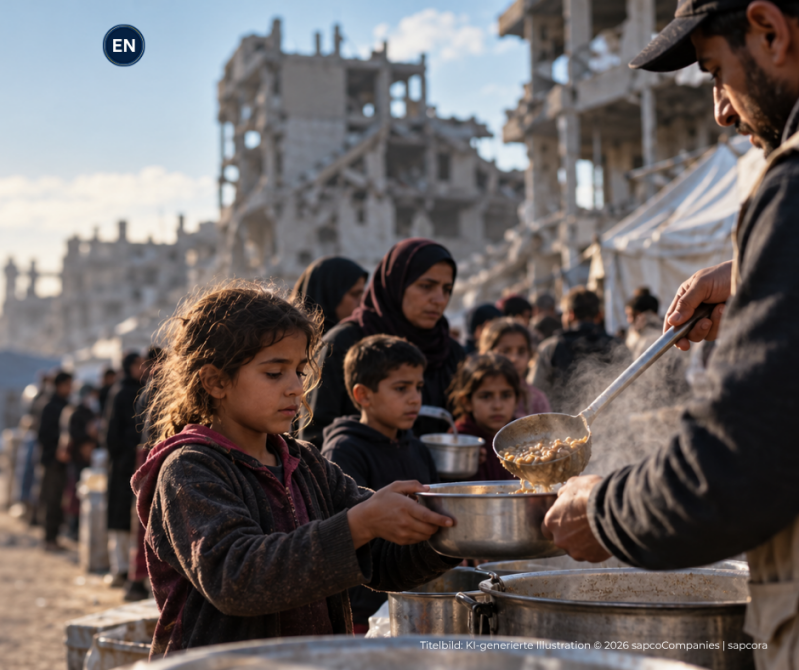
The reductions extend beyond the number of people receiving monthly assistance. WFP has also cut food rations by half and reduced the number of hot meals distributed each day from approximately 250,000 to 150,000, eliminating 100,000 prepared meals from its daily operations. Some families living in difficult-to-reach areas are now receiving a hot meal every other day instead of daily. Such distributions are particularly important for displaced households that lack functioning kitchens, reliable cooking fuel, or adequate facilities to prepare food independently. Financial assistance is also being reduced. According to WFP, approximately 75,000 families are facing a 40 percent reduction in the value of their cash assistance, further limiting their ability to purchase essential supplies through local markets. These reductions affect households in different ways. Food parcels provide basic supplies, community kitchens serve people unable to prepare meals themselves, and cash transfers allow families to purchase available products according to their immediate needs. Reducing all three forms of assistance simultaneously leaves vulnerable households with fewer options. For families with little or no reliable income, the loss of regular humanitarian support can make an already precarious food situation considerably more difficult to manage.
Around 1.4 Million People Face Severe Food Insecurity
The funding cuts are taking effect against an already critical humanitarian backdrop. WFP estimates that approximately 1.4 million people in Gaza, representing roughly two-thirds of the population, face crisis-level food insecurity or worse. Within that group, around 200,000 people are experiencing emergency levels of food insecurity. These classifications reflect serious difficulties in obtaining sufficient food and, at the most severe levels, an increased risk of acute malnutrition and other potentially life-threatening consequences. Although humanitarian assistance expanded following the October 2025 ceasefire, improvements in food security remain fragile. Much of the progress achieved over the past year has depended on sustained international support rather than a broad recovery of Gaza's economy or food production capacity. The latest reductions therefore threaten to weaken gains that required considerable humanitarian resources to achieve. Their full impact remains uncertain and will depend on how long the cuts continue, whether alternative assistance is available, and how quickly additional funding can be secured.
WFP Needs $450 Million to Sustain Operations
The financial shortfall has become an immediate operational challenge for one of the largest humanitarian food providers in Gaza. WFP says it urgently requires approximately $450 million over the next six months to maintain critical assistance programs in Gaza and the Israeli-occupied West Bank. The funding requirement covers operations in both territories and should not be interpreted as a financial appeal exclusively for Gaza. It reflects the wider pressure facing humanitarian programs that support Palestinians affected by conflict, displacement, and economic insecurity. WFP had already warned in September that insufficient funding was forcing reductions in its West Bank operations and threatening further cuts in Gaza. The latest announcement confirms that those financial pressures have continued to intensify despite persistent humanitarian needs. Carl Skau, the agency's acting executive director, has warned that living conditions in Gaza remain extremely difficult more than a year after the ceasefire agreement. With winter approaching, the organization is calling for renewed international contributions to prevent further deterioration and preserve earlier improvements in food security. The financing problem also reflects broader pressures on international humanitarian assistance. WFP is responding to multiple emergencies worldwide, while contributions from traditional donors have declined and the costs of providing assistance remain substantial.
Funding Shortages and Humanitarian Access Remain Distinct Challenges
The latest cuts highlight two separate but closely connected problems affecting humanitarian operations in Gaza. One concerns the availability of financial resources, while the other involves the conditions under which humanitarian organizations can transport, distribute, and deliver assistance. Funding shortages determine how much food an organization can purchase, how many households it can support, and whether community kitchens and cash assistance programs can continue operating. Access restrictions, damaged roads, logistical difficulties, and limitations on the movement of goods can separately affect the delivery of that assistance. WFP has identified insufficient funding as the immediate reason for its latest reductions. The organization has also warned that restrictions affecting the entry of certain goods and equipment continue to complicate recovery efforts and reduce the effectiveness of available resources. These distinctions matter because the problems require different responses. Additional donor contributions could allow WFP to restore or expand food distributions, while improvements in humanitarian access and infrastructure would help organizations use those resources more effectively. Neither challenge can be considered in isolation from Gaza's wider economic conditions. Humanitarian assistance remains essential partly because the territory's capacity to sustain ordinary economic activity has not recovered sufficiently to meet the needs of its population.
A Ceasefire Has Not Restored Economic Security
The reductions come approximately one year after the October 2025 ceasefire agreement, which created conditions for expanded humanitarian deliveries and was intended to support a broader stabilization process. Despite improvements in access and emergency assistance, reconstruction has made limited progress, and extensive damage continues to affect civilian life. Homes, businesses, agricultural infrastructure, and essential public services have suffered severe destruction. For many households, employment opportunities and reliable sources of income remain scarce, making international food assistance an essential component of daily survival. This dependence leaves families particularly exposed when humanitarian financing declines. Even where food is available in local markets, limited purchasing power can prevent households from obtaining sufficient quantities or maintaining an adequate and nutritious diet. The problem therefore extends beyond the immediate availability of food supplies. A lasting reduction in humanitarian dependence would require the restoration of basic services, functioning markets, productive employment, and infrastructure capable of supporting economic recovery. Until those conditions improve, reductions in humanitarian assistance risk transferring the consequences of international funding shortages directly to households with little capacity to absorb them.
International Donors Face an Immediate Test
WFP has not established how long the latest reductions will remain in place. Additional financial contributions could allow the organization to increase assistance again, but the timing and extent of any restoration will depend on funding commitments and operational capacity. For affected families, the consequences are already becoming visible. Hundreds of thousands are losing monthly assistance, food rations have been reduced, cash support has been cut, and community kitchens are providing significantly fewer meals each day. The October 19 announcement represents a decisive change in the humanitarian situation. What had previously been a warning about insufficient financing has become a measurable reduction in essential assistance for people already living under severe economic and humanitarian pressure. The immediate priority is to prevent further losses in food assistance while protecting the fragile improvements achieved since the ceasefire. The longer-term challenge is to rebuild the economic conditions that would allow Gaza's population to depend less heavily on international relief. For now, however, the central issue is unmistakable. The need for humanitarian assistance remains exceptionally high, while the resources available to provide it are shrinking. Unless that imbalance is addressed, the burden will continue to fall on the households least able to withstand further reductions.
Gaza: 500,000 Lose UN Food Aid as WFP Funding Crisis Deepens. The UN World Food Programme is cutting food aid for 500,000 people in Gaza, reducing meals and cash assistance amid a severe funding shortage.
Kommentar hinzufügen
Kommentare