

Category: Geopolitics
Format: Background
Author: Sinisa Brkic (sb)
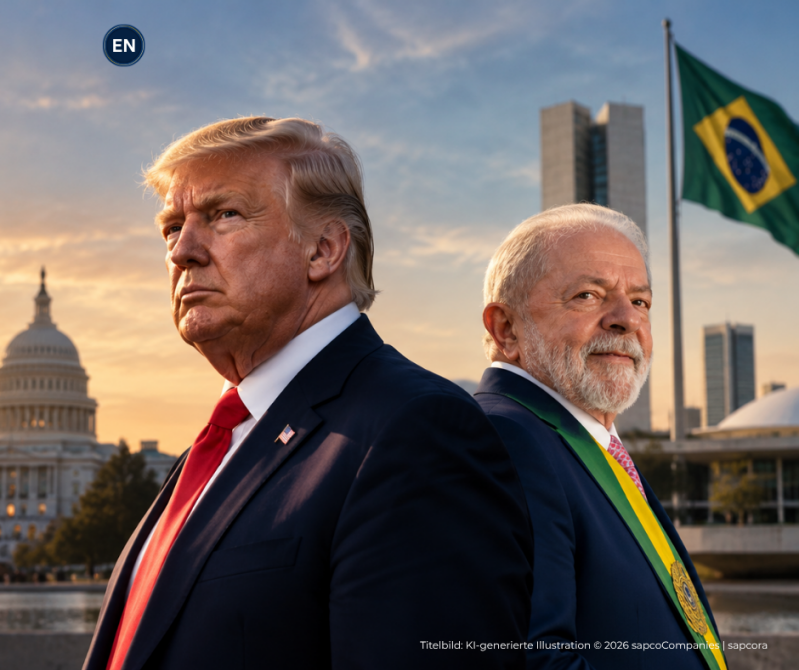
A Reuters investigation has raised serious questions about the Trump administration's role in Brazil's presidential election. According to 10 current and former U.S. officials, two senior State Department advisers pursued policies intended to weaken President Luiz Inácio Lula da Silva and help return the Bolsonaro family to power. The allegations, published just hours before Sunday's decisive runoff, cast new light on Washington's use of sanctions and diplomatic influence in Latin America's largest democracy.
A Political Strategy Inside the State Department
On the eve of Brazil's presidential runoff, an investigation published by Reuters has revealed allegations of a coordinated effort within the U.S. State Department to influence the country's political future. The reporting identifies Darren Beattie, a senior adviser responsible for Western Hemisphere affairs, and Ricardo Pita, another senior State Department official, as central figures in a campaign allegedly designed to restore the political influence of former President Jair Bolsonaro. According to 10 current and former American government officials with direct knowledge of the matter, both men supported punitive measures against Brazil that were intended to weaken Lula's administration and improve the Bolsonaro family's political prospects. The allegations concern decisions that extend well beyond routine diplomatic engagement. They involve American financial sanctions, security designations and reported instructions to U.S. diplomats regarding Brazil's presidential candidates. Although the government measures themselves are documented, the political motivations attributed to their advocates remain allegations based on the accounts obtained by Reuters. The investigation does not establish that the White House directly ordered an electoral influence campaign.
From Jair Bolsonaro to His Son Flávio
The reported strategy initially centered on Jair Bolsonaro, whose defeat in the 2022 presidential election and subsequent legal proceedings had fundamentally altered Brazil's political landscape. Three officials told Reuters that Beattie and Pita instructed American diplomats in Brazil that Washington's policy was to support the former president's return to power, even though he had already been barred from seeking elected office. In September 2025, Brazil's Supreme Court convicted Bolsonaro of plotting a coup to remain in power following his electoral defeat. He received a 27-year prison sentence, effectively ending his immediate prospects of returning to the presidency. According to the same officials, Beattie and Pita subsequently redirected their efforts toward Bolsonaro's son, Senator Flávio Bolsonaro, who emerged as the leading conservative challenger to Lula. The advisers allegedly instructed American embassy personnel to avoid engaging with other conservative presidential contenders who might threaten Flávio Bolsonaro's candidacy. Such instructions, if accurately described, would represent a significant departure from conventional diplomatic practice. Rather than maintaining relationships across Brazil's political spectrum, American officials would have been favoring one particular political faction. The investigation leaves unresolved whether these reported instructions reflected an independently developed strategy or a policy approved at higher levels of the administration.
Sanctions Against a Supreme Court Justice
One of the most consequential episodes involves Alexandre de Moraes, a justice of Brazil's Supreme Federal Court who played a central role in the investigation and prosecution of Jair Bolsonaro. In July 2025, the United States imposed sanctions against Moraes under the Global Magnitsky human rights sanctions framework. Washington accused the Brazilian justice of restricting freedom of expression and abusing judicial authority through decisions affecting political speech and social media platforms. Moraes has defended his judicial actions as necessary to combat disinformation and protect Brazil's democratic institutions. The Reuters investigation introduces new allegations concerning the political calculations behind Washington's decision. According to a former U.S. official familiar with the discussions, Beattie contacted the Treasury Department's Office of Foreign Assets Control to advocate sanctions against Moraes. The effort followed lobbying by members of the Bolsonaro family, particularly Jair Bolsonaro's son Eduardo, who had publicly supported American action against the justice. The sanctions were formally justified by allegations involving freedom of expression. However, the officials interviewed by Reuters described broader political objectives connected to weakening Lula and strengthening the Bolsonaro family. The distinction is central to understanding the controversy. A government may impose sanctions for legally defined foreign policy reasons, but the use of those powers to influence another country's electoral competition raises different questions about political interference and national sovereignty. The investigation provides accounts of alleged political intentions behind the sanctions. It does not independently establish that those intentions were the sole or decisive basis for the American government's action.
Organized Crime Becomes a Political Instrument
The investigation also examines Washington's decision to designate two of Brazil's most powerful criminal organizations, Primeiro Comando da Capital and Comando Vermelho, as foreign terrorist organizations in May 2026. Both groups operate extensive criminal networks and pose serious challenges to Brazilian law enforcement. Their involvement in drug trafficking and organized violence has made public security a major issue in Brazil's political debate. According to Reuters, members of the Bolsonaro family advocated the American designations because they believed such measures could damage Lula's standing on crime and security. Pita reportedly encouraged State Department officials to examine whether mechanisms previously used to designate Mexican criminal organizations could also be applied to Brazilian gangs. In May 2026, Flávio Bolsonaro met with Beattie and Deputy Secretary of State Christopher Landau in Washington to discuss the proposed classifications. The State Department announced the designations the following day. The close timing between the meeting and the official announcement raises questions about the relationship between political lobbying and American security policy. However, Reuters could not determine how much influence Beattie or Pita exercised over the final decision. The available evidence does not establish that the classifications were adopted primarily to benefit Bolsonaro's presidential campaign. The episode nevertheless illustrates how security policy can acquire electoral significance when criminal organizations, diplomatic measures and domestic political competition intersect.
Washington Defends Its Actions
The U.S. State Department has defended the administration's actions as legitimate measures intended to protect American interests, combat narcotics trafficking and safeguard freedom of expression. Responding to Reuters, department spokesman Tommy Pigott maintained that American measures concerning drug trafficking and free speech were designed to protect the rights and lives of U.S. citizens. He also emphasized that Brazilian voters have the right to choose their leaders through free and fair elections. The department did not directly address the specific internal instructions and political objectives attributed to Beattie and Pita. The White House declined to comment and referred questions to the State Department. Lula has repeatedly warned Washington against interfering in Brazil's domestic political affairs. He has also accused his political opponents of cooperating with the Trump administration in ways that threaten Brazilian sovereignty. The dispute exposes a fundamental tension between legitimate foreign policy interests and the political consequences of exercising American influence abroad. Washington is entitled to pursue economic, diplomatic and national security objectives. The controversy arises from allegations that some officials sought to use those instruments to influence the political fortunes of a favored family in another democracy.
When American Pressure Backfires
The investigation also highlights the possibility that several American measures produced consequences opposite to those allegedly intended. In July 2025, Washington announced additional restrictions targeting Brazil, including visa revocations affecting eight Supreme Court justices and tariffs reaching 50 percent on Brazilian goods. The Trump administration linked parts of its pressure campaign to what it described as the persecution of Jair Bolsonaro. According to Brazilian political analysts cited by Reuters, however, the economic measures strengthened Lula's position by allowing him to present himself as a defender of national sovereignty against external pressure. The sanctions and visa restrictions also failed to prevent Brazil's judiciary from continuing its proceedings against Bolsonaro. Economic opposition emerged from major businesses dependent on trade between the United States and Brazil, contributing to pressure for a less confrontational approach. Washington subsequently reduced portions of its trade restrictions. In December 2025, the United States removed Moraes from its sanctions list without providing a public explanation for the decision. The reported campaign encountered another setback in March 2026, when Brazilian authorities prevented Beattie from entering the country for a proposed visit to Jair Bolsonaro in prison. These developments complicate claims about the effectiveness of American pressure. Even if officials intended to weaken Lula politically, the available evidence does not demonstrate that their efforts achieved that objective.
Trump's Personal Involvement Remains Unproven
The most politically sensitive question concerns the extent to which President Donald Trump and Secretary of State Marco Rubio were aware of, authorized or directed the reported strategy. Reuters was unable to determine whether Beattie and Pita acted under specific instructions from either official. Trump has repeatedly expressed sympathy for Jair Bolsonaro and criticized the Brazilian authorities' treatment of the former president. Following the first round of the 2026 presidential election, he also praised Flávio Bolsonaro's performance. Those statements establish political affinity with the Bolsonaro family, but they do not prove that Trump personally authorized the measures described in the investigation. Rubio's State Department has pursued an assertive policy across Latin America, particularly toward governments regarded as hostile to American strategic interests. Yet that broader policy orientation cannot be treated as evidence of direct involvement in the specific actions attributed to Beattie and Pita. Establishing responsibility at the highest levels of the administration would require further evidence concerning internal instructions, decision-making procedures and the authorization of individual government measures. For now, the distinction between documented policy decisions, reported political objectives and proven presidential involvement remains essential.
A Presidential Election Under International Scrutiny
The allegations arrive at a decisive moment for Brazil. In the October 4 first round, Flávio Bolsonaro received 47.03 percent of valid votes, narrowly ahead of Lula, who secured 45.16 percent. Neither candidate obtained the majority required for an outright victory, setting up the October 25 runoff. The election will determine the political direction of Latin America's largest economy and influence Brazil's relationship with Washington at a time of considerable regional uncertainty. A Bolsonaro victory could bring the country closer to Trump's political priorities and foreign policy orientation. Lula's reelection would preserve an administration that has increasingly challenged American pressure over Brazilian judicial and domestic political affairs. The implications extend beyond bilateral relations. Brazil remains an influential participant in international institutions, regional diplomacy and emerging economic partnerships, making its political direction relevant well beyond South America. Against that backdrop, allegations that American officials sought to influence the presidential contest carry particular significance. The investigation does not establish that Washington altered the election's outcome. Nor does it demonstrate that the alleged efforts were coordinated directly by Trump. What it does provide is a detailed account of reported internal actions that deserve scrutiny because of the powers involved and the potential consequences for democratic sovereignty.
The Boundary Between Diplomacy and Interference
Economic sanctions, diplomatic restrictions and security designations are among the most powerful instruments available to the United States in its relations with other countries. Their legitimacy depends not only on the legal authority under which they are imposed, but also on the purposes they serve and the political circumstances surrounding their implementation. The allegations surrounding Beattie and Pita raise a question that reaches beyond Brazil's immediate presidential contest: whether American foreign policy instruments were employed to advance the interests of political allies rather than exclusively pursue publicly stated national objectives. The Reuters investigation has not resolved that question conclusively. It has, however, identified specific officials, reported internal instructions and established government decisions that make the issue difficult to dismiss as ordinary diplomatic disagreement. Brazilian voters will determine who governs their country. The unresolved issue for Washington is whether officials entrusted with American foreign policy attempted to influence that decision through the power of the United States government. The answer matters beyond the result of Sunday's election. It concerns the credibility of American diplomacy and the boundaries that should separate legitimate international influence from interference in another democracy's political future.
Brazil Election: Trump Advisers Face Interference Allegations. A Reuters investigation raises questions about whether Trump administration advisers used U.S. sanctions and diplomatic pressure to influence Brazil's election.
Kommentar hinzufügen
Kommentare