

Category: Justice & Law
Format: Analysis
Author: Sinisa Brkic (sb)
Publication Date: November 1, 2026
A federal judge in Chicago has allowed key consumer deception claims against McDonald's to move forward, rejecting the company's attempt to dismiss a lawsuit over its McRib sandwich in its entirety. At the center of the dispute is whether the sandwich's name, distinctive shape and advertising create a misleading impression about the meat it contains. The October 30 ruling raises a broader question for the food industry: How much can a product's presentation promise before marketing becomes legally deceptive?
A Legal Setback for McDonald's
McDonald's will have to continue defending itself against allegations that its McRib sandwich misleads customers about the type of pork used in the product. On October 30, 2026, U.S. District Judge April M. Perry, sitting in the Northern District of Illinois, declined to dismiss the proposed class action in its entirety, allowing substantial portions of the case to proceed. The decision represents a procedural setback for the fast-food company, although it does not establish that any deception occurred. The court concluded that the plaintiffs had presented sufficiently plausible allegations to warrant further consideration rather than having their central claims rejected at this early stage. The lawsuit, filed by four consumers in December 2025, challenges the relationship between the McRib's branding and its actual ingredients. The plaintiffs contend that the sandwich's name, rib-shaped pork patty and promotional presentation lead customers to expect genuine pork rib meat, a cut they argue has a higher commercial value than the meat allegedly used in the product. McDonald's disputes the allegations and maintains that its marketing accurately represents the sandwich. The company has also rejected specific claims about the use of certain animal organs in the McRib.
The Question Behind the McRib's Name
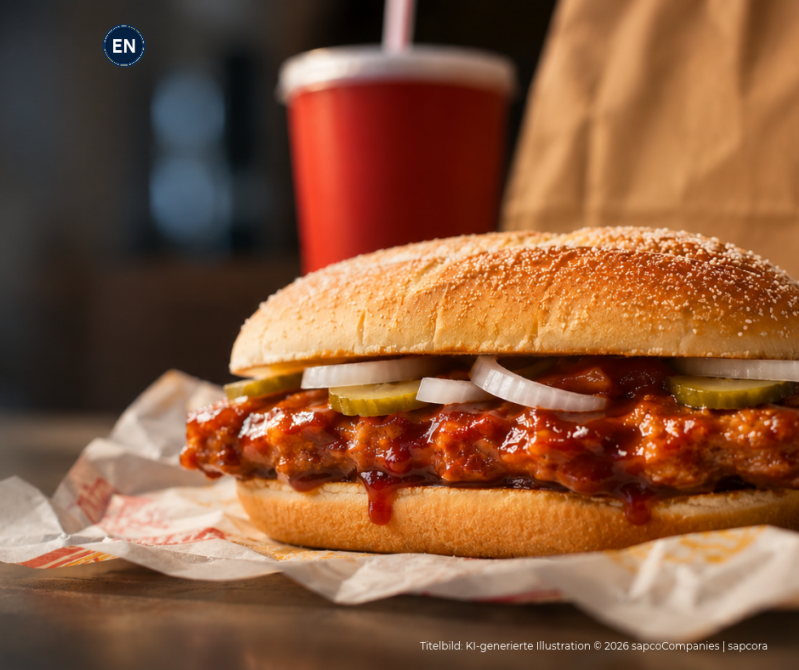
The dispute involves one of McDonald's most recognizable specialty products. Introduced in 1981 and periodically returned to menus as a limited-time offering, the McRib has developed a distinctive identity built around its barbecue flavor, unusual shape and recurring availability. Its name and appearance now form the basis of the legal challenge. The plaintiffs argue that the patty's molded ridges deliberately resemble a rack of pork ribs, reinforcing the impression that the sandwich contains meat from that particular part of the animal. According to the complaint, customers paid more than they otherwise would have because they believed they were purchasing a product containing rib meat. The plaintiffs further allege that the McRib instead uses less expensive pork cuts and products, including pork shoulder and certain organ meats. Those allegations remain disputed. McDonald's states that the sandwich is made with pork and specifically denies that the patty contains heart, tripe or stomach. The precise composition of the meat, including the cuts relevant to the lawsuit, has not been conclusively determined by the court. The distinction is important because the central issue is not simply whether the McRib contains pork. It is whether the company's product name and presentation could reasonably lead consumers to expect a particular cut of pork that they would consider more valuable.
Why the Judge Rejected the Company's Central Defense
McDonald's argued that reasonable consumers would not interpret the McRib's name and appearance as a guarantee that the sandwich contains pork rib meat. The company also pointed to publicly available ingredient information identifying pork as the product's principal meat ingredient. Judge Perry declined to accept the company's interpretation of consumer expectations as a basis for dismissing the central allegations. At this stage, the court found it premature to conclude that consumers could not reasonably associate the name McRib with actual rib meat. The ruling also addressed the practical circumstances in which consumers make purchasing decisions. Customers buying a relatively inexpensive fast-food sandwich cannot automatically be expected to investigate detailed ingredient information before placing an order. That reasoning could become significant as the litigation develops. It recognizes that product descriptions are not necessarily limited to formal ingredient disclosures and that packaging, names, visual design and advertising may collectively influence what a reasonable customer believes is being sold. The judge also considered the plaintiffs' allegations that the sandwich's rib-like appearance was deliberately emphasized in advertising. Such presentation could be relevant to an allegation of intentional deception, although establishing fraudulent intent would require additional evidence.
A Lawsuit That Has Survived, Not a Finding of Fraud
The October 30 decision allows claims involving consumer deception, fraud and unjust enrichment to continue. The court dismissed five other claims without prejudice, leaving open the possibility that the plaintiffs could seek to amend those allegations. This procedural distinction is essential to understanding the ruling. A decision allowing claims to proceed means the allegations have cleared an initial legal threshold. It does not mean the plaintiffs have established that McDonald's violated consumer protection laws. No class has yet been certified, and no damages have been awarded. The court has not determined that McDonald's intentionally misrepresented the McRib's ingredients or that consumers suffered compensable financial losses. The plaintiffs will still need to establish the factual basis for their claims, including the relevant product representations, the ingredients actually used and the extent to which consumers relied on the allegedly misleading presentation. McDonald's retains the opportunity to contest those claims and present evidence supporting its position. The company has described the lawsuit as meritless and maintains that it has been transparent about the sandwich's ingredients.
Where Food Marketing Meets Consumer Protection
The significance of the McRib litigation extends beyond the composition of a single sandwich. It highlights a recurring tension in consumer marketing between the creative freedom companies enjoy when naming products and their legal obligation not to create materially misleading impressions. Food manufacturers routinely use visual presentation, descriptive names and carefully designed product identities to communicate taste, quality and value. Those techniques are not inherently deceptive, and a distinctive product name does not automatically constitute a factual promise about every ingredient. The legal question becomes more complicated when several elements of a product's presentation reinforce the same alleged expectation. In the McRib case, the plaintiffs are asking the court to consider the combined effect of a name suggesting ribs, a patty shaped to resemble them and marketing that highlights the product's distinctive appearance. The ruling suggests that those elements cannot necessarily be evaluated in isolation when deciding whether a consumer deception claim is legally plausible. A company may accurately identify a broad ingredient category while still facing questions about the more specific impression its advertising allegedly creates. At the same time, the case does not establish a general requirement that every food product contain precisely what its name might suggest. Whether a particular representation is misleading depends on its context, the applicable consumer protection laws and the evidence concerning reasonable consumer expectations.
The Commercial Stakes of Consumer Expectations
For McDonald's, the immediate legal consequences remain uncertain. The litigation could require further examination of the product's composition, advertising practices and the expectations customers associate with the McRib name. The financial implications are similarly unresolved. The plaintiffs contend that consumers paid a premium based on an allegedly inaccurate understanding of the product, but that theory has not been established as a compensable loss. More broadly, the proceedings illustrate why consumer expectations can become commercially consequential even when a dispute begins with an inexpensive everyday purchase. At the scale of a major restaurant chain, questions about product representations can affect substantial numbers of transactions and raise issues extending beyond any individual customer. For the wider food industry, the case provides a reminder that legal scrutiny may focus not only on what appears in an ingredient list but also on what consumers reasonably understand from the presentation of a product.
The McRib's Legal Test Is Only Beginning
The immediate outcome is clear: McDonald's has not succeeded in bringing the central dispute to an early end. The plaintiffs can continue pursuing their surviving claims, while the company remains entitled to challenge the allegations and defend the accuracy of its marketing. The more consequential questions have yet to be resolved. Whether the McRib's presentation actually misled consumers, whether its ingredients support the plaintiffs' allegations and whether any resulting financial harm can be proven are matters for further litigation. For now, the ruling establishes a narrower but meaningful principle. A recognizable brand name and a publicly available ingredient description do not necessarily prevent a court from examining the broader impression created by a product's marketing. In the McRib case, that distinction has been sufficient to keep a substantial consumer deception lawsuit alive.
McRib Lawsuit: U.S. Judge Allows Claims Against McDonald's to Proceed. A U.S. federal judge allows key McRib deception claims against McDonald's to proceed, raising questions about food advertising and consumer expectations.
Kommentar hinzufügen
Kommentare