

Category: Security
Format: Special Report
Author: Sinisa Brkic (sb)
Date: November 11, 2026
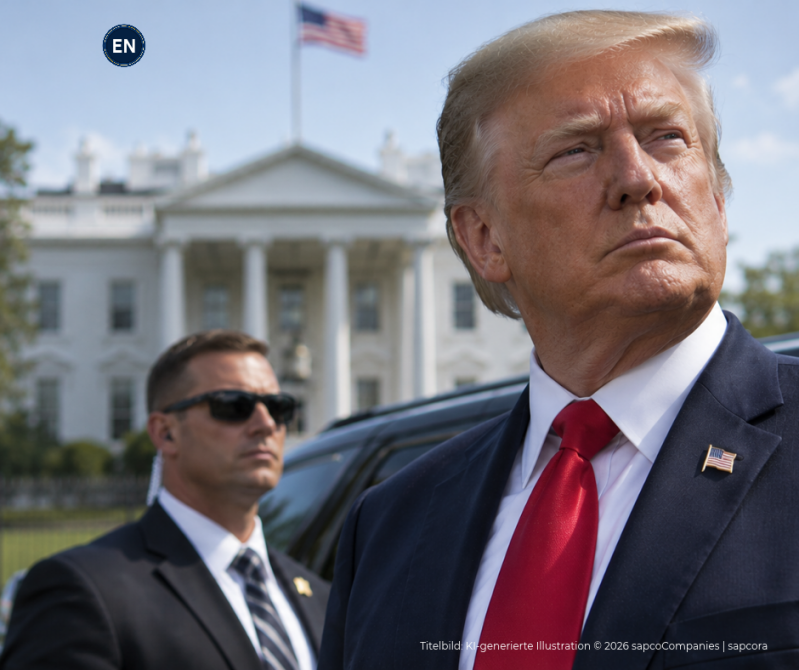
Donald Trump has survived assassination attempts, faced armed suspects, and become the target of alleged foreign-backed plots. Now, new arrests near the White House and criminal investigations across the United States are raising further concerns about the president's safety. A closer examination of the attacks, the perpetrators, and the intelligence warnings reveals a persistent security challenge, even as evidence of an imminent new attack remains absent.
A Growing Challenge for Presidential Security
The threats against Donald Trump have extended far beyond hostile political rhetoric. Over the past decade, the American president has been confronted with armed security incidents, assassination attempts, and criminal conspiracies involving individuals whose alleged intentions ranged from threatening violence to preparing or carrying out attacks. The danger became unmistakable during the 2024 presidential campaign, when Trump was wounded by gunfire at a rally in Pennsylvania. Just two months later, another armed suspect was intercepted at his Florida golf course. Both incidents exposed the extraordinary difficulties of protecting a political figure whose movements, public appearances, and personal security have become matters of intense national attention. The situation has continued into Trump's second presidency. In April 2026, a Secret Service officer was shot during an alleged assassination attempt at a Washington event attended by Trump. More recently, federal authorities have investigated additional death threats and arrested an armed suspect near the White House. These developments establish a serious and recurring threat environment. They do not, however, prove that another assassination attempt is imminent or that the individuals involved belong to a coordinated campaign. Understanding the current danger requires distinguishing established attacks from alleged plots, criminal threats, and intelligence warnings that remain disputed.
June 18, 2016: An Armed Confrontation in Las Vegas
An early indication of the security risks surrounding Trump emerged during his first presidential campaign. On June 18, 2016, Michael Steven Sandford, a 20-year-old British national, attempted to seize a police officer's handgun at a Trump rally inside the Treasure Island casino in Las Vegas, Nevada. Sandford had visited a shooting range the previous day, where he received firearms instruction. During the rally, he approached a uniformed officer, asked about obtaining Trump's autograph, and attempted to remove the officer's weapon from its holster. The officer retained control of the firearm, and Sandford was immediately arrested. The confrontation ended without gunfire or injuries, but it demonstrated how quickly a public campaign appearance could develop into a potentially lethal situation. Investigators examined the circumstances surrounding Sandford's actions and his preparations before the event.
The legal outcome was established on December 13, 2016, when Sandford was sentenced to 12 months and one day in federal prison after pleading guilty to firearms and disruption offenses. Although the incident involved an attempted seizure of a weapon during Trump's appearance, Sandford was not convicted of attempted assassination.
July 13, 2024: The Shooting That Nearly Killed Trump
The most consequential attack against Trump occurred on July 13, 2024, during an outdoor campaign rally in Butler, Pennsylvania. As the former president addressed supporters, a gunman opened fire from a nearby rooftop, striking Trump in the right ear and causing chaos throughout the gathering. The attacker was identified as Thomas Matthew Crooks, a 20-year-old Pennsylvania resident. Crooks had positioned himself on the roof of a building outside the immediate security perimeter, from which he fired several rounds toward the stage. The shooting killed Corey Comperatore, a 50-year-old former volunteer fire chief who was attending the rally with his family. Two other spectators, David Dutch and James Copenhaver, were seriously wounded. Secret Service agents immediately shielded Trump and moved him from the stage after the shooting. The attack prompted extensive investigations into the security arrangements surrounding the rally. Reviews identified serious failures in communication, protective planning, and coordination between local law enforcement and federal security personnel. Particularly troubling was the discovery that suspicious activity had been observed before the gunfire began. Information about the potential threat was not communicated or acted upon effectively enough to prevent the shooting, raising fundamental questions about the performance of the protective operation. The attacker did not survive. Crooks was shot and killed by a Secret Service counter-sniper on July 13, 2024, shortly after opening fire. No criminal trial followed, and investigators did not publicly establish a definitive motive that fully explained his actions. The Butler shooting became a turning point in the debate over presidential security. It demonstrated that even extensive protective arrangements could fail when surveillance, communication, and operational responsibilities were not effectively coordinated.
September 15, 2024: A Second Attempt at Trump's Florida Golf Course
Only 64 days after the Pennsylvania shooting, Trump was targeted again. On September 15, 2024, a Secret Service agent noticed a rifle protruding from vegetation near Trump International Golf Club in West Palm Beach, Florida, while Trump was playing golf. The agent opened fire toward the suspected gunman, who fled without firing at Trump. Authorities recovered a rifle and additional evidence at the scene, while information provided by a witness helped police identify and stop the suspect's vehicle. The man arrested was Ryan Wesley Routh, whose activities became the subject of a federal investigation. Prosecutors presented evidence indicating that Routh had prepared for an assassination attempt and monitored locations associated with Trump. Investigators also recovered a written statement acknowledging an unsuccessful attempt to kill the former president. Unlike the Butler attack, the Florida incident ended without injuries. The decisive difference was that security personnel detected the armed suspect before he could fire at his intended target.
Routh's criminal proceedings have concluded with a conviction and a life sentence. On September 23, 2025, a federal jury found him guilty on all five counts, including attempted assassination of a major presidential candidate and related firearms offenses. On February 4, 2026, a federal judge sentenced Routh to life imprisonment plus 84 months. The verdict established his criminal responsibility and represented one of the most significant judicial outcomes arising from the threats against Trump during the 2024 campaign.
April 25, 2026: Gunfire at a Presidential Event in Washington
A new and particularly serious incident occurred on April 25, 2026, during the White House Correspondents' Association Dinner at the Washington Hilton. President Trump was attending the event when an armed man allegedly attempted to breach a security checkpoint protecting access to the ballroom. Federal prosecutors identified the suspect as Cole Tomas Allen, a 31-year-old California resident who had traveled to Washington before the dinner. According to court documents, Allen approached a security screening area carrying a shotgun and ran through the checkpoint toward the area where the president was attending the event. During the confrontation, a shotgun blast struck a Secret Service officer in the chest. The officer was wearing ballistic protection and returned fire. Allen was subsequently restrained and arrested without having been struck by the officer's gunfire. Investigators recovered a shotgun, a handgun, ammunition, and other items. Federal authorities also examined Allen's travel arrangements, weapons purchases, and communications in an effort to establish the preparations and intentions behind the alleged attack. The incident was particularly serious because it involved gunfire at an event attended by the sitting president. Although Trump was not injured, the shooting of a protective officer demonstrated the potentially lethal consequences of a security breach.
Allen survived and was taken into federal custody. On May 5, 2026, a grand jury indicted him on charges including attempting to assassinate the president, assaulting a federal officer with a deadly weapon, and firearms offenses. As of November 11, 2026, the publicly verified information examined for this report does not establish a final conviction or sentence. The charges remain criminal allegations, and Allen is entitled to the presumption of innocence unless proven guilty.
October 2026: New Threats Emerge Across the United States
Federal investigators confronted additional cases involving alleged threats against Trump during October 2026. Separate investigations in New York and Nevada demonstrated that the danger was not confined to the locations of previous assassination attempts. In Syracuse, New York, authorities accused 26-year-old Christopher Vignogna of threatening to shoot Trump during a presidential appearance. According to a federal criminal complaint, Vignogna asked a coworker on October 7 whether her boyfriend could obtain a firearm for him. Prosecutors alleged that Vignogna referred specifically to shooting Trump at a rally in Syracuse. He appeared in federal court on October 9, and the Justice Department publicly announced the case on October 26. The allegations were significant because they involved an alleged effort to obtain a weapon and a reference to a particular presidential appearance. However, the publicly disclosed evidence does not establish that Vignogna acquired a firearm or carried out an assassination attempt. A separate investigation developed in Nevada after authorities received information about threatening messages published on YouTube. Federal investigators attributed the statements to Jason Randall Utlaut, a resident of Henderson, who allegedly threatened to kill Trump and made additional statements concerning mass violence. On October 16, officers searched Utlaut's residence and vehicle, recovering 15 firearms along with magazines and ammunition. Federal prosecutors announced his indictment on November 5, with an arraignment scheduled for November 18.
Both cases remained subject to criminal proceedings as of November 11, 2026. Neither investigation should be described as a completed assassination attempt, although the alleged threats and the circumstances examined by authorities justified serious federal attention.
November 5, 2026: Armed Suspect Arrested Near the White House
One of the latest incidents unfolded close to the White House shortly before midnight on November 5, 2026. A Secret Service officer patrolling the area noticed a Ford F-150 pickup truck parked on Constitution Avenue, just south of the White House grounds. The officer approached the vehicle and encountered a man inside. Federal authorities subsequently identified him as Ronny Guanipa-Chrinos, a 26-year-old Venezuelan national who allegedly made threats against President Trump. According to federal prosecutors, officers discovered that the vehicle had been stolen and recovered three firearms together with ammunition. The weapons included two pistols and a firearm assembled with a rifle-type upper receiver. The suspect's proximity to the presidential complex, the alleged threatening statements, and the presence of firearms made the encounter especially significant. Unlike an anonymous online threat, investigators were dealing with an identifiable individual who had weapons in his possession near one of the most heavily protected locations in the United States. On November 10, federal prosecutors announced charges involving threats against the president, unlawful firearms possession, and possession of a stolen vehicle. Guanipa-Chrinos had appeared before a federal magistrate judge on November 9 and was ordered detained.
The suspect was arrested without an attack being carried out. No conviction or final sentence had been established as of November 11, and the available charging documents do not independently prove that he had prepared an operational assassination plan. Nevertheless, the incident deserves particular attention because it involved more than threatening language. The combination of alleged violent intent, weapons, and physical proximity to the White House presented a tangible law enforcement concern that required immediate intervention.
Iran and the Threat of Foreign-Directed Assassination Plots
The threats against Trump are not limited to domestic suspects. American authorities have investigated assassination conspiracies linked to Iranian interests, raising concerns about politically motivated violence organized or supported from abroad. The broader confrontation between Washington and Tehran intensified following the January 2020 American military operation that killed Iranian General Qassem Soleimani in Baghdad. US security agencies subsequently investigated possible retaliatory threats against American officials and political figures. On November 8, 2024, the Justice Department publicly disclosed allegations involving Farhad Shakeri, whom investigators identified as an Iranian government asset. According to federal authorities, Shakeri told investigators that he had been instructed to prepare an assassination plan targeting Trump. Shakeri was believed to be in Iran when the allegations became public. The case provided evidence of an alleged foreign-linked plot, although the accusations themselves did not amount to a criminal conviction. A separate investigation involving Asif Merchant produced a more definitive legal outcome. Prosecutors accused Merchant of working on behalf of Iran's Islamic Revolutionary Guard Corps and attempting to arrange the assassination of American political figures. Merchant entered the United States in 2024 and approached individuals he believed were capable of carrying out contract killings. Those individuals were undercover law enforcement officers, and the suspected operation was disrupted before anyone was attacked. On March 6, 2026, a federal jury convicted Merchant of murder for hire and attempting to commit an act of terrorism transcending national boundaries. The verdict established criminal responsibility for an Iranian-linked assassination conspiracy, although the intended killings never took place. These investigations demonstrate that foreign-directed political assassination planning has represented a genuine American national security concern. They do not establish that Iran is responsible for the separate domestic threat investigations reported in October and November 2026.
The Disputed Intelligence Warning That Changed Trump's Travel Plans
The international security picture became more complicated in August 2026, when reports emerged concerning warnings about possible Iranian assassination operations during Trump's overseas travel. According to accounts based on American intelligence and administration officials, Israeli intelligence had provided repeated warnings that Iran might attempt to target the president. One reported scenario involved a possible attack against the presidential aircraft during Trump's visit to Turkey in July. The warning reportedly prompted extraordinary protective measures, including the covert transfer of Trump to another aircraft. The operation demonstrated that the possibility of an attack had been treated seriously enough to justify changes to presidential travel arrangements. However, substantial doubts emerged concerning the underlying intelligence. American officials reportedly questioned the reliability of several Israeli warnings, while Turkish intelligence had not identified corroborating evidence for the alleged threat associated with the presidential visit. The episode illustrates the difficult judgments confronting protective agencies. A warning may justify immediate precautions even when intelligence is incomplete, particularly when the consequences of disregarding a genuine threat could be catastrophic. The distinction between precaution and confirmation is essential. The reported protective measures do not prove that an Iranian attack was imminent, just as doubts about one intelligence warning do not negate the documented existence of other Iranian-linked assassination conspiracies.
The Secret Service Under Scrutiny
The succession of attacks and threats has intensified scrutiny of the United States Secret Service. Although agents have repeatedly intercepted suspects and prevented potentially lethal incidents, official investigations have identified weaknesses in the procedures and coordination mechanisms used to protect political leaders. The Butler shooting exposed particularly serious shortcomings in communication and security planning. The failure to identify and neutralize the rooftop threat before Crooks opened fire raised concerns about the coordination between federal protective personnel and local law enforcement. Further institutional concerns emerged in September 2026, when the Government Accountability Office published findings concerning Secret Service protection policies. The report concluded that eight of 22 policies examined had not been reviewed or updated within the required four-year period. Investigators also found that an agreement governing protective coordination between the Secret Service and the State Department's Diplomatic Security Service had not been updated since 1991. The findings highlighted the difficulty of maintaining effective security arrangements while threats, technology, and operational requirements continue to evolve. These deficiencies do not establish that the president is currently inadequately protected. They do, however, demonstrate that the agency responsible for his safety has faced documented organizational challenges requiring corrective action. The broader problem is that no single security procedure can address every type of threat. An attacker at a public rally, a suspect attempting to breach an event checkpoint, an armed individual near the White House, and an alleged foreign intelligence operation require different investigative and protective responses.
Which Threats Deserve the Greatest Attention?
The most immediately concerning developments are those involving identifiable suspects, alleged intentions to harm Trump, and access to weapons. The November 5 arrest near the White House falls within this category because it combined alleged presidential threats with the discovery of firearms close to the presidential complex. The Nevada investigation also raises serious questions because authorities recovered 15 firearms while examining allegations of threats against Trump and others. The Syracuse case involved a different concern: an alleged request to obtain a gun for use during a specific presidential appearance. These incidents demonstrate why authorities must investigate threatening behavior before it develops into violence. At the same time, criminal charges do not automatically establish that a suspect had the capability, preparation, or immediate intention necessary to carry out an assassination. The foreign threat dimension represents a separate and potentially more complex challenge. The conviction of Asif Merchant establishes that Iranian-linked political assassination planning has occurred, while the allegations involving Farhad Shakeri provide additional grounds for counterintelligence scrutiny. Nevertheless, the available public evidence does not establish a common operational connection between the Iranian cases and the individuals arrested in the United States during recent weeks. Nor does it establish that the disputed warnings associated with Trump's travel to Turkey reflected a verified imminent attack. The danger therefore lies in several distinct categories of threats rather than in one publicly established coordinated campaign. Each case requires assessment on its own evidence, particularly when determining whether alleged intentions developed into actual preparations or attempted violence.
Is Another Assassination Attempt Imminent?
The available evidence supports a serious assessment of Trump's security situation, but it does not justify predicting another attack. Previous assassination attempts demonstrate that individuals have been willing to use lethal violence against him, while recent investigations show that authorities continue to encounter threats involving firearms and alleged violent intentions. What remains unknown is whether any undisclosed individual or organization is currently preparing an attack. Much of the most sensitive information concerning presidential protection is unavailable to the public because intelligence assessments, investigative methods, and operational security measures are necessarily restricted. It is therefore impossible to determine the probability or timing of another assassination attempt using the publicly available record alone. Assertions that an attack is certain, imminent, or connected to a particular undisclosed conspiracy would require evidence that has not been independently established. The same caution applies to claims circulating on social media. Threatening statements, unverified intelligence allegations, and speculative predictions can attract considerable attention without demonstrating that an operational plot exists. A responsible assessment must recognize both realities. Trump has faced genuine assassination attempts and continues to be the subject of serious investigations, but the existence of those threats does not establish that another attack is about to occur.
A Threat Beyond the Individual Presidency
Violence directed against an American president carries implications that extend far beyond personal security. A successful assassination could trigger an immediate constitutional transition, significant security disruptions, and substantial political uncertainty at home and abroad. The United States has established procedures for presidential succession, but those safeguards cannot eliminate the institutional consequences of political violence. Protecting the presidency is therefore a constitutional and national security responsibility rather than a matter of political allegiance. The investigations also underline the importance of distinguishing legitimate political opposition from criminal violence. Sharp criticism, protest, and disagreement are protected elements of democratic life, while threats and attempted assassinations constitute fundamentally different conduct subject to criminal investigation and prosecution. That distinction must remain intact regardless of the political identity of the president or the motives alleged against individual suspects. Equally important is the obligation to apply the presumption of innocence in pending cases and to avoid presenting uncertain intelligence as established fact.
The Danger Is Real, but the Next Attack Is Not Predetermined
By November 11, 2026, the documented record surrounding Donald Trump's security presents a troubling picture. He survived a shooting in Pennsylvania that killed a spectator and wounded two others. A second attacker was convicted of attempting to assassinate him in Florida and sentenced to life imprisonment, while an armed suspect was indicted following gunfire at a Washington event attended by the president. More recently, federal authorities have pursued additional cases involving alleged death threats and recovered firearms. The arrest near the White House on November 5 illustrates how quickly threatening circumstances can develop into a serious security incident, even when no attack ultimately occurs. At the international level, American criminal proceedings have established the existence of Iranian-linked assassination conspiracies. Other intelligence warnings have prompted protective measures but remain subject to important questions about reliability and corroboration. Taken together, these developments demonstrate a persistent and multifaceted threat environment. They do not establish that another assassination attempt is imminent, nor do they provide sufficient evidence to identify one coordinated operation behind the separate incidents. For the Secret Service and the wider American security apparatus, the fundamental challenge is prevention. Authorities must identify credible threats early, assess individuals and organizations capable of carrying out violence, and correct weaknesses exposed by previous failures. The history of attacks against Trump demonstrates that presidential protection cannot depend on assumptions about whether a threat will materialize. It requires constant vigilance, sound intelligence, effective coordination, and the ability to intervene before dangerous intentions become irreversible actions. The central question is no longer whether Donald Trump has faced individuals willing to take his life. The documented record has already established that reality. What remains uncertain is whether the protective system can consistently detect and prevent the next credible threat before it becomes another act of political violence.
Trump Faces New Assassination Threats: Attacks, Suspects and Security Risks. An in-depth investigation into assassination attempts against Donald Trump, the fate of the attackers, new threats in 2026 and suspected Iranian plots.
Kommentar hinzufügen
Kommentare