

Category: Politics
Format: Special Report
Author: Sinisa Brkic (sb)
Multimillion-dollar corruption investigations, international offshore structures, luxury real estate developments and business relationships extending into the immediate circle of Ukrainian President Volodymyr Zelenskyy are exposing significant vulnerabilities within the country's political establishment. While international institutions continue to provide billions in financial assistance, Ukraine's own investigators are examining suspected financial networks involving individuals who once occupied positions of considerable political influence. Although the available evidence does not establish Zelenskyy's personal participation in the alleged criminal schemes, the proceedings place the organization of presidential power, the independence of state institutions and the effectiveness of international financial oversight under considerable scrutiny.
Ukraine's National Anti-Corruption Bureau
On November 4, 2026, Ukraine's National Anti-Corruption Bureau and Specialized Anti-Corruption Prosecutor's Office announced the completion of a major pretrial investigation involving an alleged criminal organization operating within the country's strategic energy sector. Investigators identified cash flows exceeding $111 million and €12 million, alongside suspected money laundering activities involving financial instruments and corporate structures extending beyond Ukraine's borders. Sixteen days later, the European Commission announced the disbursement of approximately €7.86 billion in additional financial assistance to Ukraine. The payment, authorized by the Council of the European Union on November 16, represented the largest individual disbursement under the Ukraine Facility since its establishment in 2024. The two developments concern legally and institutionally distinct processes. Their chronological proximity does not establish that European financial assistance was diverted into the suspected corruption network, but it illustrates the importance of examining international financing alongside the integrity of the institutions responsible for administering public resources.
Among those implicated in the broader investigations are a former head of the Presidential Office, former government ministers, a former deputy prime minister and a businessman whose commercial and personal relationships with Zelenskyy predate his presidency. The proceedings have brought investigators into an environment where private business interests, political appointments and access to executive authority intersect. The central issue extends beyond the conduct of individual suspects. It concerns the ability of Ukraine's institutions to prevent political connections from acquiring commercial value at the expense of public accountability, as well as the capacity of international partners to assess the effectiveness of the safeguards attached to their financial commitments.
The Political Rise of a Commercial Network
When Volodymyr Zelenskyy entered Ukrainian politics in 2019, his candidacy was associated with the promise of breaking with an established political order characterized by oligarchic influence, entrenched commercial interests and persistent corruption. His professional background outside traditional politics contributed substantially to his electoral appeal. Through the entertainment company Kvartal 95, however, Zelenskyy had already established a considerable commercial network. His professional activities involved longstanding business relationships, international corporate structures and individuals who would subsequently acquire positions of influence within or around the presidential administration. The transition from commercial success to political leadership fundamentally altered the institutional significance of those relationships. Individuals previously connected through entertainment production, financial arrangements and personal friendships found themselves operating in proximity to the highest levels of government. Personal trust is neither unusual nor inherently problematic in political appointments. Difficulties arise when informal access to political decision-makers is not accompanied by effective transparency requirements, enforceable conflict-of-interest rules and independent supervision. The investigations emerging from Ukraine since 2025 have made these safeguards particularly relevant. They have also exposed the limitations of assessing political authority exclusively through official positions and administrative responsibilities. An individual may possess considerable practical influence without holding a corresponding government office. When that influence allegedly extends into the commercial activities of state enterprises, the distinction between personal access and public authority becomes an essential subject of institutional scrutiny.
The Offshore Architecture Behind the Presidency
In October 2021, the international Pandora Papers investigation disclosed a network of offshore companies associated with Zelenskyy and several individuals connected to his former entertainment business. Corporate records examined by investigative journalists revealed financial structures involving jurisdictions including the British Virgin Islands, Belize and Cyprus. Members of the wider business network were also connected to companies holding valuable residential properties in London. The disclosures established the international character of commercial relationships that had developed before Zelenskyy's election. One particularly significant transaction occurred shortly before the 2019 presidential election. Film Heritage, a company associated with Zelenskyy, transferred its interest in Maltex Multicapital Corp. to another corporate entity owned by his longtime business partner Serhiy Shefir, who subsequently became a senior presidential aide. Documents examined during the Pandora Papers investigation indicated that an arrangement was subsequently established under which Maltex could continue distributing dividends to Film Heritage despite the ownership transfer. Film Heritage later came under the beneficial ownership of Zelenskyy's wife, Olena Zelenska. The available documentation did not establish whether these dividends were ultimately paid or what their financial value might have been. The existence of the arrangement therefore cannot be equated with proof that Zelenskyy or his family received undisclosed financial proceeds. Offshore companies are not inherently unlawful. They can serve legitimate commercial, investment and financial purposes, including the administration of businesses operating across multiple jurisdictions. The public-interest dimension arises from the transparency of such arrangements when their beneficiaries assume political office. Formal ownership, beneficial ownership and entitlement to financial distributions are distinct legal and economic concepts, each of which may require examination when assessing potential conflicts of interest. For a presidency established partly on the promise of greater transparency, the disclosures raised questions about the extent to which existing financial relationships had been separated from public responsibilities. The relevant issue was whether changes in corporate ownership also represented the termination of any associated economic interests. The Pandora Papers disclosures have not been shown to form part of the financial organization subsequently investigated under Operation Midas. The two matters remain legally distinct, even though both involve relationships originating within Zelenskyy's former commercial environment.
Operation Midas: The Alleged Commercial Exploitation of State Enterprises
In November 2025, Ukrainian investigators publicly disclosed Operation Midas, an investigation into suspected organized corruption involving strategically important state-owned enterprises. At the center of the proceedings stands Energoatom, the company responsible for operating Ukraine's nuclear power facilities. Energoatom occupies a particularly important position within the country's economic infrastructure. Its extensive commercial relationships, technical responsibilities and procurement requirements make the integrity of its financial administration a matter of national significance. According to the National Anti-Corruption Bureau of Ukraine, known as NABU, and the Specialized Anti-Corruption Prosecutor's Office, known as SAPO, members of an alleged criminal organization systematically demanded unauthorized payments from contractors operating within the energy sector. The suspected payments amounted to between 10 and 15 percent of affected contract values. Investigators allege that companies refusing to comply could encounter obstacles in obtaining outstanding payments or risk exclusion from commercial relationships. The mechanism was based on the alleged exploitation of commercial dependency. Contractors requiring administrative approval or the release of outstanding payments were potentially vulnerable to individuals capable of influencing those decisions. If established in court, the allegations would reveal a structure in which routine administrative functions were converted into a recurring source of private financial benefits. The suspected organization would consequently have been capable of generating proceeds through repeated interference in established commercial processes. The distinction is important because the proceedings concern more than isolated instances of suspected bribery. They concern the possible institutionalization of unauthorized financial demands within the commercial environment surrounding a strategically important state enterprise.
More Than $111 Million and €12 Million in Cash
The disclosure issued by NABU and SAPO on November 4, 2026, provided a more extensive account of the financial activities under investigation. According to the authorities, cash collected from the energy sector and transferred to a separate financial operation between 2020 and 2025 exceeded $111 million and €12 million. Investigators also identified evidence suggesting that the suspected organization received funds from additional sources. Cryptocurrencies, securities and an investment fund established abroad were allegedly employed to conceal or transform financial proceeds. The authorities have undertaken measures to secure assets both domestically and internationally. Related investigations concerning suspected illegal payments and the laundering of funds for other individuals remain ongoing. The financial amounts require precise interpretation. They represent cash movements identified during the investigation and should not automatically be treated as a final judicial assessment of losses incurred by the Ukrainian state. The distinction between suspected proceeds, economic damage and recoverable assets is fundamental. Establishing that money passed through a particular financial structure does not necessarily establish its complete origin, its ultimate destination or the individual responsibility of every person connected to it. The chronology is nevertheless significant. The period covered by the suspected transactions began before the military escalation between Russia and Ukraine in February 2022 and continued during subsequent years of conflict. The institutional vulnerabilities under examination therefore cannot be attributed exclusively to the exceptional pressures of military conflict. The suspected financial activities originated under earlier conditions, raising broader questions about the supervision of state enterprises throughout the period concerned.
Tymur Mindich: A Businessman With Presidential Connections
Among the central figures implicated in Operation Midas is Tymur Mindich, a longtime associate and former business partner of Zelenskyy. His relationship with the president originated within the entertainment industry and predates Zelenskyy's entry into national politics. Mindich was a co-owner of Kvartal 95, the company closely associated with Zelenskyy's professional career. Investigators allege that he subsequently occupied a leading position within the organization suspected of exercising influence over the Ukrainian energy sector. The significance of his alleged role lies in the possibility that a privately connected businessman could exercise influence over strategically important public enterprises without holding corresponding formal governmental responsibilities. Such arrangements, if established, would raise questions about the distinction between legally defined authority and practical political influence. Mindich left Ukraine shortly before the investigation became public in November 2025. Zelenskyy subsequently imposed sanctions against him, and Ukraine's High Anti-Corruption Court ordered his pretrial detention in absentia on December 1. In December 2025, Ukrainian investigative journalists located Mindich in Israel. He rejected the allegations concerning his role in the corruption affair and denied wrongdoing. The circumstances of his departure raise questions about coordination among investigative authorities, security institutions and border administration. They do not establish that government officials provided advance warning or facilitated his exit. Personal proximity to a president warrants examination where allegations concern access to public institutions. It cannot substitute for evidence establishing who authorized particular decisions, received financial benefits or participated in criminal activity.
The Economic Value of Informal Political Influence
Government institutions operate through legally defined responsibilities, administrative procedures and formal systems of accountability. Private individuals should possess no independent authority to determine procurement outcomes, obstruct contractual payments or impose unauthorized financial obligations on companies dealing with public enterprises. The allegations surrounding Energoatom raise questions about whether this distinction was consistently maintained. Where informal relationships influence administrative decisions, the actual distribution of authority may differ substantially from that reflected in official organizational structures. Individuals without formal governmental responsibilities can potentially acquire practical influence without becoming subject to equivalent disclosure obligations or institutional supervision. Under such circumstances, privileged access to political decision-makers may itself acquire commercial value. Investigating these arrangements requires more than identifying recipients of suspected illegal payments. It requires reconstructing the administrative decisions that made those payments possible, establishing who possessed the authority to intervene and determining whether institutional safeguards were circumvented or inadequate. The consequences may extend beyond financial losses. Where access to public contracts depends on informal relationships rather than transparent commercial criteria, competition can be distorted and the reliability of public procurement undermined. For Ukraine's political leadership, the proceedings therefore raise questions about the mechanisms through which state enterprises were supervised and potential conflicts of interest identified. Those institutional questions remain relevant independently of the eventual criminal responsibility of individual suspects.
Andriy Yermak: The Investigation Reaches the Presidential Office
The expansion of corruption proceedings into the former leadership of the Presidential Office represents one of the most politically significant developments in the wider investigation. Andriy Yermak served as head of Zelenskyy's Presidential Office from 2020 until his resignation in November 2025. During that period, he occupied a prominent position in domestic political coordination and international diplomacy, frequently representing Ukraine in discussions involving senior European and American officials. On May 11, 2026, Ukrainian anti-corruption authorities formally notified Yermak that he was suspected of participating in a money laundering operation involving a luxury residential development near Kyiv. The proceedings also involve Mindich, former Deputy Prime Minister Oleksiy Chernyshov and several other individuals. Investigators allege that an organized group laundered more than 460 million Ukrainian hryvnias through the construction project between 2021 and 2025. Part of the financing allegedly originated from suspected corruption activities involving Energoatom. On May 14, Ukraine's High Anti-Corruption Court ordered Yermak into pretrial custody, with the possibility of release upon payment of bail amounting to 140 million hryvnias. The bail was subsequently posted. Judicial restrictions were progressively eased during the following months, including the removal of electronic monitoring in September. Ukrainian media subsequently reported that a court decision announced on November 10 permitted Yermak to travel throughout Ukraine without obtaining separate authorization for each journey. Yermak categorically denies the allegations. His legal representatives have challenged the factual basis of the money laundering suspicion, maintaining that their client did not participate in the alleged financial operation. No final conviction has been identified in the proceedings examined for this report. The judicial decisions concerning custody, bail and procedural restrictions do not constitute determinations of criminal guilt. The political significance of the investigation nevertheless derives from the position Yermak occupied during the relevant period. A presidential chief of staff operates within an environment of extensive access, influence and discretion, making the effectiveness of financial disclosure and conflict-of-interest safeguards particularly important.
Dynasty: Luxury Real Estate and Suspected Money Laundering
The residential development at the center of the investigation is located in Kozyn, an affluent area near Kyiv. Known as Dynasty, the project encompasses four private estates, auxiliary facilities and a shared wellness complex on approximately eight hectares of land. According to investigators, the project was used to launder more than 460 million hryvnias between 2021 and 2025. Nearly $9 million in construction financing allegedly passed through a financial operation controlled by a businessman associated with the wider Midas investigation. Authorities maintain that part of the project's financing originated from suspected corruption within Energoatom. Establishing that connection, identifying the ultimate beneficiaries and determining individual responsibilities remain matters for the judicial process. The case is particularly relevant because it concerns the possible transformation of illicit financial proceeds into private assets. High-value residential property can preserve substantial amounts of capital, while complex construction and ownership arrangements can complicate efforts to establish the original sources of financing. Whether such mechanisms were criminally employed in the Dynasty development remains to be determined by the courts. The presence of valuable real estate and complex financial transactions does not independently establish money laundering. The approximately $9 million in construction-related payments and the 460 million hryvnias identified by investigators describe overlapping aspects of the suspected operation. They cannot simply be added together as separate losses, nor can either amount be presented as money personally received by Zelenskyy. The significance of Dynasty lies in its alleged connection to Operation Midas and the possible movement of funds between state-related commercial activity and private property development. That connection must ultimately be established through evidence capable of withstanding judicial scrutiny.
Former Ministers and the International Financial Dimension
The widening investigations have also reached Herman Halushchenko, who previously served as Ukraine's energy minister and subsequently as justice minister. In February 2026, investigators notified him of suspicions concerning money laundering and participation in a criminal organization. He was detained while attempting to leave Ukraine, and the full amount of his subsequently revised bail was posted in June. One aspect of the investigation concerns an investment fund established in Anguilla in 2021. According to NABU, individuals associated with the suspected organization intended to attract approximately $100 million through the structure. That amount represents the alleged financing objective of the fund. It is not evidence that $100 million was actually deposited, transferred or laundered through it. Halushchenko's defense contested aspects of the prosecution's position during proceedings concerning his detention. The allegations against him remain subject to judicial determination. The international dimension of the financial structures introduces considerable legal complexity. Establishing beneficial ownership, identifying assets registered through foreign entities and pursuing their confiscation frequently require cooperation among financial regulators, prosecutors and courts operating under different legal systems. A successful domestic prosecution does not automatically result in the recovery of assets located abroad. International asset tracing and enforcement may continue long after the original transactions have been identified. For Ukraine's political leadership, the proceedings raise a separate institutional question. Were the financial disclosure and conflict-of-interest mechanisms applicable to senior officials capable of identifying potentially problematic economic relationships before criminal investigators became involved?
July 2025: When the Independence of Investigators Was Restricted
One of the most consequential political episodes preceding the public disclosure of Operation Midas occurred on July 22, 2025. On that date, Zelenskyy signed legislation substantially restricting the institutional independence of NABU and SAPO. The changes expanded the authority of the prosecutor general over Ukraine's specialized anti-corruption institutions. They affected bodies whose independence had long been regarded as a central component of the country's institutional reform commitments and prospective membership in the European Union. The legislation provoked public demonstrations across Ukraine and criticism from European partners. The dispute concerned the extent to which investigations involving politically influential individuals could remain independent under a more centralized prosecutorial structure. Zelenskyy defended the intervention partly by referring to concerns about possible Russian influence within the institutions. This was the justification presented by the Ukrainian leadership, rather than an independently established explanation for the necessity of the legislative changes. Critics argued that potential security vulnerabilities could be addressed without substantially reducing the autonomy of the country's specialized corruption investigators. The controversy consequently concerned both the security argument presented by the presidency and the institutional consequences of the adopted legislation. On July 31, following domestic opposition and international pressure, Zelenskyy signed legislation restoring the independence of the two institutions. The reversal prevented the restrictions from becoming permanent, but it did not erase the significance of the original decision. The episode demonstrated how rapidly institutional safeguards established through years of reform could be altered through political intervention. Their restoration was important, while the circumstances that had permitted their temporary removal remained a legitimate subject of public scrutiny.
The Chronology That Requires Examination
Operation Midas had already been underway since the summer of 2024 when the independence of the anti-corruption institutions was restricted in July 2025. Several individuals subsequently implicated in the broader proceedings maintained close political or commercial relationships with the presidential administration. The chronological overlap between those investigations and the legislative intervention warrants examination. There is, however, no publicly established evidence demonstrating that the legislation was specifically designed to obstruct Operation Midas or protect particular suspects. Such a conclusion would require documentary evidence, communications or testimony concerning the intentions of those involved in preparing and approving the legislation. The documented political responsibility is narrower but nonetheless significant. Zelenskyy signed both the legislation restricting the institutions and the subsequent measure restoring their independence. The strength of an anti-corruption institution cannot be measured exclusively by its ability to investigate ordinary public officials. Its independence becomes particularly consequential when proceedings involve individuals capable of exercising considerable political influence. The July 2025 episode therefore concerns more than a temporary legislative dispute. It raises the question of whether institutional protections are sufficiently durable to withstand political pressure precisely when investigations become sensitive.
Operation Carthage: Corruption Allegations Within Law Enforcement
On November 4, 2026, the same day the completion of the principal Midas investigation was announced, Ukrainian anti-corruption authorities disclosed another suspected criminal network under an investigation known as Operation Carthage. Investigators allege that members of the organization systematically provided illegal financial benefits to senior law enforcement officials in exchange for protection from intervention in unlawful commercial activities. These activities allegedly included fraudulent call centers targeting Ukrainian and foreign citizens. According to NABU and SAPO, the suspected organization involved individuals connected to the Security Service of Ukraine, the National Police and the Office of the Prosecutor General. At least 12 individuals were implicated when the authorities publicly announced the operation. The allegations concern a particularly sensitive form of institutional corruption. Where individuals responsible for enforcing the law are suspected of protecting unlawful enterprises, the effectiveness of criminal investigations and the integrity of enforcement decisions may be compromised. Operation Carthage has not been established as part of the Midas organization, nor has it been shown to have been directed by Zelenskyy. Its relevance lies in the broader institutional vulnerabilities revealed by Ukraine's anti-corruption investigations. An effective system of public accountability requires more than specialized investigative bodies. It also depends on reliable cooperation among prosecutors, security institutions, police authorities and courts responsible for enforcing the law.
Public Resources Under the Pressure of Military Conflict
Since the escalation of the conflict between Russia and Ukraine in February 2022, Ukraine's public finances, economic infrastructure and administrative institutions have operated under exceptional pressure. Military hostilities have disrupted commercial activity, damaged infrastructure and substantially increased expenditure requirements. Maintaining essential public services and government operations has required considerable international financial assistance. Emergency administrative procedures have also complicated the conventional supervision of public procurement and expenditure. Some restrictions on public information are legitimate under conditions of military conflict. Operational security and the protection of sensitive infrastructure may require limitations on the disclosure of particular transactions. Such restrictions must nevertheless be accompanied by effective alternative mechanisms of accountability. Confidential auditing, independent investigations and appropriate parliamentary or judicial supervision remain necessary where ordinary public transparency is limited. The energy sector illustrates the importance of this balance. Public authorities must maintain essential infrastructure while simultaneously protecting procurement processes from unauthorized private exploitation. There is no established evidence demonstrating that the suspected Energoatom transactions caused specific infrastructure failures or interrupted particular repair projects. Such conclusions would require separate examination. The underlying economic risk is nevertheless significant. Unauthorized extraction of public resources can diminish the capacity of institutions to fulfill their responsibilities, particularly when available funding is already constrained.
Brussels: Billions in Assistance and the Responsibility for Oversight
The European Union has become one of Ukraine's principal institutional and financial partners. Its commitments encompass economic stabilization, public administration, reconstruction, investment and financial support connected to Ukraine's European integration. Established in March 2024, the Ukraine Facility was originally allocated approximately €50 billion in grants and loans for the period through 2027. Subsequent contributions and additional financing channels have expanded the resources available through the instrument. Substantial portions of the funding are tied to requirements contained in the Ukraine Plan. These include measures concerning judicial institutions, corruption prevention, financial governance, public assets and administrative reform. On November 16, 2026, the Council of the European Union authorized a payment of nearly €8 billion. On November 20, the European Commission confirmed that approximately €7.86 billion had been disbursed. The payment included €5.1 billion provided through the separate Ukraine Support Loan framework. This distinction is essential when assessing the overall scale of European financial commitments. The €90 billion Ukraine Support Loan covers financing needs during 2026 and 2027. Of that amount, €60 billion is intended for defense capabilities and industrial capacity, while €30 billion is allocated to budget support and economic stability. Because part of the loan is distributed through the Ukraine Facility, headline amounts associated with these instruments cannot be combined without accounting for overlapping financing channels. Approved commitments must also be distinguished from funds actually disbursed. According to the European Commission, the November payment brought cumulative support provided under the Ukraine Plan since mid-2024 to approximately €40 billion, including external contributions and funds distributed through the Support Loan. The Commission justified the disbursement on the basis of completed reform and investment requirements across several sectors, including the judiciary, corruption prevention, financial markets and public asset management. One additional reform requirement was assessed as only partially fulfilled. The simultaneous existence of major corruption proceedings and positive assessments of specific reform requirements is not necessarily contradictory. The European funding mechanism evaluates defined institutional measures, while criminal investigations examine particular suspected offenses. The relevant question is whether the assessment of formal reform milestones is accompanied by sufficiently rigorous examination of their practical effectiveness.
The European Union's Financial Control Architecture
European legislation governing the Ukraine Facility establishes mechanisms intended to protect the financial interests of the Union. These include auditing requirements, access to financial information, measures addressing conflicts of interest and procedures for reporting suspected fraud or corruption. A dedicated independent Audit Board assists the European Commission in examining relevant management and control systems. The European Anti-Fraud Office and other competent European institutions also possess responsibilities within the wider financial protection framework. Where qualifying irregularities affecting the financial interests of the Union are identified, the applicable legislation permits corrective measures. Depending on the circumstances, these may include reductions in financial support, recovery of funds or adjustments to disbursements. The existence of such instruments is important, but it does not independently establish their effectiveness. Their practical value depends on the quality of the information available, the independence of the assessment process and the implementation of appropriate corrective action. Direct financial tracing can become particularly complicated where international assistance supports general budgetary expenditure rather than separately identifiable procurement transactions. External financing may also influence the allocation of a recipient government's other available resources. That does not establish financial misconduct. It does, however, make the wider integrity of national budgetary administration relevant to international financing decisions. A meaningful assessment of European oversight must consequently address both the specific expenditure of European funds and the institutional environment through which public resources are administered. These are related but distinct responsibilities, neither of which can be adequately assessed through headline funding figures alone.
The European Commission's Own Findings
The European Commission's 2026 report on Ukraine, published on November 4, provides an important institutional assessment of the country's reform process. Its findings present a more differentiated picture than either an unqualified endorsement or a categorical rejection of Ukraine's anti-corruption efforts would suggest. The Commission acknowledged continued progress in investigating and prosecuting high-level corruption. It also recognized that Ukraine's specialized anti-corruption institutions continued to operate effectively and investigate politically influential individuals. At the same time, the Commission expressed continuing concern about attempts to exert pressure on the independence and activities of NABU and SAPO. Difficulties involving institutional capacity and the recruitment of additional personnel were also identified. The two findings must be considered together. The emergence of major corruption proceedings can demonstrate that investigative institutions are capable of confronting misconduct, while persistent attempts to influence those institutions may indicate that the durability of their independence remains uncertain. The effectiveness of reform is not established solely through the adoption of legislation, the completion of administrative milestones or the announcement of investigations. It also depends on fair judicial proceedings, the implementation of decisions and the recovery of assets where criminal conduct is established. For European institutions responsible for financing and accession assessments, the distinction between formal compliance and institutional performance is therefore fundamental. The durability of reforms matters particularly when those reforms encounter resistance from politically influential individuals.
Washington: Congressional Oversight and Financial Transparency
The United States has also committed substantial resources through economic assistance, security programs and other measures connected to Ukraine. American oversight involves congressional reporting requirements, inspectors general, financial audits and mechanisms for monitoring the implementation of assistance programs. The Special Inspector General reporting framework for Operation Atlantic Resolve provides quarterly assessments to Congress. The report covering July through September 2026 forms part of the publicly available oversight record. American appropriations encompass multiple categories, including procurement, expenditures within the United States, transfers of equipment and direct financial assistance. The total value of congressional authorizations cannot be treated as an equivalent amount of cash transferred to the Ukrainian government. The same distinction applies to the economic value of military equipment and financial resources available for discretionary civilian expenditure. Different funding categories are governed by different implementation and monitoring arrangements. These accounting principles are indispensable when examining allegations concerning the diversion of international assistance. Without a documented financial trail, broad statements equating the total value of assistance with money controlled by individual Ukrainian officials are not evidentially sustainable. The investigations surrounding Energoatom and Dynasty provide grounds for continued scrutiny of Ukraine's financial governance. The publicly available evidence examined for this report does not establish that the suspected proceeds originated from American assistance or that Zelenskyy personally diverted United States funds. Washington's responsibility concerns the effective monitoring of its own programs, the examination of substantiated irregularities and the implementation of corrective measures where warranted. Political cooperation with a recipient government does not eliminate those institutional responsibilities.
The International Politics of Financial Conditionality
International financing is influenced by strategic, economic, diplomatic and security considerations. Governments and international institutions may be reluctant to interrupt assistance where doing so could adversely affect essential public services or broader policy objectives. Financial conditionality is intended to reconcile these considerations with the requirement for effective institutional governance. Its credibility depends on the quality of the assessments preceding financial decisions and the capacity of responsible authorities to respond proportionately when irregularities emerge. The existence of a corruption investigation does not automatically justify the suspension of all international assistance. Such a response could penalize the wider population for suspected misconduct by individual officials and weaken institutions responsible for investigating wrongdoing. Equally, the strategic importance of a recipient country cannot substitute for an examination of compliance with applicable financial safeguards. Political considerations and financial control must remain distinguishable within the decision-making process. The practical challenge for Brussels and Washington is to distinguish legitimate public expenditure from potentially compromised financial channels. Where evidence establishes irregularities, corrective measures should correspond to the nature and extent of the identified problem. International assistance and rigorous accountability are not incompatible objectives. Their credibility depends on the consistent application of financial and legal standards, irrespective of the geopolitical importance of the governments concerned.
The Investigators Are Themselves Part of the Ukrainian State
A comprehensive examination of the allegations must recognize an essential fact: much of the relevant evidence has been brought forward by Ukrainian institutions, domestic prosecutors, judicial proceedings and Ukrainian investigative journalists. The operations conducted by NABU and SAPO demonstrate that elements of the country's institutional framework possess the capacity to investigate individuals with considerable political and economic influence. Their activities represent an important part of Ukraine's domestic accountability system. The public demonstrations against the July 2025 legislative restrictions also demonstrated the existence of domestic constituencies committed to preserving independent anti-corruption institutions. Opposition to the restrictions came from within Ukrainian society as well as from international partners. These developments prevent a credible assessment from treating Ukraine's public institutions as a uniformly corrupt structure. The country contains competing political interests, independent investigative actors, judicial authorities and civil society organizations whose objectives are not necessarily aligned. The institutional question is whether those capable of exposing suspected wrongdoing possess sufficient legal authority, resources and protection to withstand pressure from the individuals they investigate. The existence of extensive investigations is evidence of institutional activity. Whether that activity produces durable accountability depends on the subsequent legal process and the ability of the institutions concerned to operate without improper interference.
Zelenskyy's Personal Liability and Political Responsibility
The distinction between criminal liability and political responsibility is central to any assessment of Zelenskyy's position. Criminal liability requires evidence establishing individual participation in conduct prohibited by law. Professional relationships, personal friendships, political proximity and the suspected misconduct of appointed officials do not independently satisfy that standard. Nor does the existence of offshore companies establish criminal conduct in the absence of evidence concerning unlawful transactions. On May 12, 2026, SAPO chief Oleksandr Klymenko stated that Zelenskyy was not implicated in the investigation concerning Yermak and the suspected laundering of funds through the luxury residential development near Kyiv. The publicly available evidence examined for this report does not establish that Zelenskyy personally received proceeds from Operation Midas, directed the alleged criminal organization or participated in the suspected laundering of money through Dynasty. Political responsibility must be examined separately. Presidents influence government through appointments, legislative decisions, institutional priorities and the organization of their administrations. These decisions help determine the conditions under which senior officials operate and the extent to which independent institutions can scrutinize their activities. The quality of the safeguards surrounding political appointments is consequently a legitimate subject of public-interest examination. Zelenskyy's approval of legislation restricting the independence of NABU and SAPO, followed by its subsequent reversal, falls directly within the sphere of his documented political responsibility. Any further conclusion concerning his intentions would require evidence beyond the established chronology. The allegations concerning individuals who occupied influential positions within his administration also warrant examination of appointment procedures, financial transparency and conflict-of-interest safeguards. Such scrutiny does not constitute an attribution of criminal guilt by association.
The Financial Questions That Remain Unanswered
Despite the substantial volume of material disclosed by investigators, important aspects of the suspected financial operations remain unresolved. The ultimate distribution of proceeds, the identification of all beneficiaries and the full extent of possible economic damage have not been conclusively established through final judicial decisions. The recoverable value of assets held in Ukraine and abroad also remains subject to further proceedings. Identifying financial movements and securing property are important investigative steps, but they are not equivalent to a final determination of criminal liability or successful asset recovery. Additional examination is required to determine which administrative decisions allegedly enabled contractors to be subjected to illegal payment demands. Whether existing supervisory structures possessed sufficient information to identify suspected irregularities is another relevant institutional question. Questions concerning the knowledge and conduct of senior officials must be addressed through evidence rather than assumptions. The same applies to the possible relationship between the July 2025 legislative intervention and investigations already underway at the time. The chronology is documented, but a specific intention to obstruct Operation Midas has not been established. Similarly, no publicly demonstrated financial trail reviewed for this report directly connects European or American assistance to the suspected Midas or Dynasty financial structures. These evidentiary limitations do not diminish the significance of the investigations. They define the issues that further financial analysis, judicial proceedings and institutional examination must resolve.
Reconstruction and the Risk of Reproducing Existing Networks
Ukraine's economic reconstruction represents another dimension of the international corruption debate. Restoring infrastructure, modernizing public institutions and attracting foreign investment will require substantial procurement activity involving domestic authorities, international contractors, financial institutions and private intermediaries. The scale and complexity of these transactions will create considerable economic opportunities. Without appropriate safeguards, they may also reproduce vulnerabilities already identified in the administration of state-owned enterprises. Operation Midas illustrates how influence over contractual payments and supplier relationships can allegedly be converted into financial benefits. Comparable risks can arise wherever commercial actors depend on administrative approval, public financing or access to government-managed economic opportunities. Effective reconstruction governance will therefore require transparent procurement procedures, disclosure of beneficial ownership, independent auditing and enforceable conflict-of-interest requirements. These mechanisms must extend beyond the formal publication of contracts to the examination of how procurement decisions are made and implemented. International participation does not automatically eliminate corruption risks. Oversight arrangements must also be capable of examining foreign contractors, financial intermediaries and international institutions involved in reconstruction projects. The relevant standards must apply irrespective of nationality, political affiliation or economic significance. A credible reconstruction framework must be capable of protecting public resources from improper exploitation by both domestic and international participants.
European Integration and the Durability of Reform
Ukraine's prospective membership in the European Union places the integrity of its institutions within a broader international legal and political framework. European integration requires institutions capable of implementing common legal standards, protecting public finances and maintaining judicial independence. The work of Ukraine's specialized anti-corruption agencies provides evidence of institutional development. Their investigations have demonstrated the capacity to examine allegations involving individuals who previously occupied positions of considerable influence. The temporary restriction of their independence in July 2025 demonstrated, however, how rapidly established safeguards could be weakened through political decisions. The subsequent restoration of those safeguards was significant, while their long-term resilience remains a separate consideration. For European institutions, the challenge is to evaluate these developments without allowing one to obscure the other. Institutional progress should be acknowledged where documented, while persistent vulnerabilities require continued examination. The credibility of Ukraine's reform process will depend not only on the number of investigations initiated or legislative measures adopted but also on the durability of accountability mechanisms. Their effectiveness becomes particularly important when proceedings encounter individuals capable of exercising substantial political influence. European integration ultimately concerns the practical application of legal and institutional standards. Financial support and political cooperation cannot independently establish that those standards have been achieved.
Power, Money and the Limits of Political Loyalty
The investigations surrounding Zelenskyy's political and commercial environment reveal overlapping concerns involving public procurement, financial transparency, politically connected business figures and the independence of state institutions. They do not establish the existence of a unified criminal organization directed by the Ukrainian president. The Pandora Papers disclosures, Operation Midas, the Dynasty proceedings and Operation Carthage concern distinct legal and evidentiary questions, even where particular individuals or institutional vulnerabilities overlap. Their collective significance lies in the examination of how private economic interests may intersect with public authority. The central question is whether institutional safeguards remain effective when politically influential individuals become the subject of investigation. For the Ukrainian presidency, the issue concerns the ability to demonstrate that personal relationships confer neither privileged access to public resources nor protection from independent scrutiny. For Brussels and Washington, the corresponding responsibility concerns the credibility of financial oversight, the transparency of international commitments and the consistent enforcement of applicable funding conditions. International cooperation must not eliminate the distinction between political support and independent financial supervision. For Ukrainian citizens, the consequences are more immediate. Public resources, essential services and confidence in state institutions depend on the expectation that individuals exercising political or economic influence remain subject to the same legal standards as everyone else. The conflict between Russia and Ukraine does not resolve these questions. Neither does international solidarity, diplomatic recognition or the strategic importance attached to Ukraine's political and economic stability. The decisive test of accountability will come through fair judicial proceedings, the establishment of individual responsibilities, the recovery of unlawfully obtained assets where criminal conduct is proven and the protection of institutions entrusted with enforcing the law. Proximity to political power must neither establish guilt nor confer immunity from investigation. That principle applies in Kyiv no less than in Brussels, Washington, Moscow or any other capital where public authority and private economic interests intersect. The credibility of political institutions ultimately depends on whether the law remains enforceable against those who once stood closest to power. The credibility of international financial assistance depends on whether the institutions providing it are equally prepared to subject their own decisions to independent scrutiny.
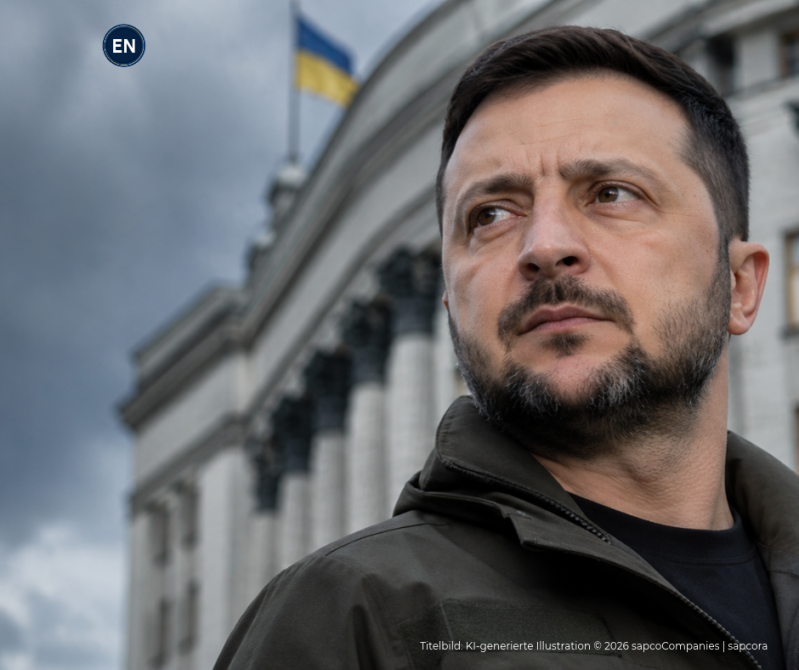
The Zelenskyy System: Money, Power and Corruption. An in-depth examination of Ukraine's corruption investigations, Zelenskyy's inner circle, offshore networks and international financial oversight.
Kommentar hinzufügen
Kommentare