

Category: Mobility
Format: Analysis
Author: Sinisa Brkic (sb)
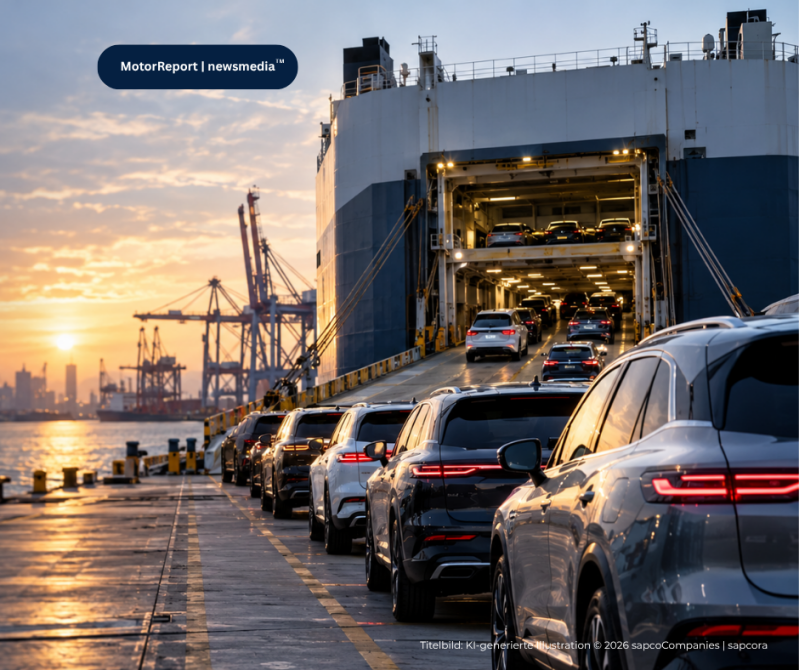
Chinese automakers are expanding across Europe at an unprecedented pace, but their growing international presence conceals mounting pressure at home. With domestic sales falling sharply, exports surging and more than 100 manufacturers competing in an increasingly crowded market, Europe is becoming far more than another sales opportunity. For some Chinese carmakers, success on the continent could determine whether they survive the industry's next major consolidation.
Europe Is Becoming a Test of Survival
The 2026 Paris Motor Show offers a striking illustration of how rapidly the global automotive industry is changing. Approximately 20 Chinese automotive brands are represented at this year's event, twice as many as at the previous show in 2024. Their growing presence reflects substantial investments in technology, international distribution and new vehicle development. Yet the expansion tells a more complicated economic story. While manufacturers such as BYD, Chery and SAIC-owned MG are strengthening their European operations, many competitors are entering the market under growing financial pressure from China. What once looked primarily like an ambitious international growth strategy is increasingly becoming a question of economic survival. China's automotive industry is struggling with declining domestic demand, intense price competition and a manufacturing structure that has supported far more companies than the market may be able to sustain over the long term. Europe has consequently become one of the most important markets in determining which Chinese manufacturers can develop into financially sustainable international automotive groups. The competition is no longer simply about selling more vehicles. It is about building businesses capable of surviving an increasingly unforgiving global market.
China's Domestic Market Is Shrinking as Exports Surge
The latest industry figures reveal the scale of the challenge facing Chinese automakers. Domestic passenger vehicle sales fell 28.1% year over year in September 2026, declining to 1.63 million units. It was the twelfth consecutive month of falling sales, according to data from the China Passenger Car Association. Exports, meanwhile, moved sharply in the opposite direction. Chinese vehicle shipments to overseas markets increased 73.2% in September, reaching approximately 923,000 units. The contrast reflects a fundamental change in the industry's growth model. For years, China's enormous domestic market provided the volumes needed to support industrial expansion, new vehicle development and the emergence of additional manufacturers. That assumption is becoming increasingly difficult to sustain. China remains the world's largest automotive market, but more than 100 automakers are competing for customers in an environment characterized by aggressive discounting, rapid model introductions and growing pressure on profitability. Government support at national, provincial and municipal levels has helped sustain domestic manufacturers and protect regional industrial employment. Although those policies encouraged the development of manufacturing capabilities, they also contributed to a market structure in which production capacity and the number of competitors are increasingly difficult to justify economically. For financially weaker companies, expanding overseas may offer a way to maintain production volumes and access new customers. However, international growth requires substantial capital at precisely the moment when declining domestic sales are putting additional pressure on financial resources. The result is a difficult economic equation. Manufacturers need international growth to improve their prospects, but establishing themselves internationally can make their financial position more vulnerable before it becomes profitable.
Why Europe Matters More Than the United States
For Chinese automakers seeking major developed markets, Europe offers opportunities that are largely unavailable in the United States. The American market remains effectively closed to most Chinese vehicle manufacturers because of substantial import tariffs and restrictions involving connected vehicle technology and national security. Those barriers make direct expansion into the United States commercially difficult, despite the country's size and purchasing power. Europe presents a different set of conditions. The continent offers a large automotive market, relatively high vehicle prices and established demand for electric vehicles, plug-in hybrids and increasingly affordable alternatives to traditional European brands. These characteristics make Europe commercially attractive, particularly for manufacturers seeking to improve margins outside China's highly competitive domestic market. However, the European automotive market is also expensive to enter and difficult to serve successfully. Establishing a credible presence requires investments in dealerships, spare parts distribution, service facilities, customer support and financial services. Regulatory compliance, vehicle certification and consumer protection requirements add further complexity.
Residual values represent another important obstacle. Leasing plays a major role in European vehicle sales, meaning that a car's expected resale value can significantly affect its monthly financing cost. For relatively unfamiliar brands without an established used-car market, uncertainty over future resale values can weaken an otherwise attractive pricing proposition. The difference between exporting a vehicle and building a successful automotive business is therefore substantial. Competitive technology and low prices may attract initial attention, but sustainable operations depend on customers trusting that a manufacturer will remain in the market for years.
BYD, Chery and MG Have an Important Head Start
The competitive environment already favors Chinese automakers that entered Europe earlier and invested heavily in local operations. BYD, Chery and MG have spent considerable resources developing brand recognition, distribution networks and after-sales support. Their progress creates advantages that later entrants may find increasingly expensive to overcome. BYD accounted for approximately 2.5% of passenger car registrations across the European Union, the United Kingdom and European Free Trade Association markets during the first eight months of 2026. Chery, including its expanding portfolio of brands, represented approximately 2.3% over the same period. These figures demonstrate that Chinese manufacturers are moving beyond experimental market entry and establishing measurable commercial positions. MG has also become a significant competitor, benefiting from an established brand identity while operating under Chinese ownership. Its presence illustrates how manufacturers can combine existing market recognition with modern Chinese vehicle production and technology. For newer competitors, building equivalent distribution networks is becoming more difficult. Prime dealership locations are increasingly occupied, experienced retail partners have more alternatives, and customers have a growing selection of Chinese vehicles from companies already operating in Europe. Manufacturers arriving later may therefore face higher acquisition costs and longer periods of financial losses before achieving sustainable sales volumes. This creates an important competitive distinction. The companies most likely to succeed are not necessarily those offering the lowest prices, but those capable of financing the long-term infrastructure needed to serve European customers reliably.
Chinese Automakers Are Moving Production Into Europe
The next stage of Chinese expansion is increasingly focused on manufacturing vehicles within Europe rather than relying exclusively on imports. BYD is preparing to expand its European production capabilities, including vehicle assembly in Hungary. The company is also examining additional manufacturing opportunities, with France and Spain among the locations under consideration. Chery is developing a European manufacturing presence through its cooperation with Spanish automaker EBRO. The companies are working on production at a former Nissan facility in Barcelona, providing a potential industrial foundation for further expansion. Changan is pursuing its own European manufacturing strategy and has indicated that it hopes to begin local production in early 2027, subject to finalizing industrial partnerships and production arrangements. These developments are commercially significant. Local manufacturing can reduce exposure to import duties, shorten certain supply chains and strengthen relationships with European governments, suppliers and industrial partners. It may also improve the political position of Chinese manufacturers as European policymakers consider stronger requirements for locally produced vehicles and components.
However, establishing European production is not without financial risks. Factories require substantial investment, labor and energy costs differ considerably from those in China, and local production does not automatically guarantee competitive pricing. Manufacturers must balance the benefits of European industrial integration against the additional costs of operating in one of the world's most demanding automotive manufacturing environments. The distinction between a Chinese importer and a European producer is consequently becoming less straightforward. A vehicle carrying a Chinese badge may increasingly be assembled in a European factory, supported by European workers and supplied partly by European companies. For policymakers, the question of where economic value is created may eventually become as important as where a manufacturer is headquartered.
The European Union Is Reshaping the Competitive Landscape
European policymakers are responding to Chinese automotive expansion through a combination of trade measures and proposed industrial policies. The European Union has already imposed additional duties on certain battery electric vehicles manufactured in China. These measures were introduced amid concerns over government subsidies and their potential impact on competition within the European market. A further development emerged in October 2026, when Brussels and Beijing reached an agreement intended to reduce Chinese exports of hybrid vehicles to the European Union over a four-year period. The arrangement is expected to significantly restrict the volume of Chinese hybrids entering the market compared with previously projected levels. Its implementation and practical effects will depend on the applicable rules and how manufacturers adjust their operations. The agreement matters because Chinese companies have increasingly promoted plug-in hybrids alongside fully electric vehicles, allowing them to compete across a broader range of European market segments. Yet trade restrictions alone are unlikely to determine the industry's future. Chinese companies may respond by expanding European manufacturing, adjusting their product portfolios or developing production capacity in other countries. Local production could allow manufacturers to reduce their reliance on direct imports from China and limit their exposure to certain trade restrictions. This creates a potential contradiction in European industrial policy. Measures designed to protect domestic manufacturing may also encourage Chinese competitors to establish factories and operations inside the European Union. The resulting competition would not disappear. It would increasingly take place within Europe's own industrial infrastructure.
German Automakers Face Pressure on Two Fronts
The changing balance of competition is particularly visible among Germany's established automotive manufacturers. As Chinese brands expand in Europe, German companies are simultaneously struggling to defend their positions in China, a market that has been crucial to their international business models. BMW reported a 6.3% year-over-year decline in global vehicle deliveries during the third quarter of 2026, with total deliveries falling to 551,072 units. The company's performance in China was considerably weaker. Deliveries declined 24.8% to 114,355 vehicles, while European deliveries increased 2.7%. Volkswagen, Mercedes-Benz and Porsche have also reported significant challenges in China as domestic competitors increase their technological capabilities and compete aggressively on price. For German manufacturers, the pressure is no longer limited to competing against lower-cost vehicles. Chinese automakers have become increasingly competitive in battery technology, vehicle software, digital features and the speed at which new models can be developed and introduced. European companies retain important advantages, including engineering experience, brand reputation, established distribution networks and long-standing customer relationships. However, those strengths are becoming less decisive when competitors offer attractive vehicles with modern technology at lower prices. Volkswagen CEO Oliver Blume has warned of enormous pressure on Europe's mass-market automotive manufacturers. High production costs, the transition toward electric mobility and intensifying international competition are making the operating environment increasingly difficult. European manufacturers must therefore defend their domestic markets while also rebuilding competitiveness in China. The industry's traditional geographic balance is shifting in both directions.
Competition and Cooperation Are Increasingly Intertwined
The transformation of the automotive industry cannot be reduced to a simple confrontation between China and Europe. European manufacturers are increasingly working with Chinese companies to access technology, accelerate development and reduce the cost of bringing new vehicles to market. Volkswagen is cooperating with Xpeng in China, while Stellantis has developed relationships with Chinese manufacturers including Leapmotor and Dongfeng. These partnerships reflect a significant change in the industry's technological balance. For decades, European automakers provided much of the engineering expertise and industrial knowledge that supported the expansion of China's automotive sector. Today, Chinese companies possess capabilities that European manufacturers increasingly regard as strategically valuable, particularly in electric vehicle development and digital automotive technology. International cooperation can improve efficiency and reduce development times. It can also create new dependencies if manufacturers gradually lose the ability to develop critical technologies independently. For European companies, the strategic challenge is to benefit from cooperation without sacrificing the capabilities that underpin their long-term competitiveness. The relationship between Chinese and European automakers is therefore becoming more complex. Companies can be competitors in one market, technology partners in another and participants in shared production arrangements elsewhere.
Not Every Chinese Automaker Will Survive
The rapid expansion of Chinese automotive brands should not be mistaken for evidence that all of them will become successful international manufacturers. China's domestic industry remains unusually crowded, and the combination of weak demand, price competition and high investment requirements is increasing pressure for consolidation. Chinese policymakers have begun encouraging a more concentrated industrial structure, with the aim of creating manufacturers capable of competing effectively on a global scale. That process could ultimately involve mergers, acquisitions, restructuring and the disappearance of financially weaker companies. European performance may become an increasingly important indicator of which manufacturers have the potential to remain independent. Companies that establish sustainable sales, maintain strong balance sheets and develop credible international operations will be in a better position to withstand consolidation. Others may discover that expanding internationally consumes more capital than their business models can support. This is particularly relevant for manufacturers entering Europe without sufficient resources to develop extensive sales and service networks. The financial risks extend beyond the manufacturers themselves. Dealerships, employees, suppliers and vehicle owners may all be affected if a brand reduces operations or withdraws from a market. Long-term reliability is therefore becoming an important part of the competitive equation. Customers need confidence not only in the vehicles they purchase, but also in the companies responsible for supporting them. The growing number of Chinese brands entering Europe makes a future consolidation increasingly plausible. It does not, however, establish which manufacturers will ultimately succeed. Strong financial resources, disciplined investment and consistent execution will matter more than the scale of a company's initial expansion.
Europe Could Help Determine the Future of the Global Auto Industry
For European consumers, greater competition offers clear potential benefits. More vehicle choices, additional technological innovation and pressure on prices can encourage established manufacturers to improve their products and operating efficiency. For European automakers, the implications are more demanding. They must modernize manufacturing operations, accelerate product development and control costs while continuing to invest heavily in new technologies. At the same time, they need to preserve the established advantages that remain valuable to customers, particularly dependable service, brand credibility and long-term product support. Chinese manufacturers face a different but equally significant test. They have demonstrated the ability to develop and manufacture technologically competitive vehicles at considerable scale. Their next challenge is proving that those capabilities can support durable, profitable international businesses. That requires more than growing exports or opening dealerships. It demands financial discipline, effective customer service, reliable operations and sustained investment through potentially difficult economic periods. The outcome will help determine how the global automotive industry is structured over the coming decade. Some Chinese companies may emerge as major international competitors with extensive European operations. Others may be absorbed into larger groups or gradually disappear from the market. European manufacturers, meanwhile, will need to demonstrate that their industrial experience and existing customer relationships can be translated into renewed competitiveness. The struggle is unlikely to be decided by technology alone, or by government policy, or by the ability to offer the lowest price. It will be decided by the companies that can combine competitive products with financially sustainable operations.
The question is no longer whether Chinese automakers will establish a lasting presence in Europe. Many already have. The question is how many can turn that presence into a profitable future. The next major consolidation of China's automotive industry may therefore be influenced as much by decisions made in European dealerships, factories and boardrooms as by developments in Beijing, Shanghai or Shenzhen.
Europe is becoming more than a destination for Chinese vehicle exports. It is becoming one of the markets that could determine which Chinese automakers survive, which become global leaders and how the balance of power in the international automotive industry evolves.
China's Automakers: Why Europe Is Becoming a Survival Test. China’s car sales are plunging as exports surge. Why Europe is becoming a crucial survival test for Chinese automakers, including BYD, Chery and MG.
Kommentar hinzufügen
Kommentare