

Section: Geopolitics
Format: Special Report
Author: Sinisa Brkic (sb)
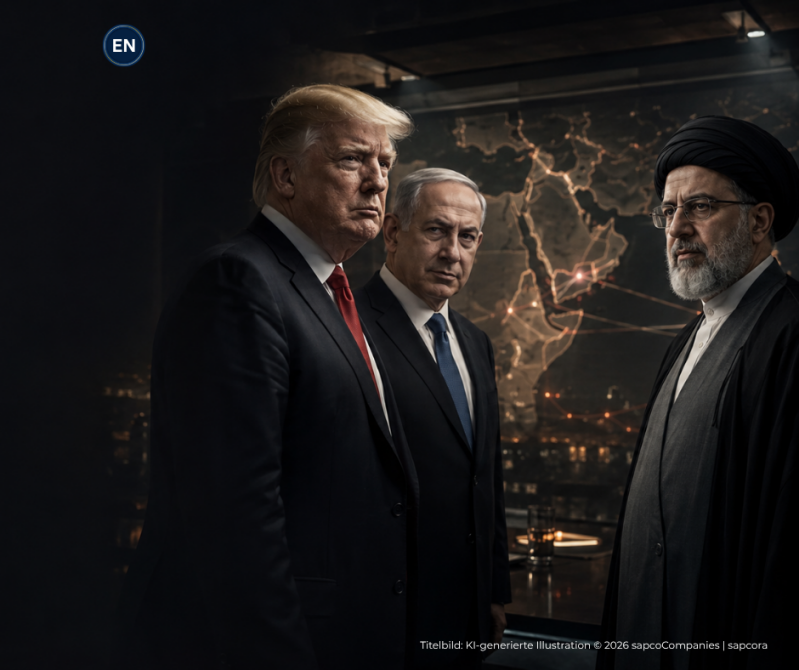
US, Israel and Iran: Three Vetoes Blocking Peace. The bombing has paused, but Washington, Israel and Iran still hold competing vetoes over the conflict’s outcome, leaving the region one incident from renewed war.
The United States has stopped its latest strikes on Iran, Tehran has suspended direct retaliation, and Israel is pressing Washington over what comes next. Yet the conflict has not entered a genuine ceasefire. Washington controls the military tempo, Israel contests the terms of any settlement, and Iran retains the power to make restraint economically and strategically expensive.
A Pause With No Rules
The immediate danger has receded. The United States ended its latest bombing campaign, and Iran said it would suspend direct attacks for as long as Washington maintained its restraint. For several days, the two governments avoided another direct exchange.
That is meaningful, but it is not a ceasefire. No signed framework defines the pause, no verification mechanism establishes responsibility for violations, and no agreed process governs how either side should respond to the next incident. The guns are quieter, but the conflict still operates without rules.
This distinction matters because the confrontation extends far beyond the armed forces of the United States and Iran. It involves Israel, regional militias, Gulf states, contested shipping routes and a nuclear program whose status remains uncertain. Any one of those fronts can overturn the political restraint shown elsewhere.
Three Capitals, Three Vetoes
The conflict is often described as a contest between overwhelming American military power and Iranian resistance, with Israel acting as Washington’s closest regional ally. That description misses the structure that now makes the crisis so difficult to resolve.
Washington controls the scale and timing of American force. Israel holds an effective veto over any settlement it believes would allow Iran to recover. Tehran retains the ability to disrupt maritime trade, activate regional pressure and raise the cost of military action far beyond its own borders.
None of the three controls the entire system. The United States can stop bombing without restoring secure passage through the Strait of Hormuz. Iran can halt direct retaliation without restraining every aligned group. Israel can support American diplomacy while reserving the right to act if it considers the result insufficient. The pause therefore does not reconcile three strategies. It merely keeps them from colliding directly for a limited period.
Washington Has Reached the Political Limit of Air Power
The American campaign demonstrated its ability to hit Iranian military and infrastructure targets repeatedly. It did not force Tehran to capitulate, restore normal commercial traffic or settle the nuclear dispute.
This is the central limit of a strategy measured through destroyed targets. Military damage can be extensive while the political outcome remains undefined. Iran has absorbed severe pressure and still retains enough regional and economic leverage to deny Washington a clean conclusion.
The United States also faces domestic constraints. Public concern about a prolonged war, congressional resistance and the prospect of higher energy prices narrow the administration’s freedom to escalate without a clear objective. Every additional strike must now answer three questions: what it achieves, how long the campaign lasts and what replaces it when the bombing stops. President Donald Trump controls the largest arsenal in the conflict. He does not control an unlimited political timetable.
Israel Is Fighting Over the End State
Israeli Prime Minister Benjamin Netanyahu arrives in Washington with a different measure of success. For the United States, an agreement that protects American forces, lowers energy prices and restores shipping could justify restraint. For Israel, those outcomes are not enough if Iran can rebuild the capabilities that made the conflict possible.
This difference is not tactical. It concerns the meaning of the war’s end. Washington is trying to manage escalation. Israel is trying to define what must remain impossible after the escalation ends. A temporary reduction in Iranian fire has limited value to Jerusalem if Tehran can reconstruct its missile forces, military infrastructure or nuclear capacity under diplomatic cover.
Netanyahu’s leverage lies in Israel’s freedom to reject a settlement as strategically incomplete. He cannot determine every American decision, but he can make any agreement politically fragile if Israel believes it only postpones the threat. That is the unresolved tension inside the alliance. The United States wants a controllable exit. Israel wants a durable outcome.
Iran Can Lose Targets and Still Control Costs
Iran cannot match American air power, but its strategy does not depend on military symmetry. It depends on spreading costs across several fronts and forcing its adversaries to experience the conflict differently.
The Strait of Hormuz remains Tehran’s strongest instrument. Iran does not need to close the waterway completely. It needs only to keep the risk of attack, seizure or obstruction high enough that shipping companies hesitate, insurers raise premiums and energy markets price in renewed disruption.
The same logic applies to Iran’s regional network. Armed groups in Iraq, Yemen and elsewhere can threaten bases, oil infrastructure and transport routes without requiring Tehran to enter every confrontation directly. Whether each operation is centrally ordered matters less than the uncertainty surrounding responsibility.
That uncertainty is itself a weapon. A militia can damage a diplomatic opening with a single strike, while governments argue over attribution and intent. The next escalation may therefore begin before the facts are established. Iran’s power lies not in controlling the entire conflict, but in making every attempt to contain it expensive.
Verification Is Now the Real Battlefield
The war has entered a phase in which the central dispute is no longer only about destruction. It is about what can be verified, who is authorized to verify it and what follows when the parties reject the same evidence.
There are three separate verification crises. The first concerns military restraint, because no agreed standard determines when an attack by an aligned group becomes an Iranian violation. The second concerns shipping, because Tehran and its adversaries dispute who may regulate passage through Hormuz. The third concerns the nuclear program, where the condition of damaged facilities and the location of sensitive material remain critical questions. Military operations can destroy infrastructure. They cannot destroy scientific knowledge, and they cannot establish continuity of information inside a restricted nuclear program.
Without sustained inspections, every government will fill the gaps according to its own threat assessment. Israel will assume recovery, Washington will face pressure to enforce compliance, and Iran will treat demands for access as an attempt to convert military pressure into permanent control. Any agreement that delays verification will not delay the dispute. It will deepen it.
Two Chokepoints, One Strategic Front
The condition of commercial shipping offers the clearest measure of whether the pause has produced real security. Traffic through Hormuz remains severely constrained, even though direct American and Iranian attacks have stopped. Commercial actors are waiting for predictable conditions, not political statements.
The danger also extends to the Red Sea. Houthi attacks and threats against Saudi energy infrastructure have placed additional pressure on routes that would otherwise serve as alternatives when Gulf exports are disrupted. Hormuz and Bab el Mandeb can no longer be treated as separate theaters. Pressure in one corridor changes the value and vulnerability of the other. When both are threatened, the energy system loses redundancy precisely when it needs it most.
This is why the conflict’s economic reach exceeds its military geography. Iran and its partners do not need to dominate the sea. They need only to make normal commerce appear reckless.
The Gulf States Are Trapped in the Middle
The Gulf states carry much of the physical risk without controlling the strategic decisions. Their territory, ports, airspace and energy infrastructure sit between American power and Iranian retaliation.
These governments want American protection without becoming permanent launch platforms for war. They want Iranian restraint without recognizing Tehran’s claimed authority over international navigation. They also need commercial stability more urgently than Washington, Jerusalem or Tehran because the first economic shock lands on them.
Their diplomatic efforts are therefore not peripheral. Mediation by Oman, Qatar and other regional actors is an attempt to create rules before another strike forces the region into a wider conflict. The weakness of that effort is speed. Diplomacy requires time, while a drone, missile or miscalculated response can change the political environment within minutes.
Washington Must Decide What Success Means
The meeting between Trump and Netanyahu cannot succeed through another declaration of unity. It must clarify what the United States and Israel are prepared to accept and what they are prepared to enforce.
A durable arrangement would need to cover more than direct attacks. It would require rules for Iran aligned armed groups, secure passage through Hormuz, sustained nuclear inspections and a response process that does not leave every incident open to unilateral interpretation.
Each of those conditions removes an advantage from one of the parties. Iran would lose ambiguity around its regional network and maritime leverage. Israel would face limits on independent action. Washington would assume responsibility for enforcing a settlement whose failure could return it to war. The easier alternative is to preserve the pause and leave the central disputes unresolved. That would reduce immediate casualties while keeping the architecture of the next conflict intact.
The Next Incident Will Test Everything
The present calm is not meaningless. It has stopped direct attacks, lowered immediate pressure on energy markets and created space for diplomacy. Those gains matter.
But no strategic veto has disappeared. Washington still controls the bombing schedule, Israel still contests the acceptable outcome, and Iran still holds the means to export insecurity. No agreed authority exists to determine who breaks the pause first.
The decisive question is no longer whether the three governments prefer fewer attacks today. It is whether they can accept a system in which none of them alone decides what happens tomorrow. Until that system exists, the war is not ending. It is waiting.
Kommentar hinzufügen
Kommentare