

Section: Geopolitics
Format: Special Report
Author: Sinisa Brkic (sb)
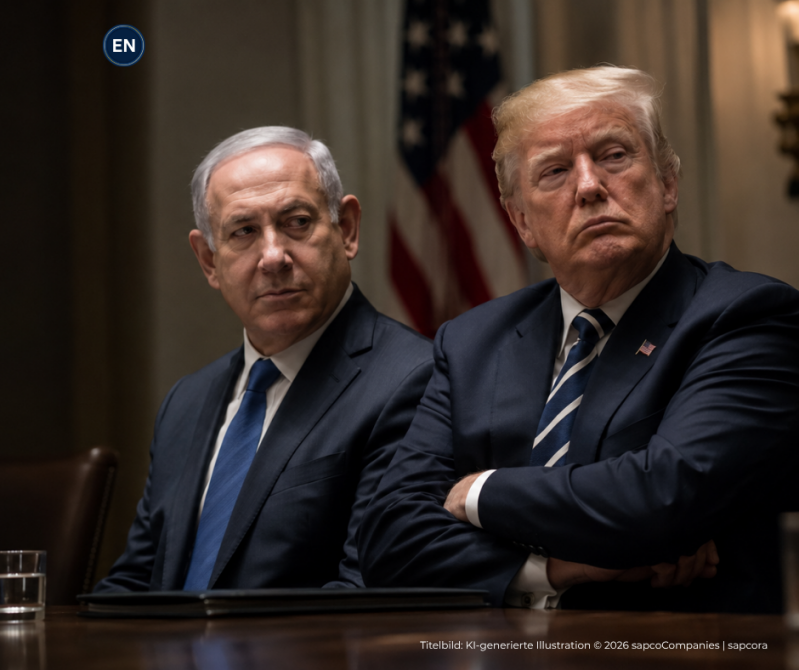
Netanyahu, Trump and the Lebanon Troop Withdrawal Dispute. Netanyahu meets Trump as pressure grows for an Israeli withdrawal from Lebanon. The dispute exposes widening differences over security and regional diplomacy.
Benjamin Netanyahu has traveled to Washington for talks with President Donald Trump at a moment of growing strategic friction between Israel and its most important ally. Iran officially leads the agenda, but the more immediate dispute concerns Israeli forces in Lebanon, Syria, and Gaza. Reports that Netanyahu intends to reject American demands for a withdrawal are credible enough to shape the meeting, but they have not been officially confirmed.
A meeting overshadowed by an unresolved military question
Israeli Prime Minister Benjamin Netanyahu’s visit to Washington comes at a point when cooperation between Israel and the United States remains exceptionally close, yet increasingly difficult to manage. Netanyahu has said that Iran and the broader regional security situation will dominate his talks with Trump, following months of military escalation, diplomatic maneuvering, and growing disagreement over the limits of Israeli operations.
The official agenda, however, tells only part of the story. Behind the public emphasis on Iran lies a sharper dispute over the continued presence of Israeli troops in southern Lebanon, parts of Syria, and Gaza. Washington is seeking visible military movement that could support its wider diplomatic strategy, while Netanyahu is determined to preserve Israel’s freedom of action wherever he believes an armed threat remains.
The reported refusal requires careful qualification
According to an Israeli media report, Netanyahu told members of his cabinet that the United States wants Israel to withdraw troops from Lebanon, Syria, and Gaza, and that he intends to reject the request. The report was based on unnamed security sources and has not been confirmed through a formal statement from the prime minister’s office.
That distinction is essential. The claim that Netanyahu will travel to Washington and simply “say no” cannot yet be presented as an established decision or a verified quotation. It is better understood as a reported description of his negotiating position, one that is consistent with his public statements but still dependent on anonymous sourcing.
Netanyahu’s broader position is nevertheless clear. He has repeatedly argued that Israeli forces cannot leave areas from which Hezbollah, Iran, or other armed groups could again threaten Israeli territory. His public language suggests that any withdrawal would be conditional, gradual, and tied to security guarantees rather than accepted as an unconditional political demand.
Trump expects movement, Netanyahu insists on conditions
Trump has publicly expressed confidence that Israel will withdraw its troops from southern Lebanon. His comments suggested that discussions were advancing and that the Israeli government also wanted to move toward a new arrangement, despite Netanyahu’s earlier statements pointing in the opposite direction.
Netanyahu has set a far more demanding threshold. During a visit to Israeli troops in southern Lebanon in late June, he said Israel would remain until the Hezbollah threat had been removed, adding that Israeli forces would stay as long as the organization remained armed and capable of threatening the country. The difference is not merely rhetorical. Trump is speaking in terms of diplomatic momentum, while Netanyahu is defining withdrawal through a security condition that may be impossible to satisfy quickly.
This creates the central tension of the Washington meeting. The United States wants a timetable that can be presented as political progress. Israel wants a security structure that prevents Hezbollah from rebuilding military positions near the border and does not depend solely on promises that Jerusalem considers reversible.
Southern Lebanon has become the decisive test
Israel currently maintains forces inside southern Lebanon in what it describes as a security buffer zone. The area extends roughly six miles into Lebanese territory along significant parts of the border, according to reporting on the continuing negotiations. Israeli officials argue that the deployment protects northern Israeli communities from renewed attacks and prevents Hezbollah from reestablishing positions close to the frontier.
Lebanon rejects that logic and demands a complete Israeli withdrawal. The Lebanese government considers the Israeli presence a violation of its sovereignty, even as it faces the separate and politically explosive task of bringing Hezbollah’s weapons under state control. President Joseph Aoun has pressed Trump to increase pressure on Israel, while also pursuing a more direct negotiating path than previous Lebanese governments were prepared to consider.
The dispute therefore cannot be reduced to a simple confrontation between Israeli security concerns and Lebanese sovereignty. It is also a question of whether the Lebanese state can establish effective control in the south, whether the Lebanese army can prevent Hezbollah from returning, and whether any international monitoring arrangement would be strong enough to survive the next regional crisis.
Diplomacy is moving, but the military reality remains
US mediated negotiations between Israel and Lebanon have produced a framework for limited transfers of territory and the creation of pilot zones under greater Lebanese army control. Talks in Rome have focused on practical arrangements that could permit Israeli forces to leave selected areas while testing whether Lebanese institutions can maintain security.
These negotiations are significant, but they do not yet amount to an agreement on a complete withdrawal. Israel continues to insist that its military presence is necessary while Hezbollah remains armed, while Lebanon argues that Israeli withdrawal is a prerequisite for restoring full state authority. Each side is therefore demanding that the other move first.
Washington is attempting to break that deadlock through phased implementation. A gradual redeployment, linked to Lebanese army deployments, monitoring mechanisms, and guarantees against Hezbollah’s return, offers the most plausible route toward compromise. It also carries a serious risk: if any element fails, Israel could halt the process or reenter territory it has already left.
Gaza reveals a more selective Israeli flexibility
Netanyahu is not rejecting every American initiative. Shortly before his Washington visit, Israel approved the legal framework allowing a multinational security force to enter designated areas of Gaza under Trump’s ceasefire plan. The decision shows that the Israeli government is prepared to accommodate US proposals when it believes they can reduce the burden on Israeli forces without surrendering essential security control.
That flexibility has limits. Israel’s acceptance of an international presence in Gaza does not mean it is prepared to withdraw completely or relinquish the ability to act militarily. The same principle shapes Netanyahu’s position in Lebanon and Syria: outside forces may be accepted as part of a security structure, but not as a substitute for Israel’s own assessment of the threat.
This is why the reported refusal in Washington should not be interpreted as a rejection of negotiation itself. Netanyahu may oppose the withdrawal sought by Trump while remaining open to partial redeployment, altered military positions, or a longer timetable. In practice, the argument is likely to concern conditions and sequencing more than the abstract question of whether Israeli troops must eventually leave.
Two leaders with different definitions of success
Trump’s regional strategy depends on visible agreements. He wants military fronts narrowed, diplomatic initiatives expanded, and American power translated into settlements that can be presented as durable achievements. A continued Israeli presence in Lebanon and Syria complicates that objective by sustaining regional tension and weakening the credibility of US backed negotiations.
Netanyahu’s definition of success is narrower and more immediate. He wants to prevent Hezbollah from rebuilding its military infrastructure, preserve freedom of action against Iran and its allies, and avoid accepting arrangements that could later be portrayed inside Israel as strategic concessions made under foreign pressure. The security argument is inseparable from domestic politics, particularly as Netanyahu faces an election expected in October and renewed scrutiny of his leadership.
The two men therefore enter the meeting with overlapping interests but different political clocks. Trump needs progress that can be demonstrated. Netanyahu needs guarantees that can be defended, both before the Israeli public and within a security establishment deeply skeptical of agreements that do not change conditions on the ground.
The alliance is strong, but no longer free of coercion
The US Israeli relationship remains anchored in military cooperation, intelligence coordination, diplomatic protection, and a shared confrontation with Iran. Yet the current dispute illustrates that closeness does not eliminate pressure. It often intensifies it, because Washington has more leverage over Israel than any other government and expects that leverage to produce results.
Trump has already shown that his support for Netanyahu does not prevent public criticism or direct demands. His calls for a softer approach in Lebanon and for troop redeployments reflect a broader concern that continuing Israeli operations could undermine US diplomacy and prolong a conflict the administration wants to contain. Netanyahu, for his part, is relying on the strategic value of Israel to resist pressure without triggering a fundamental rupture.
This is not yet a crisis in the alliance. It is, however, a test of who sets the operational boundaries when Israeli security policy collides with American regional strategy. The answer will affect far more than the deployment of several military units along one border.
Washington is unlikely to produce a simple yes or no
The most probable outcome is not an immediate Israeli withdrawal and not a definitive collapse of the talks. Washington may instead produce a phased formula that allows Trump to claim movement while allowing Netanyahu to argue that Israel has not abandoned its security conditions.
Such an arrangement could include limited withdrawals, expanded Lebanese army deployments, international monitoring, and clearly defined triggers for Israeli military action. Every element would remain contested, but a controlled sequence would give both leaders room to present the result as consistent with their own objectives.
The central question is therefore not whether Netanyahu arrives in Washington carrying a categorical refusal. It is whether Trump can transform Israeli resistance into a timetable, and whether Netanyahu can secure enough military safeguards to accept one. The durability of any agreement will be measured not by the language used at the White House, but by who controls southern Lebanon once Israeli troops begin to move.
Kommentar hinzufügen
Kommentare