

Rubric: USA / Politics
Format: Special Report
Author: Sinisa Brkic (sb)
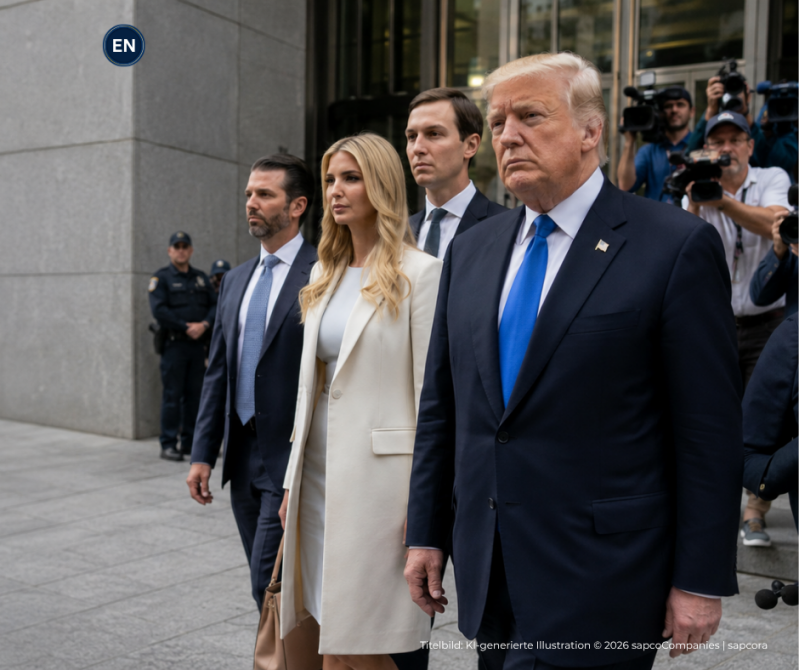
The BBC is seeking testimony and records from Donald Trump Jr., Ivanka Trump and Jared Kushner as it defends itself against President Donald Trump’s $10 billion lawsuit over a documentary about January 6. The request has opened a new front in the case, one that reaches directly into Trump’s family and the circumstances surrounding his speech before the attack on the U.S. Capitol. For now, however, the three have not been ordered to testify.
The BBC is asking for access, not yet an order to testify
The latest development is procedurally important. In a filing on August 14, the BBC asked a federal court in Florida to authorize alternative methods for serving subpoenas on Donald Trump Jr., Ivanka Trump and Jared Kushner. The broadcaster wants testimony and documents that it says are relevant to its defense against Trump’s defamation case.
That distinction matters. The court has not, at this stage, ordered the three to give testimony, nor has it ruled that the BBC is entitled to everything it is seeking. The immediate dispute concerns whether the broadcaster can formally serve the subpoenas through methods other than personal delivery after earlier attempts were unsuccessful.
Why Trump’s family has become relevant to the BBC’s defense
The case stems from the BBC’s editing of Donald Trump’s January 6, 2021 speech in a 2024 documentary. Trump argues that separate portions of the speech were combined in a way that falsely created the impression that he directly encouraged supporters to attack the Capitol. The BBC later apologized for the editing while maintaining that the documentary did not legally defame him.
The broadcaster’s defense now reaches beyond the editing process itself. Its lawyers argue that Trump’s intention when delivering the speech, how his audience could reasonably have understood his words and the extent of any resulting reputational injury are all relevant to the case. That makes people who were close to Trump before, during and after the speech potentially significant witnesses.
According to the BBC’s filing, Donald Trump Jr. and Ivanka Trump were present during important periods surrounding the preparation and delivery of the speech. The broadcaster also points to prior congressional evidence concerning their knowledge of events inside the White House as the Capitol attack unfolded. Kushner, according to the filing, was involved in preparing a proposed statement that would have condemned the violence.
None of that establishes what the three would ultimately say under oath. It explains why the BBC believes their testimony and records could contain evidence relevant to Trump’s own claims.
The unusual problem of serving the subpoenas
The most striking part of the filing concerns the BBC’s attempts to deliver the legal documents. According to the broadcaster, a process server trying to reach Ivanka Trump and Kushner at their Florida residence was prevented from completing service and directed toward the U.S. Secret Service.
The Secret Service, according to the filing, subsequently informed BBC lawyers that it was not authorized to accept the subpoenas on behalf of the individuals it protects. An attempt to serve Donald Trump Jr. at Trump Tower in New York was also unsuccessful after building security prevented access.
The BBC says it also tried to resolve the issue without asking the court to intervene, including by seeking cooperation in accepting or facilitating service. It is now asking the judge to permit another method, potentially including delivery by mail, email or through lawyers representing the intended witnesses.
The Secret Service’s involvement does not mean the agency is taking a position on the merits of Trump’s lawsuit or on whether his family members should testify. The issue described in the filing is narrower: security arrangements have made conventional personal service difficult, while the agency says it cannot simply accept legal papers for the protected individuals.
Can Ivanka Trump, Donald Trump Jr. and Jared Kushner be forced to testify?
Being the president’s child or son in law does not create a general exemption from civil discovery. Federal litigation allows parties to seek testimony and documents from nonparties when the information is relevant and the procedural requirements for a subpoena are satisfied.
That does not mean a subpoena is automatically enforceable in every respect. A recipient may challenge it, seek to have it quashed or modified, argue that particular requests are irrelevant or unduly burdensome, or raise applicable privileges and other legal protections. Questions can also arise over where a deposition may occur and what documents must actually be produced.
The first obstacle in this case is even more basic. The BBC must establish a legally sufficient method of service. Only after that issue is resolved would any challenge to the substance or scope of the subpoenas become the central fight.
Why their testimony could matter to Trump’s own allegations
Trump’s lawsuit places his reputation at the center of the dispute. That gives the BBC an incentive to investigate both the meaning of the January 6 speech and the degree to which the documentary actually altered public perceptions of him.
The testimony of people who were physically close to Trump on January 6 could therefore become relevant in several ways. They may be questioned about the preparation of the speech, Trump’s intentions, his response to the violence at the Capitol and communications occurring during the critical hours surrounding the attack. The BBC may also seek evidence concerning Trump’s reputation before and after the documentary was broadcast.
Whether any such testimony would damage Trump’s case is impossible to determine in advance. A subpoena is a mechanism for obtaining evidence, not proof that the evidence will favor the party seeking it. The testimony could help the BBC, help Trump, produce mixed evidence or ultimately prove less significant than the current legal maneuver suggests.
The $10 billion demand remains, but Trump has narrowed his damages theory
The litigation has already produced another important discovery battle. Trump originally alleged injury to both his personal reputation and his business interests, prompting the BBC to seek extensive financial information connected to his business holdings.
A federal judge subsequently allowed Trump to amend his complaint so that the damages theory concentrates on personal reputational injury rather than alleged damage to his brands and businesses. The court acknowledged that this substantially reduces the scope of damages potentially available under the revised theory.
One point remains especially important: the amended complaint retains the original $10 billion damages demand. The court has also made clear that narrowing the case does not necessarily eliminate every possible financial disclosure. The precise limits of discovery remain subject to further proceedings.
That makes the effort to question Trump’s family more consequential. If business damage is no longer the central avenue for testing Trump’s claimed injury, evidence about his reputation, intentions and conduct surrounding January 6 assumes greater importance.
What happens next
The immediate question is whether the Florida court will authorize the BBC to serve Donald Trump Jr., Ivanka Trump and Jared Kushner through an alternative method. Approval would not resolve what they must disclose, nor would it prevent them from challenging the subpoenas once properly served.
The larger case also remains unsettled. The BBC continues to dispute liability and has challenged the legal basis for Trump’s claims, while a trial has been provisionally scheduled for February 2027. Important questions over discovery, admissible evidence and the ultimate viability of the lawsuit remain before the court.
For the moment, the BBC’s August 14 filing is significant not because Trump’s family has been compelled to testify, but because the broadcaster is trying to move its defense closer to the people who witnessed some of the most consequential hours of January 6 from inside Trump’s own circle. If the court permits that effort to proceed, the fight over a disputed documentary edit could become an examination of the events, intentions and private communications surrounding the speech itself.
BBC Seeks Ivanka Trump and Jared Kushner Subpoenas in Trump $10 Billion Case. The BBC wants testimony from Ivanka Trump, Donald Trump Jr. and Jared Kushner in Donald Trump’s $10 billion defamation lawsuit. Here is why their evidence could matter and what happens next.
Kommentar hinzufügen
Kommentare