

Rubric: Politics
Format: Special Report
Author: Sinisa Brkic (sb)
President Donald Trump is moving to intensify his role in the 2026 midterms, authorizing millions of dollars for vulnerable Republicans and preparing a heavier campaign schedule as GOP strategists confront a harder political environment. The strategy is increasingly clear: mobilize Trump voters who often disappear in midterm elections and use the Republican financial advantage to protect control of Congress. Whether that is enough is now one of the central questions of the campaign.
The White House is shifting into campaign mode
With the November 3 midterms approaching, Trump is preparing a more direct intervention in the battle for Congress. His political team has been given the green light to direct millions of dollars toward vulnerable Republican candidates, while advisers are planning a significantly more active campaign schedule in competitive states and districts.
A first tranche of roughly $30 million has been discussed, although the final amount has not been settled. Trump is also expected to increase his personal appearances, with advisers considering at least one campaign stop a week in key battlegrounds as Republicans try to strengthen turnout before Election Day.
The move matters because the political backdrop has become less comfortable for the GOP. Republicans still control both chambers, but the margins are narrow enough that a relatively small number of races could fundamentally change Washington for the final two years of Trump’s presidency.
Republicans are defending two fragile majorities
The immediate danger is clearest in the House. Republicans currently hold 218 seats, compared with 212 Democrats, while vacancies and an independent member leave little room for electoral losses. Every competitive suburban district, open seat and redrawn constituency therefore carries unusual weight.
The Senate provides Republicans with more structural protection, but not immunity. The GOP holds 53 seats against 47 held by Democrats and independents aligned with them. Democrats would need a net gain of four seats to secure control, a difficult task, but several races have become important enough that Republican strategists cannot treat the chamber as secure.
That distinction is essential. Internal Republican concern does not mean Democrats are certain to win either chamber. It means the campaign has entered a phase in which GOP officials increasingly see simultaneous control of the House and Senate as something that must be actively defended rather than assumed.
The strategy is built around voters who show up for Trump
The central Republican calculation is not primarily about persuading large numbers of moderate voters. It is about recreating as much of Trump’s presidential coalition as possible without Trump himself appearing on the ballot.
That is a difficult political exercise. Trump has repeatedly demonstrated an ability to attract voters who are less reliably engaged in conventional Republican politics. Some of those voters turn out when he is the candidate but are less consistent in midterm elections, when congressional candidates must generate enthusiasm without his name at the top of the ballot.
The emerging strategy therefore places heavy emphasis on MAGA turnout. Michigan, Ohio and North Carolina are among the states where Republican strategists see Trump’s personal involvement as particularly important, while vulnerable seats in Maine, New York and California could help determine the final balance of power.
The logic is straightforward. If Republicans cannot substantially improve Trump’s standing among independents, they must compensate by bringing more of his existing coalition to the polls.
Affordability has become the campaign’s pressure point
That strategy collides with an issue that Republican messaging cannot easily neutralize: the cost of living. Food and gasoline prices remain politically potent, and recent polling has shown deep voter dissatisfaction with Trump’s handling of affordability.
The Iran war has complicated that problem. The prolonged conflict has contributed to concerns about energy prices, while Republican advisers have warned that higher gasoline costs provide voters with an immediate and highly visible reminder of economic pressure. The political danger is not limited to voters changing parties. Republicans must also worry about supporters becoming less motivated to vote at all.
That distinction could be decisive in a turnout driven strategy. A campaign built around mobilizing Trump’s base becomes significantly more difficult if some of the same voters the GOP needs are frustrated by grocery bills, fuel costs or a foreign conflict they expected to be resolved more quickly.
Trump has something Democrats cannot easily match: money
The Republican counterweight is financial strength. Trump’s political network and Republican committees have accumulated formidable reserves, giving the party the ability to concentrate spending on a relatively small number of decisive contests.
MAGA Inc. has more than $400 million available, while the Republican National Committee has also entered the closing months of the campaign with a substantial cash advantage. Trump’s decision to release additional resources into congressional races could therefore become more important than the initial dollar figure suggests.
The timing is particularly significant because the financial rules of the campaign have changed. In June, the Supreme Court struck down federal restrictions on coordinated spending between political parties and their candidates. Party committees can now coordinate spending far more extensively with campaigns, allowing Republican financial reserves to be deployed with greater strategic precision.
For a party defending narrow majorities, that is not a technical footnote. It changes how efficiently money can be concentrated in the handful of races that may decide control of Congress.
Redistricting gives Republicans another defensive line
Republicans are also relying on congressional maps that have been redrawn in several states ahead of the election. Those changes have reduced Democratic opportunities in some areas and strengthened the GOP position in districts that might otherwise have been more competitive.
But redistricting cannot completely insulate a party from a hostile national environment. District boundaries can improve the odds, but they cannot eliminate the effect of turnout, candidate quality, economic sentiment or a sufficiently strong shift among voters.
This is why the Republican strategy now combines structural protection with political mobilization. Maps can reduce exposure. Money can reinforce vulnerable candidates. Trump can attempt to activate voters. None of those tools, however, guarantees that the coalition will hold together.
The real test is whether MAGA can become a midterm electorate
The most important question is therefore larger than the size of Trump’s spending package. Republicans need to know whether the political movement built around him can reproduce its presidential turnout pattern in an election where he is campaigning for other candidates rather than for himself.
There is evidence that this remains a weakness. Democratic participation in several 2026 primaries has been unusually strong, while Republican strategists have been confronting signs of weaker enthusiasm among parts of their own electorate. Primary turnout is not a reliable prediction of November results, but it can reveal which side currently has more political energy.
Trump’s response is to make himself more visible, not less. The bet is that rallies, targeted spending and aggressive voter identification can transform personal loyalty to the president into votes for Republican congressional candidates.
That is plausible. It is not yet proven.
Congress could define Trump’s final two years
The stakes extend far beyond individual House and Senate races. Losing either chamber would significantly alter Trump’s ability to govern during the second half of his term.
A Democratic House could block legislation, control committees and launch extensive investigations into the administration. A Democratic Senate would create a different but equally serious problem for the White House by changing control of the chamber responsible for confirmations, committees and a large part of the legislative process.
Losing both would produce an even sharper transformation. Trump would move from governing with unified Republican control to confronting an opposition Congress with institutional power to investigate, obstruct and reshape the national political agenda.
That possibility explains the urgency now entering the Republican campaign. Trump is not simply preparing to endorse candidates or appear at rallies. His political operation is beginning to treat congressional control as a direct test of whether the coalition that returned him to the White House can survive when he is no longer the candidate.
The answer will not be determined by one poll, one spending package or one rally. It will depend on whether Republicans can turn Trump’s personal political power into a durable congressional majority at a moment when economic pressure, war and voter fatigue are testing the limits of that power.
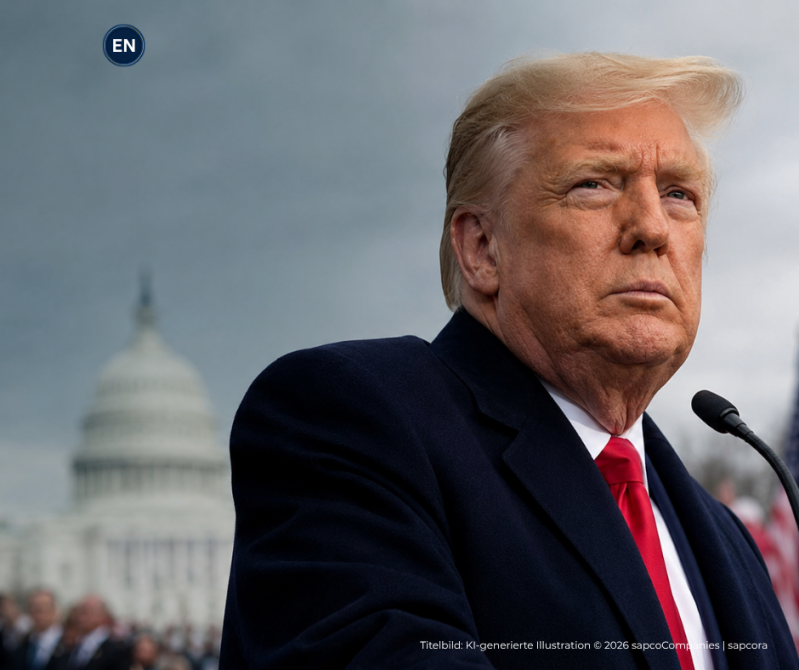
Trump’s Midterm Strategy: Cash, MAGA Turnout and the Fight for Congress. Trump is escalating his 2026 midterm campaign with money, rallies and a MAGA turnout strategy as Republicans fight to retain control of Congress.
Kommentar hinzufügen
Kommentare