

Section: Technology & AI
Format: Special Report
Author: Sinisa Brkic (sb)
A customer at Sainsbury’s in East Dulwich was wrongly removed from the store after staff acted in connection with a Facewatch facial recognition alert. Sainsbury’s and Facewatch insist that the technology itself did not identify the wrong person and say the failure occurred when staff handled a valid alert. That distinction matters, but it does not settle the larger issue. As Sainsbury’s prepares to expand facial recognition from about 55 stores to more than 200, a private biometric system is acquiring the power to influence who is treated as a suspect during one of the most ordinary activities of daily life.
The case that should not be simplified into an “AI failure”
On 6 August 2026, Matt Arnold was shopping at Sainsbury’s East Dulwich superstore in south east London when managers approached him and refused to serve him. He was told he was connected with an earlier incident and was asked to leave. Sainsbury’s subsequently apologised and temporarily paused Facewatch alerts at the branch while the incident was investigated and staff received further training.
The obvious headline is that artificial intelligence mistook an innocent man for a shoplifter. The available evidence does not establish that. Sainsbury’s says the incident resulted from human error, while Facewatch says its system generated a correct alert concerning another person but that the alert was mishandled inside the store.
That difference is legally and journalistically important. Arnold’s wrongful treatment is not disputed, but the claim that facial recognition software itself falsely matched his face is disputed by both companies involved. Describing the incident simply as a proven AI misidentification would therefore go beyond what has been established.
Yet the distinction also exposes a more difficult problem. A facial recognition system does not operate in a laboratory. Its reliability depends on cameras, algorithms, databases, alert interfaces, staff training, human judgement and procedures for deciding what happens next. A technically correct alert that results in an innocent person being removed from a supermarket is still a failure of the system as experienced by the public.
This was not Sainsbury’s first wrongful intervention
The East Dulwich incident did not emerge in isolation. Earlier in 2026, Warren Rajah was asked to leave a Sainsbury’s branch in Elephant and Castle after staff acted on a Facewatch related alert. After pursuing the matter, Rajah was told that he was not on the Facewatch database, and Sainsbury’s again said the problem was not a technological misidentification but that staff had approached the wrong person.
That pattern changes the question. If two innocent customers can be subjected to the consequences of facial recognition alerts even when the provider maintains that its algorithms performed correctly, then algorithmic accuracy alone cannot describe the safety of the deployment.
For customers, the distinction between machine error and operational error may offer little comfort. The visible consequence is the same: an individual is confronted in public, associated with suspected criminal conduct and placed in the position of having to challenge a decision generated through a system they may know almost nothing about.
How Facewatch works
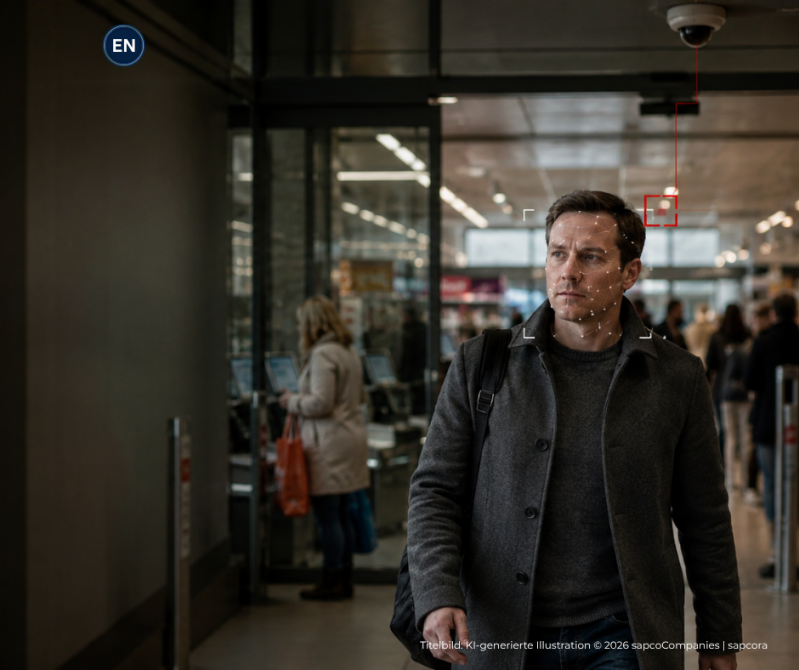
Facewatch describes itself as the data controller for the facial recognition processing it performs for participating businesses. Dedicated cameras detect the faces of people entering protected premises, create biometric templates and compare those templates against a database of people classified by Facewatch as Subjects of Interest.
The company says subscribers can submit a person following an incident involving suspected unlawful conduct. Its current privacy notice states that an incident must include a formal witness statement providing evidence that an offence occurred and reasonable grounds for suspecting the individual concerned. Facewatch says it reviews those submissions before accepting them into its database.
This point is crucial. A Facewatch Subject of Interest is not necessarily a person who has been convicted in court, nor is the database simply a copy of a police wanted list. It is a privately operated database in which inclusion can arise from incidents reported by participating businesses, subject to Facewatch’s own review procedures and the requirements of data protection law.
When the software identifies a possible match, Facewatch says a second algorithmic check is performed. The company states that alerts meeting its quality criteria are then reviewed before reaching the subscribing business, where a trained human is expected to verify the alert before any action is taken.
In theory, therefore, the machine does not expel anyone from a shop. It recommends a possible match. The decision to confront, monitor, refuse service or remove a person remains a human one.
The East Dulwich case demonstrates why that distinction cannot simply be treated as a complete safeguard.
Human review is only protection if the human actually reviews
Regulators have repeatedly emphasised that meaningful human involvement requires more than placing an employee at the end of an automated process. The Information Commissioner’s Office says human input must genuinely influence the outcome, particularly where facial recognition is used to support decisions about stopping or questioning people.
This is the central operational weakness exposed by incidents such as East Dulwich. A person can technically remain responsible for the final decision while in practice placing excessive confidence in the technology, the alert interface or the assumption that previous checks have already established the answer.
That creates a familiar automation problem. The more reliable a system is believed to be, the easier it becomes for its human operators to stop behaving like independent reviewers and start behaving like executors of its recommendations.
Sainsbury’s says every match is reviewed by trained managers. Facewatch likewise emphasises human verification as one of the safeguards built into the system. The fact that innocent customers have nevertheless been confronted shows why the quality of that review is at least as important as the existence of the review itself.
What happens to the face of an ordinary shopper?
For someone who is not on the watchlist, Facewatch says the biometric template generated from their face is deleted immediately once no match is found. The company also says it does not retain ordinary shoppers’ biometric templates for subsequent tracking.
There is, however, an important distinction between a biometric template and the underlying facial image. Facewatch’s current privacy notice says detected faces from its camera feed are kept for seven days, allowing images connected with suspected incidents to be uploaded retrospectively, while biometric data generated from people who are not Subjects of Interest is deleted immediately.
This distinction deserves attention because public descriptions of the system can sound broader than the underlying retention policy. Sainsbury’s has previously stated that where somebody is not recognised, captured data is deleted immediately. Facewatch’s more detailed privacy notice separates biometric measurements from facial images and applies different retention periods to them.
For people who are placed on the Subject of Interest database, retention is much longer. Facewatch says such data can ordinarily be held for up to 12 months from the most recent recorded incident, with a period of two years applying to incidents involving weapons or threats involving weapons. It also states that certain alert location data is retained for 48 hours.
These are not minor technical distinctions. When biometric surveillance enters routine retail environments, the question is not merely whether a face is scanned. It is what information survives the scan, who controls it, what can cause a person to enter a watchlist and how effectively an individual can discover and challenge that status.
The 99.98 per cent figure requires context
Sainsbury’s and Facewatch have repeatedly cited an accuracy rate of 99.98 per cent. Facewatch says the figure reflects a process involving a primary algorithm, a secondary algorithm and human verification, with alerts subject to high similarity thresholds before they are sent.
The number sounds definitive. It is not a complete description of how facial recognition performs in a busy supermarket.
Accuracy in biometric identification can refer to several different measures. False matches, missed matches, the proportion of genuine targets successfully identified and the probability that an alert is actually correct are separate questions, and their significance changes with thresholds, image quality, watchlist size and the number of people being scanned. Official biometric testing frameworks therefore report several performance measures rather than relying on a single headline percentage.
This matters particularly in systems scanning large populations in search of comparatively small watchlists. Even an algorithm with an exceptionally low error rate operates in an environment where thousands or millions of comparisons can occur. A percentage alone tells the public little about the number of erroneous alerts produced under real conditions, how those errors are distributed or how often a human reviewer correctly rejects them.
It would therefore be wrong to translate a claimed accuracy of 99.98 per cent automatically into the assertion that only 0.02 per cent of people challenged in stores will be innocent. Those are not necessarily the same statistical question.
Why Sainsbury’s is expanding the system
The attraction for retailers is not difficult to understand. Shoplifting, aggression and violence against retail employees have become a serious operational problem, and Sainsbury’s says industry data records around 1,600 incidents of abuse, threats or violence against shop workers every day across the United Kingdom.
The company says facial recognition allows trained staff to identify repeat offenders before situations escalate. Sainsbury’s also reports that more than 90 per cent of banned offenders identified through its early deployments did not subsequently return to its stores.
The rollout has therefore accelerated rapidly. Sainsbury’s began a two store trial in September 2025, later expanded the technology across dozens of branches and in July 2026 confirmed plans to extend it from around 55 stores to more than 200 by the end of the year. Contrary to some reporting and commentary around the current controversy, the technology is not yet operating in more than 200 Sainsbury’s branches. That figure describes the planned scale of the rollout.
The distinction is significant because the company is still moving from trial deployment towards a much larger operating network. Incidents occurring during that expansion are therefore not merely retrospective controversies. They provide evidence about whether the safeguards designed for the technology are functioning before its reach increases further.
A private watchlist with consequences in public life
Supermarkets are privately operated premises, and businesses have legitimate interests in preventing theft and protecting employees. But supermarkets also occupy an unusual social position. They are private spaces that millions of people depend upon for basic daily necessities.
Facial recognition changes the nature of that relationship. Traditional security systems generally document conduct occurring inside a store. Live facial recognition attempts to identify a person at or shortly after entry and can influence how that individual is treated before any new offence has occurred.
That shifts security from observing behaviour towards assessing identity.
Once that happens, a privately maintained biometric record can begin functioning as a form of access infrastructure. The decisive question is no longer simply, “What did this customer do today?” It can become, “Who does the system believe this customer to be?”
The boundary between retail security and policing is becoming less clear
Facewatch says its network generated almost 300,000 alerts involving people it classified as repeat offenders during the first six months of 2026. It has also announced plans for a system intended to alert police rapidly when people classified as particularly serious repeat offenders trigger matches, with deployment expected in autumn 2026.
That development raises a wider governance question. A private retailer using technology to protect employees and property is one thing. A network of privately operated biometric watchlists capable of feeding alerts towards law enforcement moves much closer to an infrastructure that can influence the exercise of public authority.
Police facial recognition and private retail facial recognition are not governed in precisely the same way. Police operate under public law duties, policing powers, equality and human rights obligations, operational policies and formal oversight mechanisms. Facewatch, by contrast, operates as a private data controller whose processing is primarily governed through data protection law and associated legal duties.
The British Government is working towards a more specific legal framework for law enforcement use of facial recognition and related biometric technologies. The proposals published so far concentrate on law enforcement rather than creating an equivalent bespoke statutory regime for private retailers.
That asymmetry may become increasingly difficult to defend if private biometric networks and policing systems begin interacting more closely.
Why supermarkets can legally scan faces
There is no general British ban on private facial recognition. Businesses deploying it must instead satisfy existing data protection requirements, principally the UK GDPR and the Data Protection Act 2018, as subsequently amended by the Data (Use and Access) Act 2025.
Facial recognition used to identify individuals involves biometric information that falls within the sensitive categories of personal data protected by law. The ICO says organisations using such technology must be able to explain their lawful basis, demonstrate necessity and proportionality, consider less intrusive alternatives and assess whether the system is actually achieving its stated objectives. It also treats facial recognition deployments as likely to present a high risk to people’s information rights and expects data protection impact assessments to be maintained accordingly.
Facewatch states that it relies on the prevention and detection of crime as the substantial public interest justification for processing biometric and criminal offence data. It also relies on legitimate interest provisions for the wider processing associated with its service.
Legality, however, is not the same as an unconditional regulatory endorsement of every use, every watchlist entry or every intervention. Compliance depends on how the technology is deployed, whether data is accurate, whether processing remains necessary and proportionate, and whether safeguards actually work in practice.
What can a wrongly identified customer do?
People have rights over information held about them. Facewatch’s privacy notice provides for subject access requests, correction of inaccurate personal data, objections to processing and requests for erasure where the legal conditions apply. It also states that individuals may complain directly to the company and to the Information Commissioner’s Office.
The right to deletion is not absolute. UK data protection law allows organisations to retain information in certain circumstances, and requests must be assessed according to the legal basis and purpose for which the data is being processed. The ICO nevertheless confirms that individuals can request erasure, challenge inaccurate information and seek regulatory review where they believe their rights have been infringed.
For an ordinary shopper, the practical difficulty begins earlier. A person removed from a store may not know whether the algorithm produced a false match, whether a member of staff approached the wrong customer, whether their own image is present on a watchlist or whether an incident record associated with them is inaccurate.
A credible system therefore requires more than abstract rights written into a privacy notice. It needs an accessible way for someone to discover what happened, challenge the relevant data and receive a decision without facing the practical burden of proving their innocence to a system whose internal workings they cannot see.
The central question is accountability, not whether AI is perfect
No serious security technology can be judged by demanding absolute perfection. Retailers face genuine theft and violence, employees have a legitimate claim to protection, and facial recognition may provide measurable security benefits.
The relevant standard is whether the power attached to the technology is matched by equally strong accountability.
That means published performance data capable of distinguishing false matches from other operational errors. It means independent scrutiny rather than reliance on headline accuracy figures, rigorous controls over watchlist creation, clear escalation procedures, meaningful human review and rapid mechanisms for correcting mistakes.
It also means recording incidents in which the algorithm was technically correct but the person confronted was not. From the perspective of public harm, a human selecting the wrong shopper after a correct machine alert is not an irrelevant statistic. It is precisely the kind of failure that a responsible deployment should measure.
The supermarket is becoming a test case for biometric society
The deepest issue raised by Sainsbury’s rollout is therefore not whether Facewatch can recognise faces with impressive technical accuracy. It is whether Britain is comfortable allowing biometric identification to become a routine layer of private commercial life before the rules governing its consequences have reached the same level of maturity.
A supermarket is an unusually revealing place for that argument. People do not enter it to cross a border, attend a high security event or encounter the police. They enter to buy bread, milk, medicine, household goods and dinner.
When facial recognition becomes part of that transaction, surveillance stops being exceptional. It becomes infrastructure.
Sainsbury’s is entitled to argue that its staff deserve better protection from violence, intimidation and repeated theft. Its critics are equally entitled to ask whether scanning every entrant is a proportionate answer, how watchlists are constructed, how errors are detected and whether an innocent person has a realistic route to challenge the system before reputational damage has already been done.
The East Dulwich case does not prove that Facewatch’s artificial intelligence failed. In some ways, that makes the episode more instructive, not less. A sophisticated biometric system can perform exactly as its designers intend and an innocent person can still end up outside the supermarket door.
That is the standard by which the next phase of facial recognition should be judged. Not whether the algorithm can recognise a face, but whether the entire system is trustworthy enough to decide what happens to the person attached to it.
Sainsbury’s Facial Recognition Problem: Facewatch, Privacy and the Risk of Wrongful Identification. Sainsbury’s has paused facial recognition at one London store after an innocent customer was wrongly removed. Our Special Report examines Facewatch, biometric watchlists, accuracy, privacy rights and the growing power of private surveillance in British retail.
Kommentar hinzufügen
Kommentare