

Section: Global Affairs
Format: Special Report
Author: Sinisa Brkic (sb)
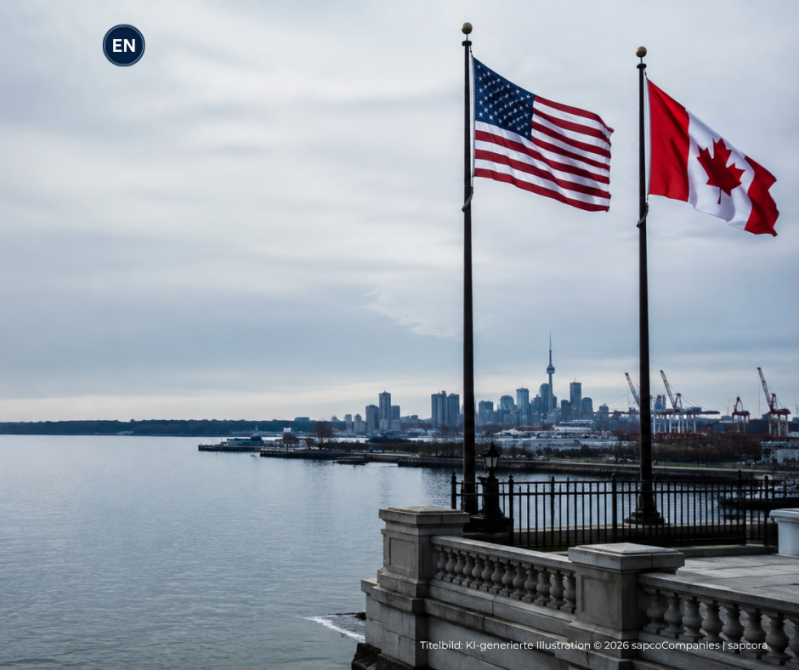
President Donald Trump has ordered the U.S. federal government to call Lake Ontario “Lake America,” turning one of North America’s most familiar geographic names into a new point of friction between Washington and Ottawa. The order is real and consequential inside the federal government, but its reach stops well short of giving the United States the power to impose a new international name on a lake shared with Canada.
A presidential order can change federal usage
On August 27, 2026, President Donald Trump signed an executive order directing the U.S. government to rename Lake Ontario as “Lake America.” The order instructs the secretary of the interior, working with the U.S. Board on Geographic Names, to implement the change within 30 days and update the federal Geographic Names Information System. That matters because the naming system is not merely an online catalog. It is the federal standard used to maintain consistent geographic terminology across government maps, records, contracts, databases, publications and agency communications.
Once the change is implemented, federal departments will be expected to use “Lake America” rather than Lake Ontario. In that specific and limited sense, Trump can rename the lake for the purposes of the U.S. executive branch. What he cannot do is compel the rest of the world to agree.
What the executive order actually changes
Federal law gives the secretary of the interior and the Board on Geographic Names responsibility for maintaining uniform geographic nomenclature across the federal government. That framework has existed in its modern statutory form since 1947 and is designed to prevent different government agencies from using competing names for the same places.
Trump’s order uses that machinery directly. It tells the Interior Department to formally replace Lake Ontario with “Lake America” in the federal naming system and instructs agencies to adopt the new designation in official federal materials.
The practical consequence is straightforward. U.S. government maps and federal databases can be changed, federal agencies can be required to use the new terminology, and future federal publications can refer to “Lake America” as the official U.S. government designation. None of those steps changes the international border, Canadian sovereignty, treaty rights or control over the water itself.
Washington cannot rename the lake for Canada
Lake Ontario is not an exclusively American geographic feature. The lake forms part of the international boundary between the United States and Canada, with New York along its southern and eastern shoreline and Ontario along much of its northern and western side.
That distinction is decisive. An American president controls terminology used by the U.S. executive branch, but presidential authority does not extend into the Canadian government. Prime Minister Mark Carney has rejected the new designation and made clear that Canada will continue to call the lake Lake Ontario. Ottawa is under no legal obligation to change Canadian maps, documents, educational materials or government databases because of an American executive order. The result is not one universally renamed lake. It is one shared lake that may now carry different official names depending on which government is speaking.
The order has no power to redraw the border
A change in geographic terminology should not be confused with a change in territorial sovereignty. Calling Lake Ontario “Lake America” in federal records does not enlarge U.S. territory, modify the international boundary or create new American jurisdiction over Canadian waters.
It also does not alter navigation arrangements, water rights or existing international obligations simply by changing the name printed on a federal map. A geographic name can carry political weight without carrying territorial force. This is why the distinction between federal recognition and international recognition matters. The White House can determine what federal agencies call the lake, but it cannot transform an American naming decision into a binding rule for another sovereign state.
Google Maps does not have to comply
One of the most immediate public questions concerns digital maps. If Washington starts calling Lake Ontario “Lake America,” does Google have to do the same? Legally, no. Private mapping companies are not federal agencies, and the federal government does not control how they display geographic names on consumer products. The U.S. Board on Geographic Names establishes standards for federal use, not mandatory labeling rules for private businesses.
There is, however, an important precedent. After the federal government changed the U.S. name of the Gulf of Mexico to the Gulf of America in 2025, Google adjusted its U.S. map display after the federal Geographic Names Information System was updated. Users in the United States saw “Gulf of America,” users in Mexico continued to see “Gulf of Mexico,” and many users elsewhere saw both names.
That precedent makes a similar response to Lake Ontario plausible, but not legally required. Google, Apple and other mapping providers remain responsible for their own products, and the federal order itself does not compel them to adopt “Lake America.”
A shared lake creates a harder cartographic problem
Lake Ontario presents an even more complicated mapping question than the Gulf of Mexico did. The lake itself is divided by an international boundary, meaning American and Canadian users can stand on opposite shores of the same body of water while their governments officially use different names for it.
A mapping service could choose to localize the designation according to a user’s country. It could display both names internationally or decide to retain Lake Ontario regardless of the federal change. That makes the response from major digital platforms politically significant. For millions of people, the name that appears on a smartphone screen may matter more in daily life than the designation contained in a federal database.
New York does not have to follow the White House
The federal nature of the United States creates another important limit. An executive order governing federal agencies does not automatically require the State of New York to rewrite its own maps, signs or state documents.
Governor Kathy Hochul has rejected the new name. Her opposition highlights the distinction between a federal standard and a universally binding domestic rule. Washington can determine the terminology used by federal agencies. It cannot simply command a state government to adopt the same terminology for every independent state purpose unless a separate source of federal legal authority requires it. That means Americans themselves may encounter competing official usage. A federal document could say “Lake America” while a New York State document continues to say Lake Ontario.
The Indigenous history makes the dispute more than symbolic
The controversy has also opened a deeper argument over who has the authority to define the history represented by a geographic name. “Ontario” is derived from Indigenous language and predates both the United States and modern Canada.
For Indigenous nations in the region, the dispute therefore reaches beyond relations between Washington and Ottawa. The Seneca Nation has called for the executive order to be reversed and has linked its objection to Indigenous history and the Treaty of Canandaigua of 1794.
The treaty, concluded between the United States and the Haudenosaunee, remains an important document in the relationship between the federal government and the nations of the Haudenosaunee Confederacy. The Seneca objection adds a legal and historical dimension that cannot be reduced to a dispute over modern national branding. Whether those arguments provide a successful legal basis for overturning the executive order would be a separate and more complex question. Political and historical objections do not automatically create a judicial remedy, but they could become significant if the order is challenged.
The real dispute is larger than the name
The timing of the executive order is difficult to separate from deteriorating U.S.-Canada relations. Washington and Ottawa are already locked in a renewed trade confrontation involving tariffs, market access and competing claims over economic fairness. Canada’s vulnerability is significant because its economy remains deeply integrated with the United States. The energy relationship is particularly striking, with roughly 90 percent of Canadian oil exports currently going to the American market.
The latest confrontation is increasing pressure inside Canada to reduce that dependence. Expanding western export capacity and opening stronger routes toward Asian markets are becoming questions not only of commercial strategy, but of national economic resilience. Against that background, “Lake America” is not simply a naming exercise. It arrives during a period in which both countries are reconsidering assumptions that once made their economic relationship unusually stable.
The Gulf of America precedent changed the playbook
Trump has already demonstrated how presidential authority over federal naming conventions can produce effects well beyond Washington. His earlier move to designate the Gulf of Mexico as the Gulf of America initially appeared largely symbolic, but the federal change soon entered government databases and major digital mapping products in the United States. That episode established a powerful practical precedent. An American president does not need international agreement to change what the U.S. government calls a geographic feature.
But the Lake Ontario case exposes the limits of that strategy more clearly. The lake is directly shared with Canada, carries a deeply established Indigenous name and sits at the physical center of one of the world’s most important bilateral relationships. The federal government can standardize its own vocabulary. It cannot standardize everyone else’s.
Can the order be challenged?
Legal challenges are possible, but the strongest arguments would likely focus on the manner in which federal naming authority was exercised rather than on the broader proposition that presidents can never influence federal geographic terminology.
The Board on Geographic Names normally operates through an established process involving federal agencies and consultation with state, local and Tribal authorities. Trump’s executive order instead directs a specific result and gives the Interior Department a deadline for implementing it.
Any serious challenge would have to identify a legal requirement that the administration violated or a protected right affected by the action. Political opposition alone would not be enough. The Seneca Nation’s invocation of the Treaty of Canandaigua could become particularly important if opponents attempt to frame the dispute around federal obligations toward Indigenous nations. Whether that argument can support a court challenge will depend on the legal claims ultimately brought, not simply on the historical significance of the treaty.
So is Lake Ontario now officially “Lake America”?
The answer depends entirely on what “officially” means. For the U.S. federal government, the change has been ordered and is moving through the implementation process required by the executive order.
For Canada, the answer is no. For New York State, the answer can also be no, while Google, Apple and other private companies remain free to make their own decisions about how the lake is displayed. Internationally, there is no presidential mechanism by which the United States can force another country to recognize the new name. Lake Ontario therefore has not acquired a universally binding new identity simply because the White House issued an executive order.
A small name change with a much larger political meaning
The controversy illustrates how symbolic presidential actions can become consequential without possessing unlimited legal power. Trump can reshape federal terminology, influence American maps and force government institutions to use a new name, but he cannot rename a shared international lake for Canada, rewrite the border or require private companies to follow Washington’s choice.
That distinction ultimately defines the episode. “Lake America” can become an official U.S. federal designation while Lake Ontario continues to be used by Canada, state authorities, Indigenous communities and private mapmakers. The fight is therefore not really about whether a president can change words in a government database. He can. The more consequential question is how far the authority of one government extends when the place being renamed belongs to a geography, a history and a political relationship that no single government controls.
Lake America: Can Trump Rename Lake Ontario? Trump has ordered U.S. federal agencies to rename Lake Ontario “Lake America.” Here is what the order legally changes, what Canada can reject, and whether Google Maps must follow.
Kommentar hinzufügen
Kommentare