

Section: Geopolitics
Format: Report
Author: Sinisa Brkic (sb)
The United States, Denmark and Greenland have reached a political agreement on a new Arctic security arrangement that could significantly expand Washington’s military role on the strategically important island. The three governments expect to sign the agreement next week during the United Nations General Assembly, while Copenhagen has made clear that Danish sovereignty, territorial integrity and Greenland’s right to self determination remain intact.
Agreement moves toward formal signing
The Greenland negotiations have entered a new stage. What had previously been described as sensitive talks between Washington, Copenhagen and Nuuk has developed into a political agreement that the three governments expect to sign during the UN General Assembly next week. The Danish Prime Minister’s Office confirmed on September 18 that Greenland, Denmark and the United States expect to conclude an agreement aimed at strengthening security in the Arctic and North Atlantic. Once signed, the arrangement will still have to pass the necessary national parliamentary procedures before it can enter into force. That distinction remains essential. A political understanding has been reached, but the agreement has not yet been formally signed or implemented, and its complete legal text has not been made public.
Trump outlines a larger US military role
President Donald Trump has described the emerging arrangement in considerably broader terms. According to his account, the United States will gain permanent rights allowing it to take measures considered necessary for the defense of Greenland and the United States. Trump also said Washington intends to establish a significantly larger military presence on the island. Details about troop numbers, additional facilities and the locations that could be covered by the agreement have not yet been disclosed publicly. The American description suggests that the deal could provide long term access, basing and operational rights extending beyond the existing security framework. The precise limits of those rights cannot be established until the agreement itself is published.
Foreign military presence and investment face new barriers
Another element outlined by Trump concerns the activities of countries viewed by Washington as strategic adversaries. According to the president, such states would not be permitted to establish military bases or maintain a military presence in Greenland. Sensitive investments would also face additional restrictions. Reuters reported that investments from non-NATO countries in designated strategic areas could require US approval under the arrangement.
The scope of such authority remains one of the most consequential unanswered questions. It is not yet clear which sectors would be defined as sensitive, how approval procedures would operate or how responsibilities would be divided between the United States, Denmark and Greenland. Until the treaty text is available, claims of permanent American control over Greenlandic security therefore require careful qualification. Washington’s political description is broader than the language currently used by Copenhagen.
Denmark draws a firm sovereignty line
The Danish government has emphasized precisely that distinction. Prime Minister Mette Frederiksen said the agreement would strengthen common security in the Arctic and North Atlantic while recognizing the sovereignty and territorial integrity of the Kingdom of Denmark and the Greenlandic people’s right to self determination. Greenland’s Prime Minister Jens-Frederik Nielsen has also presented the arrangement as a security agreement rather than a transfer of sovereign authority. He said it would strengthen the security of Greenland, the Kingdom of Denmark, the United States and the Western alliance while recognizing Greenland’s interests and its position in international cooperation.
The official Danish statement therefore leaves no basis for describing Greenland as becoming American territory. Copenhagen explicitly places the agreement within the continued sovereignty of the Kingdom and the political rights of Greenland’s population. That clarification is particularly significant after months in which Trump repeatedly placed Greenland’s strategic status at the center of US policy. The emerging arrangement appears to address American security demands without formally transferring ownership or sovereignty.
Different language reveals the central tension
The contrast between Washington and Copenhagen is more than a matter of presentation. Trump describes an arrangement that would give the United States a permanent and extensive security role. Denmark describes the same process within a framework that preserves sovereignty, territorial integrity and Greenlandic self determination. Those positions are not necessarily incompatible. A security agreement can provide extensive military access and operational rights without transferring sovereign authority over the territory itself. The crucial issue is how those principles are translated into legally binding provisions. Rules governing military access, construction rights, deployments, foreign investment and decision making authority will determine the actual balance of power created by the agreement.
Greenland’s strategic importance grows
The agreement comes as the Arctic assumes greater importance in Western defense planning. Greenland’s geographic position between North America and Europe gives the island particular relevance for military surveillance, missile warning, space operations and access across the Arctic and North Atlantic. For the United States, a more durable military position in Greenland would strengthen its ability to operate across a region that has become increasingly important in competition with other major powers. For Denmark and Greenland, the challenge is to accommodate legitimate security requirements without allowing expanded military cooperation to blur questions of political authority.
The agreement also carries implications for NATO. Frederiksen explicitly described stronger Arctic and North Atlantic security as beneficial to the alliance and to Europe, placing the arrangement within a broader Western security framework rather than presenting it solely as a bilateral American initiative.
The treaty text will determine the real extent of US authority
The political direction is now substantially clearer. Washington is seeking a lasting and expanded security role in Greenland, while Denmark and Greenland insist that any arrangement must remain compatible with sovereignty, territorial integrity and Greenlandic self determination. What remains unresolved publicly is the extent of the authority the United States will actually receive. No complete text currently defines the scale of additional military deployments, possible new facilities, investment controls or the decision making mechanisms that would govern sensitive security questions. The expected signing at the UN General Assembly will therefore be only the next stage. The decisive moment will come when the agreement itself becomes public and its legal provisions can be examined.
Only then will it be possible to determine precisely how far the US role in Greenland has expanded, what powers Washington has secured and where Danish and Greenlandic authority continues to set the limits.
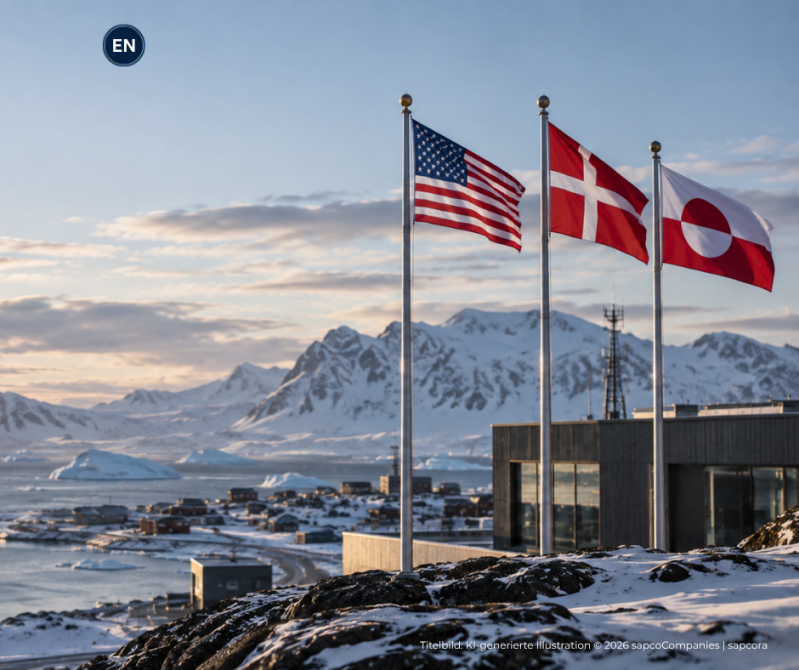
US, Denmark and Greenland Agree on Arctic Security Deal. The US, Denmark and Greenland are preparing to sign a major Arctic security agreement that could expand America’s military role while preserving Danish sovereignty and Greenlandic self determination.
Kommentar hinzufügen
Kommentare