

Category: Technology & AI
Format: News Article with Analysis
Author: Sinisa Brkic (sb)
Google has launched Playground, an AI-powered platform that allows users to create playable video games through simple text instructions. Developed alongside a strategic partnership with Unity, the technology could make game development accessible to millions of new creators and challenge established gaming platforms. Its long-term significance extends beyond entertainment, pointing to a future in which artificial intelligence can generate increasingly complex interactive software.
Google opens game development to a wider audience
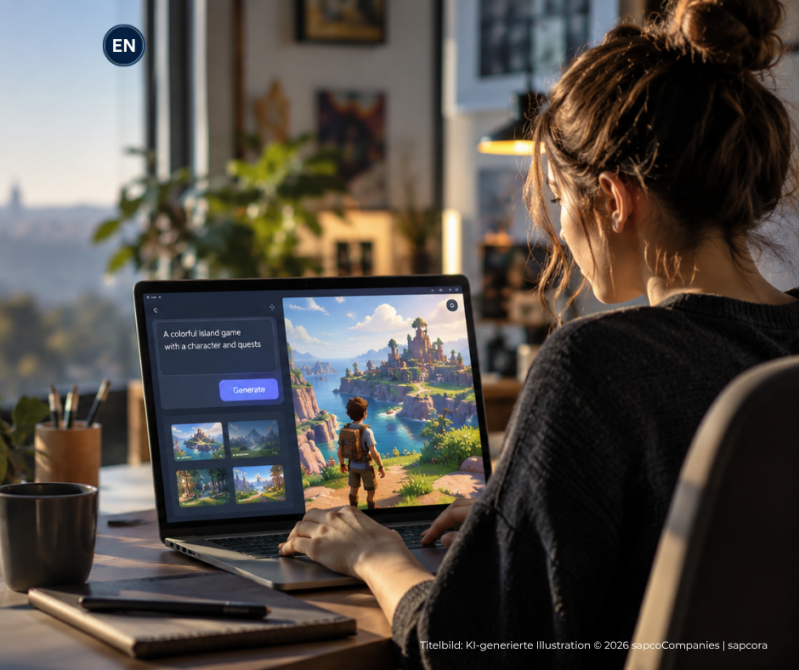
Google introduced Playground on October 7, 2026, bringing generative artificial intelligence into an area of software development traditionally dominated by specialised programming skills and complex production tools. The experimental platform allows users to generate, modify and share playable computer games by describing their ideas in ordinary language. Instead of writing code, creators interact with an AI system that translates their instructions into game mechanics, characters and digital environments. The launch is accompanied by a strategic partnership with Unity, one of the most established technology providers in the global gaming industry. Together, the companies aim to develop an integrated ecosystem that connects AI-assisted creation with interactive entertainment and community distribution. Initially available in the United States for adults aged 18 and older, Playground represents a significant expansion of generative AI beyond conventional content production. Unlike systems that generate static images, written material or video sequences, the technology produces interactive experiences in which players can influence what happens on screen.
Creating games through simple instructions
Playground replaces much of the conventional starting process of game development with a conversational interface. Users can begin with an original concept, adapt existing prompts or follow guided suggestions to develop a playable game directly in their browser. A creator might describe a racing game, a platform adventure or an interactive puzzle and then refine the result through additional instructions. Game rules, character behaviour, environmental elements and physics can be adjusted without manually editing programming code. The system also allows users to test their creations and continue modifying them as their ideas develop. This approach makes experimentation considerably more accessible, particularly for people who have creative concepts but lack experience with professional development software. However, the distinction between producing a simple playable game and developing a sophisticated commercial title remains substantial. Complex games require reliable mechanics, consistent performance, technical optimisation and sustained creative direction. Playground is still an experimental product, and its ability to support demanding projects has not yet been independently demonstrated at scale.
Google is building more than a creation tool
Playground is designed not only for developing games but also for distributing them to other users. Creators can keep their projects private, share individual links or publish completed experiences in the platform's public Explore gallery. Players can discover community creations, rate games and follow individual developers through their Google Play Games profiles. Selected genres support multiplayer experiences, while leaderboards introduce competitive elements intended to encourage repeated engagement. Google also uses player ratings and activity to determine which games receive greater visibility. Published content undergoes safety screening, and users can report experiences that violate community guidelines. These features reveal the wider commercial possibilities of the initiative. Rather than offering AI game generation as an isolated software function, Google is establishing the foundations of a platform that combines creation, distribution and audience engagement. If Playground succeeds in attracting a substantial community, the company could develop a new presence in an industry where access to creators and players is as strategically important as the underlying development technology.
Unity Spark is intended to expand the technology
Google's partnership with Unity provides an important foundation for the next phase of the project. Unity's game engine technology is used across a wide range of interactive applications, from independent games to larger commercial productions. The companies have announced Unity Spark, a new development environment intended to introduce more advanced creation capabilities. A closed beta is planned for later in 2026, but the product is not yet generally available. According to the announced plans, Unity Spark will provide access to more sophisticated gameplay mechanics, high-quality three-dimensional environments and the flexibility of the Unity runtime. The objective is to allow creators to begin with basic text instructions and progressively develop more ambitious interactive projects. Games developed with Unity Spark are also intended to become playable through Playground, connecting advanced production capabilities with Google's emerging distribution environment. The distinction between the two products remains essential. Playground already supports the creation and modification of relatively simple games, while Unity Spark's professional capabilities belong to a forthcoming stage of development. Their practical performance, technical limitations and suitability for commercial production will require further assessment once the technology becomes more widely accessible.
Roblox faces a new competitive question
Google's entry into AI-powered game creation could eventually affect established platforms whose business models depend on user-generated content. Roblox is particularly relevant because its ecosystem combines accessible development tools with a large community of creators and players. Developers produce games and interactive experiences that attract audiences, generate engagement and support the platform's commercial activities. Playground addresses a comparable market from a different technological direction. By reducing the programming knowledge required to create playable experiences, Google could attract users who would otherwise find conventional development environments too demanding. The potential competitive advantage is not limited to simplified creation. Google possesses substantial technological infrastructure, extensive consumer distribution channels and advanced AI research capabilities. Unity contributes established game development expertise and technology that could support increasingly sophisticated applications. Nevertheless, generating games quickly is not equivalent to building a successful gaming ecosystem. Roblox benefits from an existing creator community, established monetisation mechanisms and a substantial network of recurring users. Google has not yet demonstrated that Playground can match those advantages. Its longer-term competitive significance will depend on creator adoption, game quality, distribution capabilities and the development of a sustainable economic model. The arrival of Playground therefore represents a credible new competitive factor rather than evidence of an immediate disruption to the market.
Artificial intelligence could change development economics
The consequences of AI-assisted game creation may extend well beyond consumer gaming platforms. Traditional development requires combinations of programming, animation, visual design, technical testing and gameplay engineering. Even smaller projects can demand considerable time, specialist knowledge and financial resources before reaching a playable stage. Natural language development tools could reduce some of these requirements, particularly during experimentation and early production. Independent creators may gain opportunities to test ideas more rapidly, while established studios could eventually use comparable technology to accelerate certain workflows. For the software industry, the implications are broader. If AI systems become increasingly capable of generating interactive applications from written instructions, similar methods could influence educational software, simulations and other forms of digital product development. Yet automation does not eliminate the importance of professional expertise. Successful games depend on coherent design, balanced mechanics, originality and technical reliability. These qualities are difficult to guarantee through automated generation alone. There are also unresolved commercial and legal considerations. Questions surrounding intellectual property, the ownership of generated assets and the use of existing creative material may become increasingly important as AI-produced games enter public distribution. The economic significance of the technology will ultimately depend on whether it can reduce production costs while preserving the quality and distinctiveness that make interactive experiences commercially valuable.
Lower barriers could create new problems for creators
Greater accessibility may also introduce challenges for the platforms that distribute AI-generated games. If users can produce playable experiences within minutes, the number of available titles could increase substantially. While this creates opportunities for experimentation and individual creativity, it could also make it harder for original projects to attract attention. Platforms may need more sophisticated systems to distinguish compelling games from repetitive, incomplete or low-quality creations. Moderation and intellectual property enforcement could become more demanding as the volume of published content grows. Google's existing community features provide an initial framework for discovery and oversight, but their effectiveness will depend on how the platform develops. For individual creators, technical accessibility could gradually become less important than creative distinction. The ability to generate a functioning game may become widespread, while designing an experience that holds an audience's attention remains a more demanding achievement. This is an important limitation of the idea that AI will make everyone a game developer. The technology can simplify production without necessarily replacing the judgement, artistic direction and practical experience required to create successful entertainment.
Availability and the next stage of development
Playground launched in the United States with access restricted to users aged 18 and older. Browsing and playing games is available without charge, while AI game generation operates under a token-based system. A free creation tier offers limited weekly usage, with higher token allowances available through eligible Google AI subscription plans. Access to the creation functions is being introduced gradually, meaning that not every eligible user will necessarily receive immediate access to all capabilities. Google intends to expand Playground to additional countries, although a confirmed timetable for availability in Europe has not been announced. Unity Spark remains in testing, with its closed beta expected later in 2026. The companies have outlined ambitious technical objectives, but the commercial conditions and full capabilities of the integrated environment remain to be established. For now, the technology should be assessed as an early platform with considerable potential rather than a mature replacement for established game engines or professional development processes.
A new direction for generative AI
The significance of Playground reaches beyond the possibility of creating games without programming knowledge. It illustrates how generative AI is beginning to move from producing digital content towards constructing interactive applications. This shift is technically more demanding because interactive systems must respond consistently to user actions, maintain functional rules and support environments that remain playable rather than merely visually convincing. Google and Unity are attempting to bring these capabilities together within a creation and distribution ecosystem. If successful, the model could influence how games are developed, how digital platforms compete for creators and how interactive software is produced. The immediate achievement is clear: users can now generate playable games through natural language instructions, even without conventional programming experience. The more consequential question is whether this approach can eventually support the complexity, reliability and creative ambition of professional game development. Playground does not answer that question yet. It does, however, establish a direction that the gaming and software industries can no longer regard as purely theoretical. The next competitive advantage may belong not simply to those who can generate games most quickly, but to those who can turn accessible creation technology into experiences that people genuinely want to play.
Google Playground: Create AI Video Games Without Coding. Google launches Playground with Unity, allowing users to create video games without coding. How AI could transform game development and challenge Roblox.
Kommentar hinzufügen
Kommentare