

Category: Geopolitics
Format: News Article
Author: Sinisa Brkic (sb)
Iran is intensifying its campaign against international shipping, adopting new surveillance tactics and expanding attacks beyond the Strait of Hormuz. Despite substantial losses to its naval forces, Tehran continues to threaten one of the world's most important energy corridors. Senior Iranian officials say the strategy is also intended to keep oil prices elevated ahead of the U.S. midterm elections, adding a political dimension to an increasingly dangerous maritime confrontation.
Iran Changes Its Strategy in the Persian Gulf
Iran has adopted a new approach to maritime warfare, increasing the frequency of attacks on commercial vessels while extending its operations beyond the Strait of Hormuz. The shift comes as Tehran attempts to maintain pressure on Washington despite extensive damage to its conventional naval capabilities. According to two senior Iranian government officials who spoke to Reuters, the revised strategy was approved at the highest levels of the country's leadership and coordinated across its political and military establishment. One official said the changes began approximately ten days ago and involve different methods of targeting ships that Tehran considers to be violating its restrictions on passage. The developments represent a significant adjustment in Iran's efforts to influence international shipping. Rather than relying exclusively on conventional naval operations, Iranian forces appear to be combining surveillance, selective attacks and the threat of wider disruption to maintain their influence over regional maritime traffic. Since the United States and Israel launched strikes against Iran on February 28, Tehran has sought to use the Strait of Hormuz as leverage in its confrontation with Washington. Before the war, approximately one-fifth of global oil and liquefied natural gas trade passed through the waterway, making it indispensable to international energy markets.
Attacks on Commercial Vessels Intensify
The latest developments have been accompanied by a sharp increase in maritime security incidents. According to data examined by Reuters, at least five incidents involving oil tankers and other commercial vessels were recorded in and around the Strait of Hormuz during the 48 hours preceding October 14. The incidents included drone strikes and other reported attacks on commercial shipping. The frequency of these incidents is comparable to another period of heightened violence between October 3 and 5. Maritime security assessments suggest that the renewed escalation may reflect a deliberate effort to increase pressure on vessels continuing to operate in the region. The consequences extend beyond ships that are directly attacked. Even unsuccessful strikes and credible threats can disrupt shipping schedules, force operators to reconsider routes and increase insurance costs. For energy markets, prolonged uncertainty can become almost as consequential as an interruption to physical supplies. Iran's actions have already severely restricted traffic through the strait, although commercial shipments have not stopped completely. The distinction is important because Tehran has demonstrated an ability to disrupt maritime operations without establishing uninterrupted military control over the entire waterway.
Small Boats Become a New Surveillance Tool
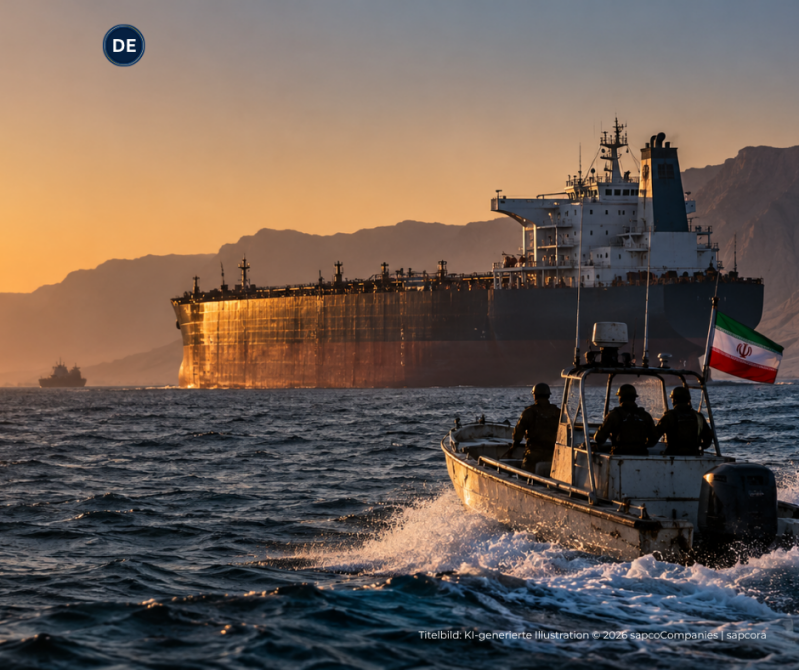
One of the most revealing aspects of Iran's changing strategy involves the identification of potential targets. A U.S. military official confirmed that the Islamic Revolutionary Guard Corps has increasingly relied on unarmed observers aboard small boats to monitor commercial vessels and American warships. The adjustment follows U.S. attacks that destroyed substantial portions of Iran's radar infrastructure. With conventional surveillance capabilities weakened, Iranian forces have apparently turned to more decentralized methods of gathering information about vessels operating in the region. These observers can identify potential targets and transmit information to other military units. The boats themselves do not necessarily carry weapons or conduct attacks, but their surveillance activities may support subsequent Iranian operations. The American military official described an incident from the previous week in which U.S. forces identified Iranian observers aboard a traditional wooden vessel known as a dhow. According to the official, the occupants were relaying targeting information to the Revolutionary Guards. American forces confronted the vessel and instructed its occupants to abandon it before destroying the boat. No casualties were reported. The incident had not previously been publicly disclosed. The episode illustrates the difficulty of eliminating Iran's ability to threaten maritime traffic through conventional military strikes alone. Even after losing major naval assets and surveillance systems, Tehran can continue operating through smaller, less sophisticated platforms that are harder to detect and monitor.
The Threat Expands Beyond Hormuz
Iran's revised strategy also involves a broader geographic area. The two Iranian officials said Tehran intends to extend its operations beyond the Strait of Hormuz into the Gulf of Oman and other surrounding waters. Maritime security assessments suggest that this expansion may already have begun. Recent attacks and suspicious incidents have been reported in waters off Qatar and the United Arab Emirates, including locations outside the strait itself. Although the pattern is consistent with the strategy described by Iranian officials, responsibility for every incident has not been independently established. The widening threat complicates international efforts to secure commercial shipping. Protective measures concentrated on the Strait of Hormuz may become less effective if vessels face similar risks elsewhere in the Persian Gulf and adjoining waters. For shipping companies, the implications are substantial. Avoiding a particularly dangerous section of the strait would no longer necessarily provide adequate protection if attacks could occur across a much larger operating area. The development also increases uncertainty for regional oil exporters. Even countries that maintain functioning export infrastructure may face transportation difficulties if the waters surrounding their ports and shipping routes become increasingly hazardous.
Tehran Seeks to Keep Oil Prices High Before U.S. Elections
The military campaign has an additional political objective, according to the Iranian officials interviewed by Reuters. Tehran reportedly wants to prevent the United States and its allies from reducing global oil prices ahead of the November congressional elections. One of the officials described the strategy as an effort to frustrate Washington's attempts to stabilize international energy markets. The other indicated that Iran intends to respond whenever American efforts appear close to bringing prices down. These statements suggest that Tehran views energy prices as an instrument of political pressure. However, the claim that Iran's leadership formally adopted the strategy to influence the U.S. election outcome has not been independently verified. The economic calculation is nevertheless significant. Oil prices respond not only to actual shortages but also to the perceived risk of future supply disruptions. Persistent attacks on tankers, higher freight costs and uncertainty surrounding maritime access can reinforce upward pressure on international energy prices. For President Donald Trump, the confrontation presents a difficult challenge ahead of the midterm elections. The administration has sought to increase economic pressure on Tehran through sanctions and a naval blockade of Iranian ports, while also attempting to prevent further disruption to global energy supplies. Higher fuel prices and the continuing financial burden of the conflict have become politically sensitive issues in the United States. Iran's reported strategy appears designed to exploit that vulnerability, although its actual influence on American electoral politics remains uncertain.
Why Iran Remains Dangerous Despite Naval Losses
The campaign exposes a fundamental limitation of conventional military superiority. American strikes have severely weakened Iran's navy and damaged its surveillance infrastructure, but those losses have not eliminated Tehran's capacity to threaten commercial shipping. Iran does not need to control every vessel passing through the Strait of Hormuz to create significant economic disruption. The possibility of further attacks can influence commercial decisions, insurance premiums and shipping operations across the region. The use of small surveillance boats illustrates how Iran is adapting to its diminished military resources. By relying on dispersed observers and retaining the ability to strike selected vessels, Tehran can continue generating uncertainty without committing the same level of conventional naval power. The strategy has limits, however. According to the American military official, Iran has been unable to prevent a recovery in oil exports through the strait, partly because its remaining fast boats are too valuable to risk in direct confrontations. That assessment highlights the difference between disrupting maritime trade and exercising complete control over a strategic waterway. Iran can impose substantial costs on international shipping, but its ability to stop all traffic remains constrained. The resulting confrontation is increasingly defined by competing forms of pressure. Washington seeks to weaken Iran's military and economic capabilities, while Tehran attempts to preserve enough operational capacity to keep global markets exposed to renewed disruption.
Iran Threatens Further Restrictions on Shipping
The Iranian officials have also warned that Tehran could move toward a more comprehensive closure of the Strait of Hormuz for vessels that violate its restrictions. One official suggested that ships refusing to comply with Iranian conditions would eventually be unable to pass through the waterway. The warning should not be confused with an accomplished total blockade. Despite severe disruptions and restrictions, some commercial shipping continues to transit the strait. Iran has not demonstrated the ability to enforce a complete and permanent closure against all maritime traffic. Nevertheless, international maritime security assessments continue to describe conditions as extremely dangerous. In its latest assessment, the U.S. Navy-led Joint Maritime Information Center maintained a severe threat classification for merchant shipping in the Strait of Hormuz, the second-highest level on its scale. The assessment cited continuing attacks, attempted strikes, drone activity, targeted surveillance and intimidation of commercial vessels. These incidents demonstrate that the threat extends beyond direct weapons strikes to a broader campaign of pressure against civilian maritime operations. Neither the Pentagon nor Iran's Foreign Ministry had immediately responded to Reuters' requests for comment on the reported strategic changes.
A Maritime Conflict With Global Economic Consequences
The Strait of Hormuz has become a central point of confrontation between Iran and the United States because of its importance to the global energy system. What happens in these waters affects not only the countries directly involved in the conflict but also oil importers, shipping companies and consumers far beyond the Middle East. Iran's evolving tactics suggest an attempt to compensate for military weakness through economic disruption. Rather than confronting American naval superiority on conventional terms, Tehran is seeking to exploit the vulnerability of commercial shipping and the sensitivity of international oil markets to regional instability. For Washington, restoring confidence in the safety of maritime traffic may prove more difficult than destroying Iranian military infrastructure. Protecting a major international shipping corridor requires sustained security, while relatively limited attacks can undermine commercial confidence. The central question is whether Iran can maintain its current operational tempo and extend the threat beyond the Strait of Hormuz without exhausting its remaining military capabilities or provoking another escalation. A permanent closure of the strait is not necessary for Tehran to exert pressure on global energy markets. As long as commercial vessels remain exposed to unpredictable attacks and shipping operators cannot rely on safe passage, Iran retains a means of influencing international trade despite its military losses. That is the strategic significance of the latest developments. The confrontation is no longer defined solely by how much naval power Iran possesses, but by how effectively it can turn uncertainty along one of the world's most important energy routes into political and economic leverage.
Iran Turns the Strait of Hormuz Into a Weapon. Iran expands attacks on oil tankers and shipping routes, deploying new surveillance tactics to pressure global energy markets ahead of U.S. elections.
Kommentar hinzufügen
Kommentare