

Section: Geopolitics
Format: News Report
Author: Sinisa Brkic (sb)
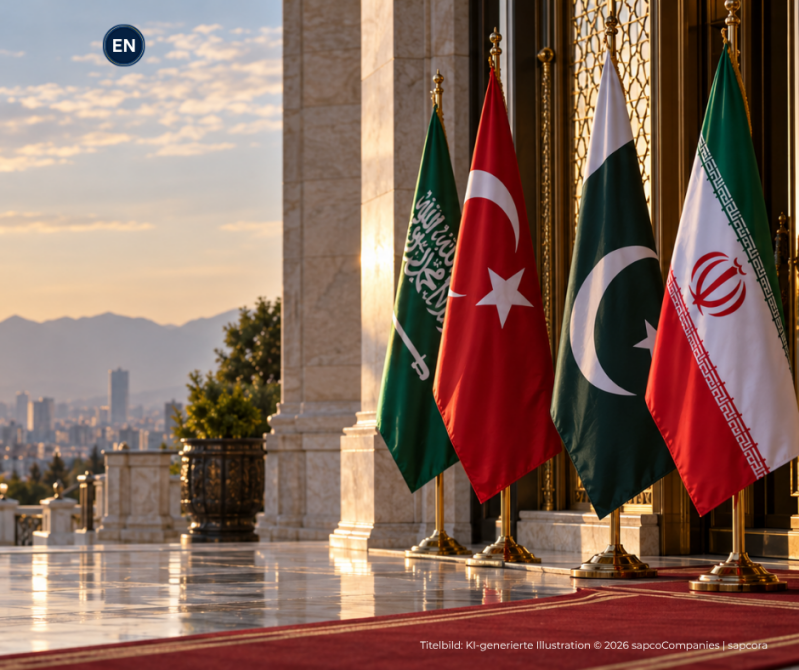
Saudi Arabia, Turkey, and Pakistan are preparing for joint security talks with Iran as tensions across the Middle East intensify. Senior defense and intelligence officials from the three countries are expected in Tehran on Monday, October 26, for consultations with Iran's Supreme National Security Council. The initiative could mark an important development in regional diplomacy, bringing the members of a newly established defense alliance into direct discussions with Tehran.
Three Regional Powers Seek Direct Talks With Iran
A new diplomatic initiative is taking shape in the Iran war as Saudi Arabia, Turkey, and Pakistan prepare to hold joint security consultations with Iranian officials in Tehran. The planned meeting represents the first high-level engagement involving all three members of the Mecca defense alliance and Iran since escalating attacks on Saudi Arabia brought the kingdom deeper into the regional conflict. Saudi Arabia is expected to be represented by Defense Minister Prince Khalid bin Salman, Pakistan by army chief Field Marshal Asim Munir, and Turkey by intelligence chief Ibrahim Kalın. The officials are scheduled to consult with Iran's Supreme National Security Council on regional security and political coordination. Ali Bagheri Kani, deputy secretary of Iran's Supreme National Security Council, confirmed the planned visits. Saudi Deputy Minister for Public Diplomacy Rayed Krimly also described the initiative as part of broader efforts to reduce regional tensions, encourage diplomatic solutions, and support existing mediation efforts. The meeting had not been confirmed as underway at the time of the initial announcements. Neither a detailed negotiating agenda nor any preliminary agreement has been made public.
The Mecca Defense Pact Takes on a Diplomatic Role
The significance of the planned consultations extends beyond the immediate security situation. In August 2026, Saudi Arabia, Turkey, and Pakistan signed the Mecca Joint Defense Agreement, establishing a framework for collective security cooperation among three influential regional powers. Under the agreement, an armed attack against one member is considered an attack against all three. The pact also provides for collective measures to address threats to the territorial integrity, sovereignty, and internationally recognized borders of its members. The arrangement was established against the backdrop of a rapidly deteriorating regional security environment. Earlier in October, ministers from the three countries held emergency consultations in Riyadh and agreed on measures intended to facilitate the rapid deployment of military forces and capabilities in Saudi Arabia. Pakistan approved the agreement last week, while Turkey's parliamentary ratification process remains underway. The alliance is therefore still developing its institutional framework, even as its members begin coordinating their responses to the wider conflict. Their planned joint engagement with Tehran introduces a notable diplomatic dimension. Rather than relying exclusively on separate national initiatives, the three governments are exploring whether their collective security relationship can also provide a platform for regional dialogue. That development does not necessarily signal a strategic realignment toward Iran. It does, however, demonstrate that collective defense arrangements and diplomatic engagement are not mutually exclusive.
Houthi Attacks Increase Pressure on Saudi Arabia
The immediate backdrop to the consultations is the intensifying confrontation involving Saudi Arabia and Yemen's Iran-aligned Houthi movement. Saudi forces intercepted another wave of missiles and drones on Sunday as the fighting continued to threaten the kingdom's security. The attacks have increased pressure on Riyadh at a time when the broader conflict involving Iran, the United States, and Israel remains unresolved. Saudi Arabia has become an increasingly exposed participant in regional hostilities, despite its efforts to protect its territory and critical infrastructure. The strategic consequences extend beyond military security. Saudi Arabia is among the world's largest oil exporters, and continued instability across the Gulf threatens energy infrastructure, commercial shipping, and international supply chains. Disruptions to regional energy transportation have already placed significant pressure on global markets. Any further escalation affecting Saudi production facilities, transportation networks, or maritime routes could deepen uncertainty for energy-importing economies. For Saudi Arabia, preventing additional attacks is therefore both a national security priority and an economic necessity. Turkey and Pakistan also have substantial interests in containing the conflict, particularly given their dependence on regional stability and functioning international trade routes. These overlapping concerns provide a practical foundation for diplomatic engagement, even where the participating governments maintain different strategic relationships and regional priorities.
Pakistan and Qatar Remain Central to Mediation Efforts
Pakistan's participation is particularly significant because Islamabad has already played a diplomatic role between Washington and Tehran. Previous mediation efforts involving Pakistan and Qatar contributed to an interim peace arrangement in June, although that agreement subsequently collapsed as fighting resumed. Field Marshal Asim Munir visited Tehran last week and held discussions with Iranian President Masoud Pezeshkian and other senior officials. According to information released following those consultations, Iranian representatives maintained that negotiations with Washington would not resume until Tehran's demands were addressed. Qatar has also remained active in efforts to reduce tensions. Qatari mediators met Iranian officials in Tehran on Sunday, underscoring the continued importance of diplomatic channels involving regional governments. The planned participation of Saudi Arabia and Turkey alongside Pakistan could broaden those efforts. A coordinated approach would potentially allow the three governments to address security concerns that extend beyond the immediate confrontation between Washington and Tehran. Whether such an initiative can generate meaningful progress remains uncertain. Previous diplomatic arrangements have demonstrated how quickly agreements can unravel when military operations continue and fundamental political disagreements remain unresolved.
A New Approach to Regional Security
The emerging diplomatic configuration reflects a broader question confronting governments across the Middle East: whether regional powers can assume greater responsibility for managing conflicts that increasingly threaten their own security and economic interests. Saudi Arabia, Turkey, and Pakistan possess different military capabilities, diplomatic relationships, and strategic priorities. Their cooperation under the Mecca agreement has created a framework for collective deterrence, but engaging Iran collectively could expand the alliance's political significance. For Tehran, the consultations offer an opportunity to communicate directly with three governments whose security decisions could influence the regional balance. For the Mecca Pact members, the discussions provide a means of exploring diplomatic options without abandoning their collective defense commitments. The initiative also comes amid renewed warnings from Washington and Tehran about the possibility of further military confrontation. Against that background, direct communication among regional powers could help clarify intentions and identify measures capable of limiting escalation. Nevertheless, a diplomatic meeting alone does not constitute a breakthrough. Any meaningful progress would require concrete commitments, credible mechanisms for managing military risks, and sufficient political willingness to prevent further confrontation.
Tehran Talks Face an Immediate Test
The planned meeting represents a potentially important moment in the diplomatic response to the Iran war. Its significance lies not merely in the seniority of the participants, but in the decision by three defense partners to engage Tehran through a coordinated political channel. For Saudi Arabia, Turkey, and Pakistan, the central challenge will be reconciling their collective security obligations with the practical demands of regional diplomacy. For Iran, the discussions could provide an opportunity to address the concerns of neighboring powers whose involvement is becoming increasingly important to the wider conflict. There is no confirmed agreement on security guarantees, military restraint, or a ceasefire. The immediate outcome of the consultations therefore remains open. What happens in Tehran will determine whether the initiative remains a limited diplomatic exchange or begins to establish a more structured regional security dialogue. At a time when military escalation continues to threaten stability and international energy supplies, the ability of these governments to translate political contact into concrete measures will be the decisive test.
Iran War: Saudi Arabia, Turkey and Pakistan Plan Tehran Crisis Talks. Saudi Arabia, Turkey and Pakistan prepare for joint crisis talks with Iran in Tehran as regional tensions escalate and security concerns intensify.
Kommentar hinzufügen
Kommentare