

Category: Geopolitics
Format: Analysis
Author: Sinisa Brkic (sb)
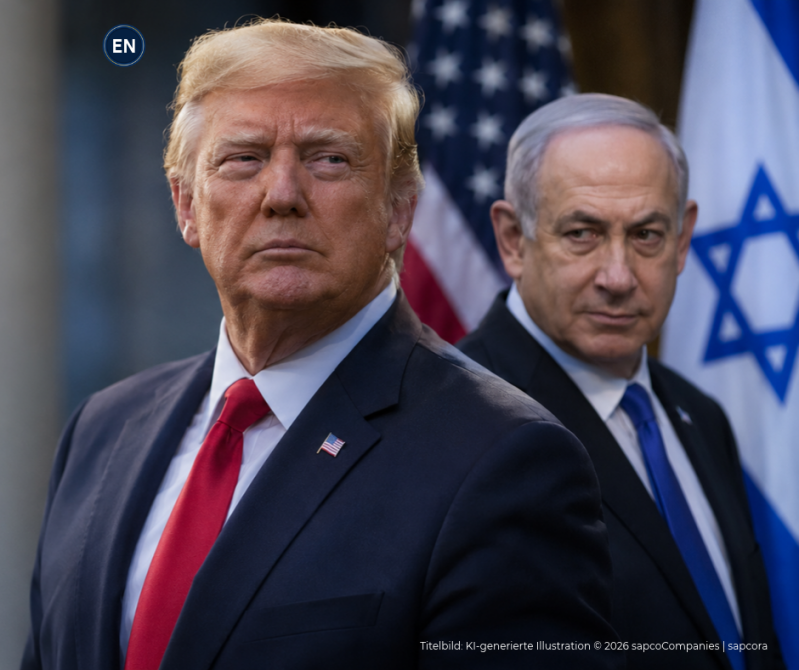
President Donald Trump wants to end nearly $4 billion in annual US military assistance to Israel beginning in 2027, while allowing American weapons sales to continue. The announcement could fundamentally reshape one of Washington's most consequential security partnerships. Trump claims he reached an agreement with Israeli Prime Minister Benjamin Netanyahu months ago, but an existing $38 billion aid arrangement runs through 2028, raising serious questions about whether the proposed change can be implemented ahead of schedule.
Washington Signals a Major Shift in US-Israel Relations
President Donald Trump has announced plans for a significant change in how the United States supports Israel's military. Under his proposal, Washington would stop providing approximately $4 billion in annual military assistance beginning in 2027, potentially dismantling a financial arrangement that has served as a cornerstone of the bilateral security relationship for decades. Trump made the announcement during a November 3 telephone interview with Fox News, indicating that the United States would continue selling military equipment to Israel and providing assistance when necessary. The distinction is significant. Rather than ending military cooperation, the administration appears to be considering a transition away from direct financial grants toward a relationship increasingly based on arms purchases and defense industry cooperation. The timing adds another political dimension. Trump's remarks came on the day of the US midterm elections, as American support for Israel has become an increasingly contentious domestic issue. The president suggested that the financial assistance program had become a political liability, giving Democratic candidates an opportunity to challenge Republican priorities. Trump claimed that he and Israeli Prime Minister Benjamin Netanyahu had reached an agreement months earlier to end the assistance by the close of 2026. However, the Israeli government had not publicly confirmed the terms of such an agreement, and significant questions remain about its implementation. The existing funding framework, congressional authority and outstanding defense commitments could complicate any attempt to bring the program to an early end.
A $38 Billion Agreement Complicates the Plan
The existing framework for American military assistance to Israel dates back to a memorandum of understanding signed in 2016 under President Barack Obama. The agreement provides for $38 billion in US military assistance over ten fiscal years, covering 2019 through 2028. Under its terms, Israel receives $3.3 billion annually in foreign military financing, along with an additional $500 million for cooperative missile defense programs. The arrangement provides a predictable funding structure for long-term military procurement while supporting the acquisition and development of advanced American defense systems. For Israel, this financial predictability is particularly important. Major weapons programs require years of planning, substantial financial commitments and carefully coordinated delivery schedules. American assistance has therefore become deeply integrated into Israeli defense planning and procurement decisions. Trump's announcement raises an immediate question about the future of these commitments. If the administration intends to terminate annual assistance beginning in 2027, it must address a framework that was designed to remain in place through September 2028. The memorandum itself is not a legally binding treaty and does not independently obligate Congress to appropriate the entire amount. Nevertheless, Congress has supported the arrangement through legislation and annual funding decisions, including provisions reinforcing the agreed foreign military financing levels. A political understanding between Trump and Netanyahu would not, by itself, resolve the legal and budgetary questions involved in ending the program early.
Congress Could Determine Whether the Plan Succeeds
The most significant institutional obstacle to Trump's proposal lies on Capitol Hill. Under the American constitutional system, Congress controls federal appropriations and plays a decisive role in determining the financial resources available for foreign military assistance. A presidential announcement does not automatically terminate funding already appropriated under applicable US law. Any substantial restructuring of the assistance program would therefore require careful consideration of existing legislation, budget commitments and congressional authority. Historically, support for Israel has enjoyed broad bipartisan backing in Washington. Although disagreements have existed over individual policies and military operations, successive Democratic and Republican administrations have maintained extensive security cooperation with the Israeli government. That political environment has become more complicated. The conflicts involving Gaza and Iran have intensified American debates over military assistance, arms transfers and the broader consequences of US involvement in the Middle East. Trump's proposal arrives at a moment when the long-standing bipartisan consensus surrounding Israel is facing growing scrutiny. His explicit reference to domestic political criticism suggests that Washington's financial relationship with Israel is increasingly being shaped by electoral considerations as well as strategic calculations. Whether Congress would support an accelerated termination of military assistance remains uncertain. Lawmakers could seek to preserve parts of the existing arrangement, establish transitional funding mechanisms or develop a different framework for future defense cooperation.
Israel Would Face a More Expensive Defense Future
For Israel, the financial implications could be substantial. Ending annual American military grants would require the government to finance a greater share of its defense procurement directly from its national budget. Such a transition would come at a particularly demanding moment. Israel faces sustained regional security challenges and elevated defense expenditures, limiting the government's flexibility to absorb additional multibillion-dollar obligations without making difficult fiscal choices. The consequences would extend beyond future weapons purchases. Major military acquisition programs involve contractual commitments, production schedules, maintenance requirements and long-term operational planning. An abrupt change in financing could complicate these arrangements even if existing contracts remained in force. The United States would also have economic interests at stake. Much of the military assistance provided to Israel is spent on American-made defense equipment, channeling substantial funds back into the US defense industry. Under the current agreement, Israel is required to spend an increasing proportion of its foreign military financing on American defense products, reaching 100% in fiscal year 2028. The program therefore serves not only Israeli security interests but also supports American defense manufacturers and their supply chains. If Israel were required to finance those purchases independently, it would not necessarily maintain procurement at the same level. American defense contractors could face reduced orders or changes in purchasing priorities, depending on how Israel adjusts its military budget. Washington might therefore achieve direct budgetary savings while simultaneously affecting an established market for American military technology. The financial consequences of the proposal cannot be assessed solely by looking at the assistance that would no longer be provided.
Netanyahu's Vision of Greater Financial Independence
The idea of gradually reducing Israel's dependence on American military grants is not entirely new. Netanyahu has previously argued that Israel's economic strength and technological capabilities could eventually allow the country to rely less heavily on direct US financial assistance. In that scenario, the relationship would shift toward greater emphasis on joint investments, defense technology development and industrial cooperation. Missile defense, cybersecurity and advanced military systems already provide an extensive foundation for collaboration between the two countries. Such a transformation could offer Israel greater financial independence while preserving its access to American military expertise and technology. It could also create opportunities for defense companies in both countries to collaborate on emerging systems and long-term research programs. But financial independence would not necessarily translate into strategic independence. Israel's armed forces remain heavily dependent on American aircraft, precision weapons, spare parts and technical support. Their ability to sustain certain military capabilities would continue to depend on cooperation with Washington even if annual financial grants were eliminated. A closer industrial relationship would also introduce new challenges. Technology transfer, intellectual property rights, export restrictions and control over jointly developed defense systems would require detailed agreements between the two governments. The result could be a partnership that is less dependent on direct American funding but remains deeply integrated at the military and technological levels. In practical terms, Israel would assume greater financial responsibility without necessarily gaining equivalent freedom from American strategic influence.
Political Opposition Emerges in Israel
Trump's announcement has generated criticism within Israel, where opposition figures have questioned how such a consequential change could be considered without greater public transparency. Critics have challenged Netanyahu over the apparent lack of clarity surrounding discussions with Washington. Particular concern has focused on the fact that the proposed termination of military assistance became public through statements by the American president rather than through a coordinated announcement by the two governments. Former Israeli military chief Gadi Eisenkot demanded an explanation from Netanyahu, arguing that the country's relationship with the United States remains a critical component of national security. Opposition leader Yair Golan also warned about the potential security consequences of losing American financial support during a period of continuing regional instability. The political dispute reflects a broader strategic dilemma. Reducing dependence on American grants could strengthen Israel's financial autonomy over time, but an accelerated transition could create serious short-term pressures on defense spending and military planning. For the Israeli government, the challenge would be to reconcile the political appeal of greater independence with the practical requirements of maintaining military capabilities in an increasingly volatile security environment.
Washington's Leverage Would Not Disappear
An end to direct military grants would not necessarily mean a corresponding decline in American influence over Israeli defense policy. Washington would continue to hold considerable leverage through weapons export approvals, access to sensitive technology, military logistics and the supply of critical equipment. This distinction is central to understanding the potential consequences of Trump's proposal. A country that purchases its own weapons may be financially more independent, but its operational freedom can remain constrained when those weapons, their components and their maintenance systems depend on a foreign supplier. For Israel, this dependency is particularly significant because key elements of its air power, missile defense and precision-strike capabilities rely on American technology. Financing those systems independently would not eliminate the need for continued cooperation with US manufacturers and government authorities. Washington, meanwhile, would retain the ability to influence the pace and scope of military transfers. A shift from grants to commercial purchases would change the financial terms of the relationship without necessarily reducing the strategic importance of American export decisions. The proposed restructuring could therefore produce an unusual outcome. Israel might become less dependent on Washington for money while remaining highly dependent on it for the military systems needed to sustain its defense capabilities.
A Different Partnership, Not the End of an Alliance
Trump's proposal could represent the beginning of a fundamental restructuring of US-Israel security relations. Instead of relying on predictable annual military grants, Israel could increasingly finance American weapons purchases from its own resources while expanding joint defense investments and technological cooperation. The strategic partnership itself would not necessarily weaken. Washington would retain substantial influence through weapons exports, defense technology, military logistics and the continued integration of American systems into Israel's armed forces. Nevertheless, the proposed timetable presents considerable uncertainty. The existing assistance agreement extends through September 2028, Congress retains authority over federal spending, and long-term procurement commitments could complicate any accelerated withdrawal of funding. A credible transition would require more than an announcement from the White House. It would demand a detailed financial framework, coordination between the two governments and a workable legislative path in Washington. Until those conditions are met, the termination of military assistance remains an announced policy objective rather than an accomplished change. The larger question is not whether the United States and Israel will continue to cooperate militarily. Their defense establishments, industries and strategic interests remain closely connected. What could change is the financial foundation of that relationship, with Jerusalem assuming a greater share of its military costs while Washington retains much of its strategic influence. If implemented, Trump's proposal would not end the US-Israel security partnership. It would redefine how that partnership is financed, how its costs are distributed and how the two allies balance military dependence with national autonomy.
Trump Targets Israel's $4 Billion in Annual US Military Aid. Trump plans to end nearly $4 billion in annual US military aid to Israel in 2027. A $38 billion agreement and congressional authority complicate the move.
Kommentar hinzufügen
Kommentare