

Section: Mobility | MotorReport
Format: Analysis
Author: Sinisa Brkic (sb)
Volkswagen’s ambitious electric vehicle strategy in China is facing serious questions after previously undisclosed internal documents revealed a striking gap between planned and actual sales. The ID. UNYX 08, developed in cooperation with Chinese technology partner XPeng, achieved barely 7% of its original monthly sales target. The findings expose weaknesses in Volkswagen’s market assumptions and raise broader concerns about the German automaker’s ability to regain its competitive position in the world’s largest automotive market.
Internal Documents Reveal the Scale of Volkswagen’s Sales Shortfall
Volkswagen’s effort to restore its position in China has encountered a significant setback. Internal company planning documents examined in a Reuters investigation published on October 20, 2026, reveal that the ID. UNYX 08 electric SUV has performed dramatically below the sales volumes originally anticipated by the German automaker. Between its market launch in April and August 2026, the vehicle recorded average monthly sales of just 267 units, according to data from automotive consultancy ThinkerCar. Volkswagen’s original internal planning target was 3,622 vehicles per month. The comparison is striking. Actual monthly sales reached approximately 7.4% of the original target, representing a shortfall of 92.6%. In practical terms, Volkswagen sold roughly one vehicle for every 14 it had initially expected to sell.
The documents provide a rare view into the difference between Volkswagen’s internal commercial expectations and its actual performance in China. They do not establish that the company publicly misrepresented sales figures or deliberately misled investors. They do, however, expose the extent to which its original forecasts underestimated the difficulties of bringing a competitive electric vehicle to the Chinese market. Volkswagen declined to comment on the sales projections contained in the documents. The company instead emphasized the technological achievements of its partnership with XPeng and the progress made in developing new vehicle architectures.
Volkswagen Had Already Lowered Its Expectations
The original monthly targets were not the only ambitious figures identified in the internal documents. Volkswagen’s planning from 2024 anticipated sales of approximately 32,600 ID. UNYX 08 vehicles by the end of 2026, followed by 70,400 units in 2027. Longer-term projections envisioned annual sales exceeding 120,000 vehicles later in the model’s life cycle. Those expectations were subsequently revised. Earlier in 2026, Volkswagen reduced its forecast for the current year by more than 60%, bringing the anticipated volume down to approximately 12,300 vehicles. The adjustment indicates that the company had already recognized a substantial gap between its initial assumptions and the market conditions it expected to encounter. Yet even after that revision, the vehicle’s early sales performance remained exceptionally weak relative to the ambitions behind the project. This distinction matters because the figures do not simply describe an unsuccessful product launch. They raise questions about the reliability of the internal assumptions used to assess market demand, approve vehicle programs and allocate resources. Large automotive manufacturers depend on long-term sales projections to justify development expenditure, production capacity and supplier commitments. When those projections diverge substantially from actual demand, the consequences can extend well beyond the commercial performance of a single model.
Chinese Competitors Have Raised the Technological Standard
Volkswagen entered its partnership with XPeng in 2023 with a clear strategic objective. By combining German manufacturing expertise with Chinese electric vehicle technology, the group hoped to shorten development cycles and produce models better suited to local consumer expectations. The ID. UNYX 08 was among the first tangible results of that cooperation. Yet its arrival demonstrated how difficult it has become for established foreign manufacturers to distinguish themselves in China’s increasingly sophisticated electric vehicle market. With an initial price of approximately $34,260, the SUV entered a segment already populated by highly competitive domestic alternatives. Chinese manufacturers have made substantial advances in vehicle software, digital interfaces, driver assistance systems, charging technology and integrated electronic platforms. The commercial difference was considerable. Between April and August, Xiaomi sold nearly 57,000 units of its YU7 SUV, while Zeekr delivered more than 21,000 units of its 7X model. Volkswagen’s ID. UNYX 08 recorded approximately 1,300 sales over the same period. These figures are not a direct comparison of identical products or distribution networks. They nevertheless illustrate the difficult competitive environment Volkswagen encountered and the challenge of attracting customers in a market where domestic manufacturers have become formidable technology providers. The issue extends beyond vehicle specifications. Chinese consumers increasingly evaluate electric cars as integrated digital products, placing considerable importance on software capabilities, connectivity and the pace at which manufacturers introduce new features. Volkswagen’s traditional strengths in engineering, manufacturing quality and brand reputation remain important, but they are no longer sufficient to guarantee commercial success.
A Distribution Strategy That Restricted Market Access
Product competitiveness was only one part of the problem. Volkswagen’s distribution strategy also placed the ID. UNYX 08 at a disadvantage. Rather than relying primarily on its extensive established dealership infrastructure, Volkswagen marketed the model through a comparatively small network associated with Volkswagen Anhui, its electric vehicle focused operation in China. That decision created a substantial difference in market reach. Volkswagen’s longstanding joint ventures with FAW and SAIC have access to more than 3,000 dealerships, while the newer Anhui operation had a considerably smaller retail presence. People familiar with the company’s Chinese operations identified limited distribution as an additional obstacle to the vehicle’s launch. Potential buyers could not necessarily encounter the model through the sales channels traditionally associated with Volkswagen’s established market presence. The company has since expanded Volkswagen Anhui’s network to 166 outlets and introduced cooperation with selected FAW-Volkswagen dealerships. These measures are intended to improve customer access and strengthen the visibility of the newer electric vehicle range. However, expanding distribution addresses only part of the challenge. A larger dealership network can improve availability and awareness, but sustained sales growth ultimately depends on a product’s ability to compete convincingly on technology, price and perceived value.
The XPeng Partnership Has Not Yet Delivered Commercial Success
The disappointing performance of the ID. UNYX 08 presents Volkswagen with a strategic dilemma. Its collaboration with XPeng has produced measurable technological progress, but those achievements have not yet translated into the expected commercial results. Volkswagen says the partnership helped develop a new electronic and electrical architecture in just 18 months. The technology is intended to support locally manufactured vehicles, simplify electronic systems and accelerate future product development. These advances are significant for an automaker seeking to adapt its historically lengthy development processes to the much faster pace of the Chinese market. They may also provide substantial benefits across future generations of vehicles. Nevertheless, the experience of the ID. UNYX 08 demonstrates that acquiring technology does not automatically produce a competitive product. Successful vehicle development requires more than access to advanced electronic platforms. Manufacturers must correctly anticipate customer preferences, establish realistic pricing, select appropriate distribution channels and bring products to market before their competitive advantages disappear. This is particularly challenging in China, where the pace of innovation has compressed the commercial life cycle of automotive technology. Features considered advanced during initial development may become standard across competing models before a new vehicle reaches showrooms. Volkswagen therefore faces a problem that cannot be solved exclusively through partnerships. The group must improve its ability to translate technological capabilities into products that customers are prepared to purchase.
China’s Decline Is Becoming a Structural Problem for Volkswagen
The ID. UNYX 08 setback is part of a much broader deterioration in Volkswagen’s competitive position. In 2019, approximately one in five passenger cars sold in China was a Volkswagen. During the first eight months of 2026, the group’s market share had fallen to approximately 10%, according to figures from the China Passenger Car Association. The financial importance of that decline is substantial. China, once responsible for nearly half of Volkswagen Group’s profits, now contributes approximately one-tenth, reflecting a major shift in the geographical foundations of the company’s earnings. For decades, China provided Volkswagen with extraordinary sales opportunities and a strong industrial position. Joint ventures, manufacturing facilities and extensive distribution networks helped establish the German company as one of the dominant foreign automakers in the country. That historical advantage has weakened as Chinese manufacturers have developed their own technology, strengthened their brands and expanded across market segments previously dominated by international competitors. Volkswagen is consequently confronting two pressures simultaneously. It must defend its existing business in China while financing the technological transformation required to compete in an automotive industry increasingly shaped by Chinese innovation. The implications reach Germany and the wider European automotive sector. Volkswagen’s international profitability influences its capacity to invest in research, manufacturing modernization and future vehicle programs. Although the weak performance of one Chinese model cannot be directly connected to specific employment or production decisions in Europe, persistent commercial weakness in China reduces the financial flexibility available to the group.
The Next Electric Model Will Test Volkswagen’s Strategy
Despite the disappointing launch, Volkswagen is continuing its cooperation with XPeng and preparing additional vehicles developed through the partnership. The ID. UNYX 09 sedan is expected to enter Chinese showrooms in October 2026. Internal product planning documents indicate that Volkswagen has projected average monthly sales approaching 4,900 vehicles for the new model. Those expectations are ambitious, particularly when assessed against the performance of the ID. UNYX 08. Volkswagen is also pursuing a wider product offensive in China, with more than 20 new electrified vehicles scheduled for introduction during 2026. The strategy reflects the company’s determination to rebuild its competitive position through locally developed technology and a product portfolio more closely aligned with Chinese market requirements. The crucial question is whether the next generation of vehicles will benefit from lessons learned during the earlier launch. Pricing adjustments have already become part of Volkswagen’s response. The ID. UNYX 08 has recently been advertised at a discount of approximately 17% compared with its initial launch price. Such reductions may encourage additional sales, but they also present a commercial dilemma. Lower prices can stimulate demand while simultaneously placing pressure on margins, particularly in a market where manufacturers already face intense competition. For Volkswagen, the next phase of its China strategy must therefore demonstrate more than improved vehicle development speed. It must establish that the company can make realistic demand forecasts, respond quickly to competitive developments and sell its products at economically sustainable volumes.
Volkswagen Must Confront the Gap Between Ambition and Reality
The internal figures reveal a fundamental weakness in Volkswagen’s attempt to regain momentum in China. The company recognized the importance of local technology partnerships and committed significant resources to accelerating development, yet its initial commercial expectations proved far removed from actual customer demand. That does not mean the XPeng partnership has failed. Its technological achievements remain relevant, and Volkswagen still possesses considerable manufacturing resources, brand recognition and market experience. What the figures demonstrate is that technological cooperation, established industrial capabilities and ambitious planning are not substitutes for a competitive market proposition. Volkswagen’s challenge is now to align its forecasts, products and commercial decisions with conditions in a market that has changed more rapidly than many established manufacturers anticipated. The ID. UNYX 08 may ultimately be remembered as an early setback in a successful transformation. But the magnitude of its initial sales shortfall leaves little room for complacency. For Volkswagen, the decisive measure of progress in China will no longer be the number of new partnerships announced or the speed at which vehicles are developed. It will be whether the company can once again produce cars that Chinese customers choose in sufficient numbers to sustain a profitable business.
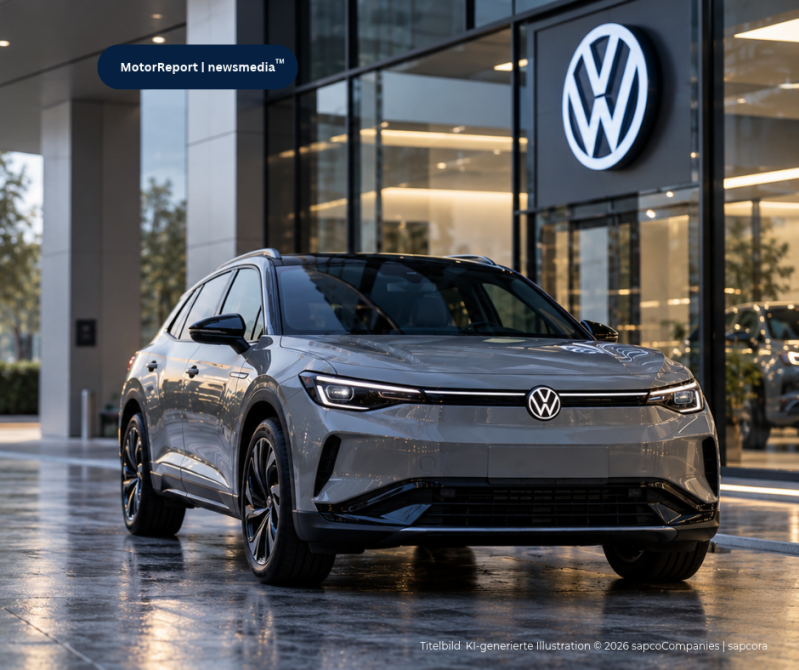
VW China EV Sales Fall 93% Short of Internal Target. Internal Volkswagen documents reveal a 93% sales shortfall for the XPeng-developed ID. UNYX 08, raising questions about VW’s China strategy.
Kommentar hinzufügen
Kommentare