

Section: Economy
Format: Special Report
Author: Sinisa Brkic (sb)
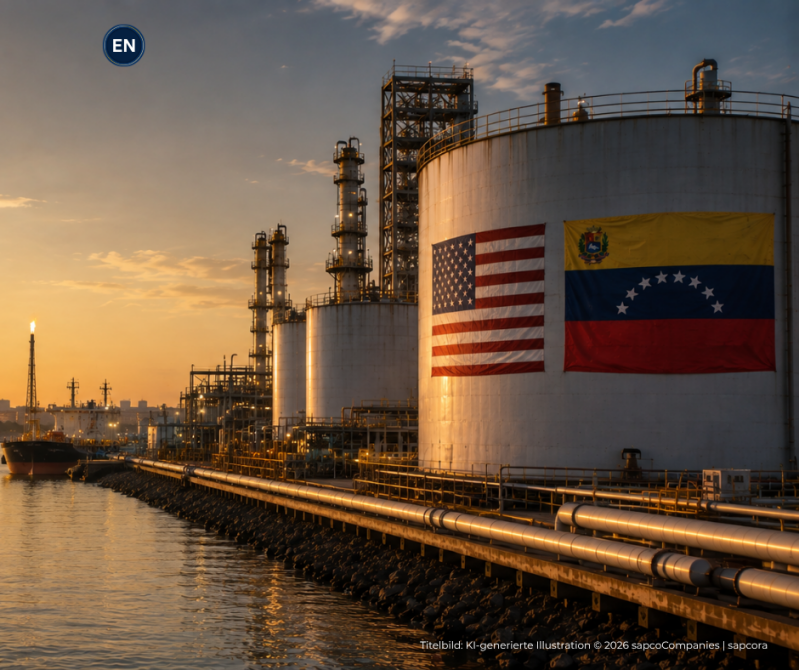
Washington is moving far beyond conventional access to Venezuelan crude. A sweeping energy agreement gives the United States a strategic role in the development of 17 oil fields containing more than 65 billion barrels of proven reserves, while a separately reported government stake in a private oil venture points to an even deeper level of involvement. What is emerging is not merely another oil deal, but a long term attempt to connect American energy security, private investment and geopolitical influence to one of the world’s largest petroleum reserves.
Washington moves from access to influence
The scale of the new US relationship with Venezuela’s oil sector is becoming clearer. President Donald Trump says Washington has secured majority US control over more than 65 billion barrels of proven Venezuelan reserves through an agreement combining government involvement with private business. Venezuela has described the arrangement as a 25 year energy agreement covering 17 strategic oil fields, with plans to expand development into additional areas. Caracas says the program is intended to increase production, attract major investment and rebuild an industry that has suffered from years of underinvestment, political intervention, sanctions and deteriorating infrastructure.
That gives the agreement a significance extending far beyond the restoration of ordinary commercial ties. Washington is positioning itself closer to the structure through which Venezuelan oil is financed, developed and ultimately brought to market.The precise legal architecture remains incomplete in public. No comprehensive contract has been released, and some of the administration’s language about control still requires clarification. But the political direction is increasingly difficult to miss.
More than 65 billion barrels at the center
The volumes involved explain why the agreement carries unusual strategic weight. The 17 fields identified under the framework are said to contain more than 65 billion barrels of proven oil reserves, a quantity that would represent a substantial share of Venezuela’s enormous petroleum base.
Venezuela has the largest proven crude reserves in the world, but its production has remained far below its geological potential. Years of weak investment, aging equipment, infrastructure losses, sanctions and political instability have left a striking gap between what the country possesses underground and what it can reliably produce. The new arrangement is designed to narrow that gap. Venezuelan officials have said the agreement initially targets production of 1.5 million barrels per day and could attract around $100 billion in investment. That transformation, however, cannot happen simply through political announcements. Developing neglected fields, repairing transport systems, restoring processing capacity and protecting operations will require large amounts of capital, technical expertise and time.
A 25 year energy relationship
The duration of the agreement is nearly as significant as its scale. A 25 year framework moves the relationship beyond short term sanctions policy and into the realm of strategic planning. For Washington, such a structure offers the prospect of dependable access to a major crude source in the Western Hemisphere. For Venezuela, it offers a potential route back to international capital, technology and larger export volumes after years of economic isolation.
Caracas has insisted that the agreement does not surrender national sovereignty over Venezuela’s natural resources. That distinction will be politically important inside the country, particularly as the government seeks to reconcile foreign investment with a petroleum sector long treated as an instrument of national control. The tension is obvious. Washington speaks in terms of control, while Caracas emphasizes sovereignty. The eventual contractual structure will determine where political language ends and economic power begins.
The reported government stake raises new questions
A separate development has made the arrangement even more sensitive. Reporting published on Sunday said the US government could receive a 35 percent passive interest in North American Blue Energy Partners, an oil venture led by Venezuelan businessman Alejandro Betancourt.
The same reported structure would give Washington preferential rights to acquire 20 percent of the company’s production at cost. If implemented, that would potentially provide the US government with an economic position linked directly to production rather than merely regulatory influence or diplomatic access. Those details are not yet sufficiently confirmed to be treated as completed facts. Neither the White House nor the company has publicly confirmed the reported equity arrangement, and a Pentagon statement has raised a significant legal complication.
The Pentagon says the Office of Strategic Capital, the agency associated with the proposed structure, does not have statutory authority to take direct equity positions in private companies. Its available instruments include loans, guarantees and technical assistance. Until that contradiction is resolved, the reported 35 percent interest remains a proposed or reported mechanism rather than an established government holding.
The legal structure could become the real story
The dispute over equity is more than a technical detail. It goes to the heart of how far the federal government can move from supporting strategic industries to becoming economically embedded in individual private ventures.
If Washington ultimately secures benefits resembling ownership without formally holding conventional equity, the financing mechanism will deserve close scrutiny. Warrants, guarantees, purchase commitments or other instruments could produce substantial economic rights while operating within a different legal framework. That distinction matters because the government would occupy several roles simultaneously. It would help shape policy toward Venezuela, influence access to its oil industry and potentially hold financial rights connected to the success of a private venture operating there. Such a structure would raise questions about oversight, transparency and the boundary between national security policy and commercial participation. Those questions become more significant as the size and duration of the Venezuelan commitment increase.
Oil security becomes foreign policy
The strategic logic behind Washington’s move is easier to understand against the wider energy landscape. Control over reliable crude supplies has regained importance as geopolitical conflict, supply disruptions and price volatility expose the vulnerabilities of global energy markets.
Venezuelan crude has particular relevance for the United States because several US refineries are technically suited to processing the country’s heavy grades. Restoring larger volumes would therefore have an industrial as well as geopolitical dimension.
The administration has also presented the agreement as a mechanism that could ultimately help lower fuel prices for American consumers. That claim deserves caution, since significant increases in Venezuelan output will depend on investment and infrastructure development that cannot be completed immediately. The deeper objective appears broader than short term pump prices. By establishing a durable position around future Venezuelan production, Washington gains potential leverage over an energy source whose importance could extend across several political and market cycles.
China and Russia are part of the equation
Greater US involvement in Venezuela also changes the geopolitical map. Caracas spent years strengthening economic and political relationships with countries outside Washington’s orbit, particularly as US sanctions restricted its access to Western capital and markets. China and Russia have both treated Venezuela as strategically relevant, whether through financing, energy relationships, diplomacy or broader competition with the United States. A sustained American return to the Venezuelan oil sector would challenge that position.
The issue is therefore not simply who extracts the crude. It is who supplies the capital, determines commercial routes, gains contractual influence and shapes the long term development of one of the world’s largest energy reserves. That makes Venezuela part of a wider competition over strategic resources. Oil fields can become geopolitical assets long before their full production reaches the market.
The economics remain formidable
Political control cannot erase the physical condition of Venezuela’s petroleum industry. Some of the fields covered by the agreement lack sufficient infrastructure, while others have suffered from deterioration, equipment losses and years of inadequate maintenance. Bringing large volumes online could require billions of dollars in investment. Security, pipelines, electricity supply, processing equipment, storage facilities and export infrastructure all form part of the equation.
This means the United States may be acquiring influence over enormous reserves without gaining immediate access to enormous production. The distinction between reserves and usable supply will remain critical when assessing the economic value of the agreement. The payoff, if the reconstruction succeeds, would come over years rather than months. That helps explain why the long duration of the arrangement matters so much.
Venezuela oil enters a new era
The emerging US strategy represents a striking change in the relationship between Washington and Venezuela’s petroleum industry. What began as renewed access to Venezuelan crude is developing into a much broader structure involving long term contracts, private capital, government influence and control over future production. Important details remain unresolved. The exact allocation of ownership, the financing obligations of the US government, the legal mechanism behind any direct economic interest and the practical meaning of Washington’s claimed majority control all require further disclosure. Yet the strategic shift itself is already substantial. The United States is no longer positioning itself merely as a buyer of Venezuelan oil or a regulator determining which companies may operate there. It is seeking a lasting role in how a major portion of Venezuela’s petroleum wealth is developed and connected to global markets.
That is the larger significance of the agreement. Venezuela’s oil is becoming more than an energy supply for Washington. It is becoming a strategic asset around which economic power, national security and geopolitical influence are increasingly being built.
US Deepens Grip on Venezuela Oil in Major Energy Deal. The United States is expanding its role in Venezuela’s oil sector through a 25 year energy agreement covering 17 fields and more than 65 billion barrels of reserves, raising major economic, legal and geopolitical questions.